
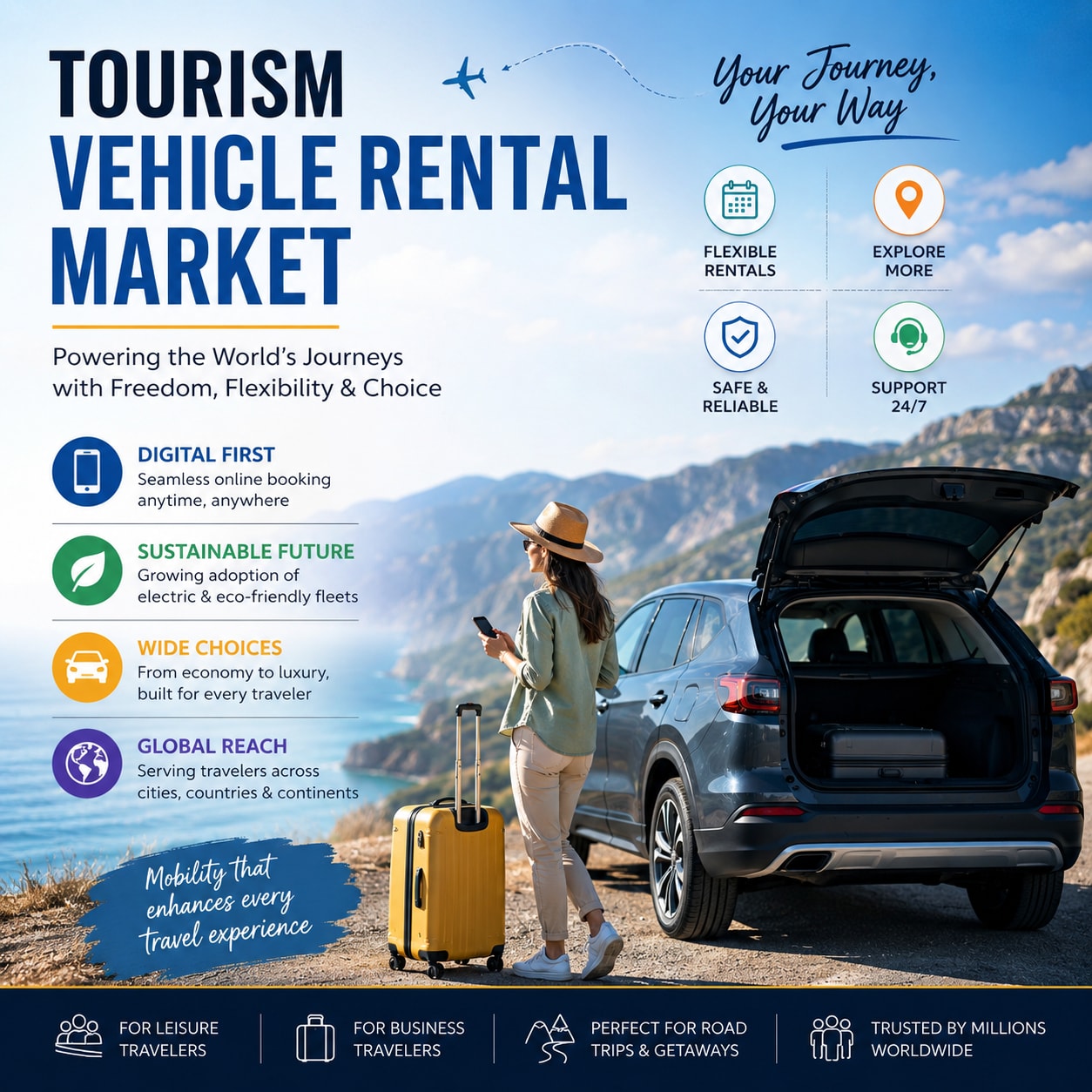
How Car Hire Has Become Central to Modern Tourism
There's no doubt that travel is different today than even just a decade ago.
Travelers are looking for much more than planes and hotels. People want control over their own travel experience, the flexibility to customize and the ease to do so. From road-tripping through national parks as a family to exploring an unfamiliar business city and venturing down uncharted coastal roads with a partner, access to personal mobility is one of the key elements of the traveler's experience today.
This evolution in the way people approach travel is driving the significant growth in the global tourism car rental market.
Once just an accessory service found in an airport, it's becoming a far more complex and sophisticated world that includes digital tech, mobile apps, electric vehicles, and traveler-centric offerings.
As international travel continues its recovery and growth path, car rental companies are finding themselves right at the heart of an enormous shift in the overall tourism sector.
A Market Growing Together with Tourism
The car rental sector for tourism has become a fundamental support market in the wider travel sphere.
By 2025, it's anticipated to be valued at some USD63 billion and grow to over USD101 billion by 2034, representing a decade of consistent growth.
This upward trajectory is driven by a combination of increased international travel, a rise in domestic tourism, and demand from people looking for greater self-determination while exploring the world. While other traditional travel options are subject to rigid timetables and set routes, car rentals offer the customer complete independence. This is something travelers are finding increasingly valuable.
The Growing appeal of Rental Cars
Today's travelers are more interested in an experiential journey than solely in convenience. Instead of traveling with schedules determined by public transport, a considerable number of tourists want to tailor their journey, explore at their own pace and create unique experiences. This is facilitated by the rental car. From secluded attractions to small villages, spontaneous stops on scenic routes to visiting places with less developed public transport links, the rental car enables it all.
Road trips themselves have fueled the sector. They are now a mainstream approach to seeing North America and Europe for instance, and tourists are more than ever wanting to engage in slow travel and discover their surroundings beyond the typical city breaks. For many, the trip has now become part of the vacation.
Digital transformation changes the Car Rental industry
The digital booking platforms have been perhaps the single greatest disruption to the industry. Ten years ago the car rental process usually involved a lot of paperwork, visiting an agent on-site and complicated bookings. Now, travelers can research their available vehicle, get price quotes, make reservations, submit their driving licenses and even pick up the car keys from their smart device. The process is now mobile-first and many platforms can:
* Provide instant car comparisons
* Guarantee clear pricing
* Take just a minute to complete the booking
* Manage the booking via an app
* Enable a fully contact-free process for both pick up and return.
Online bookings are quickly becoming the preferred choice among travelers, raising expectations and requiring heavy investment in technology.
Contactless Travel is the New Norm
The sector's adoption of contactless technologies continues. From keyless entry, digital ID checks, and mobile check-ins, car rental agencies are trying to ensure that customers have no reason to approach a physical counter. This is making travel easier for the customer and the system much more efficient for the rental provider. Full digital bookings will only become more of an industry standard in the coming years.
Green considerations reshuffle fleets
Every industry, including the travel and rental sector, must face its responsibility when it comes to environmental concerns. Consumers are more and more demanding and looking for sustainable alternatives to the current vehicle fleet. As a result, large car rental agencies are now investing more and more in electric vehicles and hybrid fleet options. This strategy not only reduces operating costs but is also highly appealing for travelers seeking to do their bit when they holiday. Across North America, Europe and in some markets in the Asia Pacific region, green fleet is high on the priority list.
The Demand for Premium Traveling has Risen
While economy models remain the largest market segment, luxury rentals have experienced significant growth. Travelers are increasingly seeking experiences that are memorable. This is leading to an increase in the booking of luxury vehicles for tourism in a range of markets: luxury holiday destinations, weddings, corporate travels and even within young adults in certain regions looking for the next amazing travel experience. The car has once again moved from simply a tool for traveling to becoming an essential element of a travel journey.
Technology makes for a Smarter Fleet
The increasing integration of technology means that car rental fleet vehicles are becoming ever more intelligent. Features like telematics, AI and IoT are helping fleet operators to manage vehicles more effectively and enhance customer service. Connected vehicles provide valuable data to managers regarding:
* Where vehicles are
* What maintenance is needed
* Their fuel economy
* How they are driven
* Overall fleet usage
This data, for example, is helping rental agencies to drive down operating costs while also increasing the availability of vehicles. Advanced AI is also playing a key role in optimizing pricing according to seasonal factors, demand levels, special local events, and competing agencies' pricing. This level of real-time pricing could not have been envisioned only a few years ago.
Emerging markets offer fresh prospects
While Europe and North America still represent the largest sectors in this market, it is the emergence of countries like Vietnam, India, Saudi Arabia and the Philippines that present incredible potential for growth. Tourism is developing at a rapid rate across these regions, backed by significant improvements in infrastructure, and a growing middle class, which translates into increasingly high demand for vehicle rental services. Most of these regions are underdeveloped compared to long-established tourism destinations, meaning considerable opportunities for new entrants to the market, as well as established brands, alike.
Challenges on the Horizon
Despite this positive growth picture, several hurdles still lie ahead for the industry. Competition is rife from ride-hailing services which offer more ease of travel in busy urban locations. Vehicle acquisition costs have also surged due to ongoing supply chain issues and rising manufacturing expenses. Furthermore, differing regulatory, insurance and licensing rules across borders present a complex web for car rental operators to navigate. These challenges must be tackled and will likely require a great deal of expertise. However, many industry players are recognizing these challenges as opportunities to adapt and grow within the competitive landscape.
The Road Ahead
The prospects for the tourism car rental industry appear very positive indeed. People continue to look for a flexible and personal approach to travel and the need for rental vehicles will likely stay strong. Mobile platforms are developing, electric vehicle fleets are expanding, and the customer experience is becoming continuously improved thanks to advanced connectivity and automation. In addition, it is expected that emerging markets will present extensive growth potential. By 2034, the sector is projected to surpass USD100 billion, firmly establishing it as a significant part of how people explore the globe.
Senior Market Researcher at IMARC Group, specializing in global market analysis, industry trends, and data-driven insights across diverse sectors.
How does it work?
There are no comments for this story
Be the first to respond and start the conversation.
More stories from
Robert and writers in Futurism and other communities.
The Technology Driving Modern Automation: Why the Linear Motion System Market is on the Rise How often do we actually think about what allows a robot arm to move, a semiconductor wafer to be precisely positioned or an automated assembly line to proceed? It’s easy to overlook, but underlying much of today's manufacturing advancement is a crucial component that enables precision motion: the linear motion system.
By
about 2 hours ago in
Futurism
Market Overview The residential solar market in the UK is witnessing rapid growth, driven by increasing adoption of renewable energy solutions, rising electricity prices, and growing consumer focus on sustainability. Residential solar systems are becoming increasingly popular among homeowners seeking energy independence, lower utility bills, and environmentally friendly power generation solutions.
By Jackleen Jackleen7 days ago in Futurism
Market Overview According to IMARC Group's latest research publication, the global renewable energy market size was valued at USD 1,031.5 Billion in 2025. Looking forward, IMARC Group estimates the market to reach USD 1,939.3 Billion by 2034, exhibiting a growth rate of 7.05% during 2026-2034.
By sujeet. imarcgroup5 days ago in Futurism
*** The grass leans in the breeze Listing out of the way Of the petrified giants Now asleep in the plains Paths seldom passed
By Kelli Sheckler-Amsden4 days ago in Poets
© 2026
Creatd, Inc. All Rights Reserved.