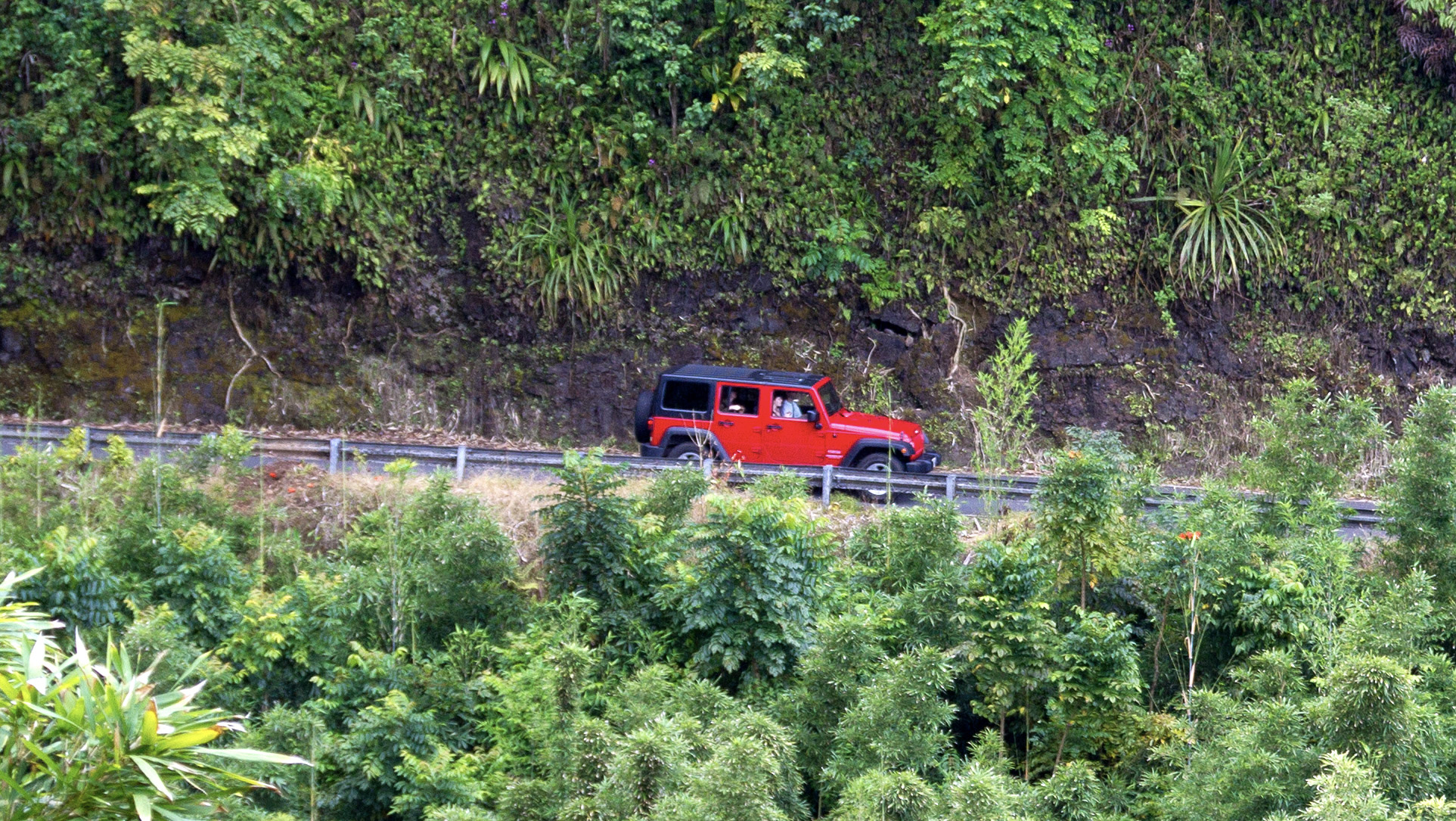
You booked the Jeep because that is what so many people do in Hawaii. For visitors, the open-top Wrangler is part of the island vacation itself. It is the vehicle they picture driving along Kauai’s north shore, heading toward Hana, crossing the Big Island, or exploring West Maui. It sits in the Hawaii vacation imagination right alongside the ocean-view room and sunset dinners.
This week some of those same Jeeps come with a warning few renters expected to hear. The maker is telling owners of certain Jeep Wrangler and Gladiator models to park them outside and away from buildings, structures, and other vehicles because of a fire risk that can occur even when the vehicle is turned off.
For visitors, that guidance runs straight into how Hawaii hotels actually park cars. Park outside and away from buildings is one thing on a driveway when it’s available, and another thing entirely at a resort built around a parking garage or rows of tightly spaced stalls. And there’s no repair available yet, so this is not something you can simply schedule away before your vacation.
Most rental car recalls never become visitor issues. The rental company handles the repair, swaps out the vehicle, and the traveler never knows that anything ever happened.
This one is different because of its timing and reach. More than a million Jeep Wrangler SUVs and Gladiator trucks are affected nationwide, and the recall happened just as Hawaii’s busy summer travel season got started. Many visitors have already booked these vehicles for upcoming trips, while others may be picking one up without realizing it could fall under the recall.
The concern involves a component in the electric hydraulic power steering system. According to recall documents, a wiring connection can develop high resistance, overheat, and potentially ignite nearby materials, and the fire risk can exist even when the vehicle is parked with the ignition turned off.
The official advice is not simply to schedule a repair. Owners are being told to park affected vehicles outside and away from buildings and other vehicles until the repair becomes available. But for rental cars, that advice doesn’t help.
No fires involving affected vehicles have been reported in Hawaii thus far. A recall this size obviously doesn’t mean every affected vehicle will have the problem, only that it is considered a real enough fault to keep the cars away from structures until the fix is ready.
The recall is a national story. What makes it a Hawaii story is where you are supposed to put the rental car. The manufacturer says park affected vehicles outside and away from buildings, structures, and other vehicles, and that instruction does not jive well with many Hawaii vacations. Plenty of resorts park guests in garages or in stalls packed close together, and at some properties that is the only option. So the question gets pressing before you ever start the motor: if your Jeep is affected, where are you allowed to leave it overnight, and does your hotel have a spot that fits the vehicle’s current guidance?
That puts a visitor in an awkward position. The car you rented carries one set of instructions, and the resort you are staying at may have its own rules about what it will and will not park. It is now better to sort that out before you arrive than at the valet stand on your arrival, especially since there’s just no way yet to make the issue go away.
If you have already booked a Jeep for an upcoming Hawaii trip, a few simple things before you arrive can settle it. First, ask the rental company or Turo host whether the vehicle is affected, and specifically whether the VIN has been checked against the recall database. Second, if you have the vehicle identification number, run it through the National Highway Traffic Safety Administration lookup tool found at NHTSA.gov, which went live for this recall on June 11. You can also call the NHTSA Vehicle Safety Hotline at 888-327-4236 or use the SaferCar app. And if you are already standing at the rental counter, it is fair to ask directly whether the car you are being handed is or is not part of the recall, and whether another vehicle is available if it is.
It is hoped that the remedy will be available no later than July. Until then affected vehicles remain under the park-outside guidance.
Don’t assume, however that everything will be resolved next month. Repairs won’t happen the moment the fix is announced. With more than a million vehicles in this recall, backlogs are a reasonable expectation to have, especially on islands with a limited number of service centers.
For visitors, the best approach is to know whether your vehicle is affected before you head out from the car rental desk, let alone before heading for the beach, the mountains, or the island road trip you have been planning for months. A few minutes of checking now can save real hassle on your vacation.
This is a first for us. Have you ever had a rental car recalled, restricted, or even refused by a hotel during a trip? What happened, and how did the rental company handle it?
By Rob and Jeff, Beat of Hawaii.
What changes about a Hawaii trip often shows up long before most visitors notice it. We’ve spent nearly 20 years covering Hawaii as residents, tracking the shifts that can affect everything from where you stay to what you drive, and telling you what they mean before you arrive. Join us →
Get Breaking Hawaii Travel News
Comment policy (1/25):
* No profanity, rudeness, personal attacks, or bullying.
* Specific Hawaii-focus “only.”
* No links or UPPER CASE text. English only.
* Use a real first name.
* 1,000 character limit.
Your email address will not be published.
This site is protected by reCAPTCHA and the Google Privacy Policy and Terms of Service apply.
The rental car companies and Turo vendors should not rent these potentially dangerous vehicles out.
If I was coming to Hawaii after reading this I’d ask to have the vehicle changed, cancel the rental or even the trip.
My advice is just plain don’t. Don’t drive one of the plug in Jeep vehicles. The implementation is very ill thought out for two reasons. Firstly, they only get 17 miles of electric range. Even on Kauai they don’t make sense. Maybe Molokai would be the only place it would be useful. Secondly, the put the battery inside under the back seat. They haven’t killed someone yet, but it is only time. The first time that battery bursts into flames while driving, it will kill the people inside.
This recall is primarily *gas powered* Jeep vehicles, not “plug in” as you say. You can blow up in a gas vehicle, in fact it is more likely than a battery fire. Do some research.
Copyright © 2008-2026 · Beat of Hawaii · All rights reserved.
All trademarks, logos and brand names are the property of their respective owners.
Website built by TechSpokes
Stay abreast of the latest island travel news, tips, deals, and more. Subscribe to our FREE newsletter and let Hawaii come to you. Mahalo!