Notifications can be managed in browser preferences.
Please refresh the page or navigate to another page on the site to be automatically logged inPlease refresh your browser to be logged in
Swipe for next article
Thousands of passengers remain on their ships in the Gulf
Removed from bookmarks
From reproductive rights to climate change to Big Tech, The Independent is on the ground when the story is developing. Whether it’s investigating the financials of Elon Musk’s pro-Trump PAC or producing our latest documentary, ‘The A Word’, which shines a light on the American women fighting for reproductive rights, we know how important it is to parse out the facts from the messaging.
At such a critical moment in US history, we need reporters on the ground. Your donation allows us to keep sending journalists to speak to both sides of the story.
The Independent is trusted by Americans across the entire political spectrum. And unlike many other quality news outlets, we choose not to lock Americans out of our reporting and analysis with paywalls. We believe quality journalism should be available to everyone, paid for by those who can afford it.
Two major cruise lines have cancelled their Arabian Gulf season early amid the Iran conflict as attention turns to getting stranded passengers home.
MSC Cruises and Celestyal have cancelled sailings that were due to take place up to the end of March and passengers have been offered refunds and future cruise credit.
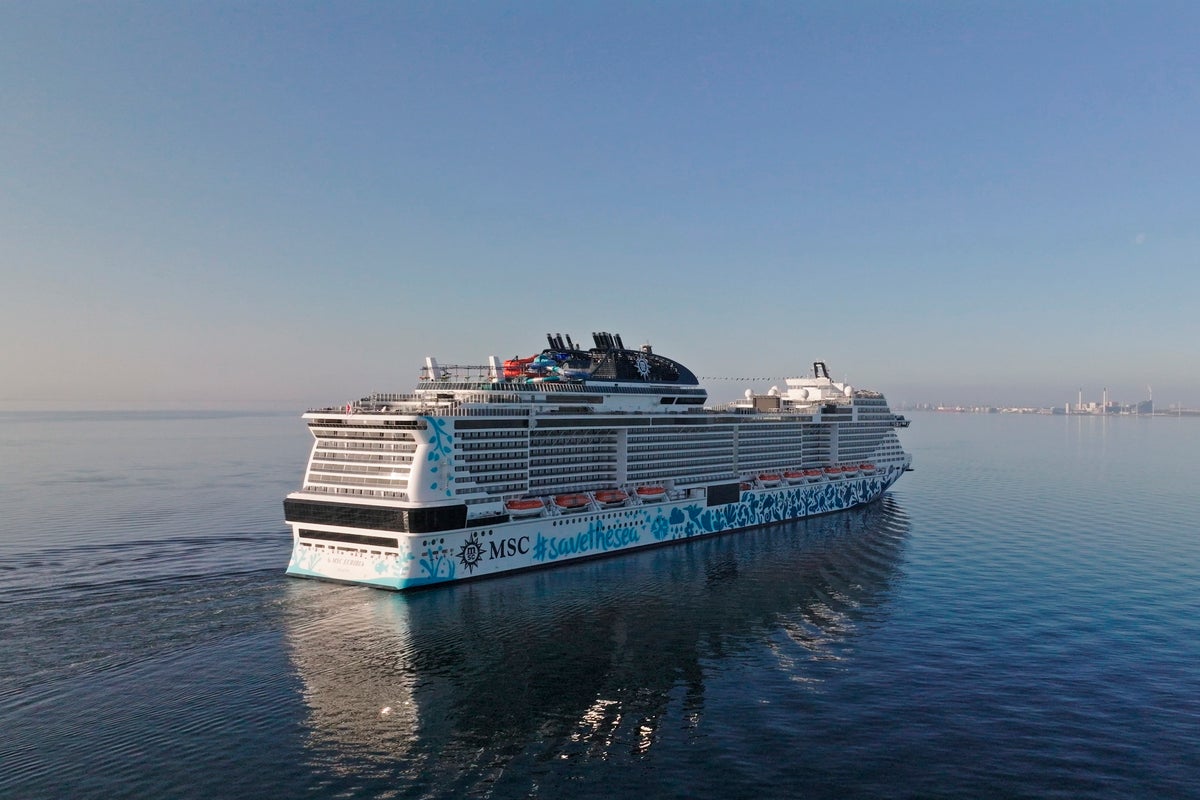
Thousands of passengers remain on their ships including MSC Euribia, Celestyal Discovery and Celestyal Journey. The operators are focusing on helping guests rearrange flights as the United Arab Emirates’ airspace gradually reopens.
MSC Cruises has launched its own flights to help passengers aboard the 6,334 capacity MSC Euribia who are stranded in Doha, Qatar.
A spokesperson said: “MSC Cruises has been working on the safest and quickest way to repatriate our guests and has taken decisive action to accelerate this by launching a dedicated flight operation that currently includes five charter flights with the first flight planned to depart today.
“These flights would see close to 1,000 guests leave the region by Saturday.
“In parallel, MSC Cruises is pursuing every available pathway for the remaining guests – including commercial flights, further charter options and coordinated government-assisted solutions.”
Meanwhile, thousands of passengers have been stranded aboard Celestyal Journey in Doha and Celestyal Discovery in Dubai.
The cruise line has now cancelled scheduled cruises from Doha that were due to take place on 7 and 14 March and from Dubai on 9 and 16 March.
Celestyal said passengers will be advised of disembarkation plans within the next 24 to 48 hours.
The cruise line said in a statement: “Our onboard teams will support guests with onward travel arrangements and provide assistance with transfers or accommodation where required. Guests have been advised to contact their airlines directly regarding flight arrangements and to register with their respective embassies for any official updates or repatriation support.
“We remain in contact with embassies and foreign offices to stay informed of any guidance or assistance being provided for onward travel arrangements.”
Similarly, Mein Schiff has cancelled Gulf sailings that were due to depart this week and in the coming days.
The cruise line said in a statement: “Our top priority is, and remains, the safety and well-being of our guests and crew. The Tui Cruises crisis team is working continuously and in close coordination with the relevant authorities, the Federal Foreign Office, the responsible embassies, international security experts and the security teams of our shareholders, TUI AG and the Royal Caribbean Group, to continuously assess the situation and implement the necessary measures.”
Once passengers are disembarked, the cruise lines will be aiming to get their ships back to the Med for the summer season but that will depend on when it is safe to pass through the Strait of Hormuz.
Passenger rights for cruises can be less generous than those for airlines if there are delays or changes to an itinerary. Often, passengers will not get any automatic compensation, especially if a delay or cancellation is outside their control.
But there are protections in place, especially if you use an ABTA-registered travel agent or cruise brand.
Many cruise lines including Celestyal and MSC Cruises, as well as Tui, are members of travel trade body ABTA in the UK.
According to ABTA regulations, cruise passengers subject to a delay have the right to an alternative cruise or a refund if it causes a significant change to their original booking.
The ABTA rules say: “In practice this means that the delay would have to be quite long. As a rule of thumb, on a 14 night trip, the delay would need to be longer than 12 hours, and longer for longer cruises.”
If a sailing is cancelled or delayed and an overnight stay becomes necessary, the cruise operator should offer the passenger free of charge accommodation where possible.
ABTA says this can be on the ship or ashore.
With airspace limited and the Foreign Office advising against travel to the region, cruise lines will also be expected to help passengers rearrange flights, especially if you booked a package deal that include both the flight and the sailing.
There are steps you can take before even getting on the ship to ensure you are protected financially.
Paying by credit card will give you Section 75 protection on purchases between £100 and £30,000 if the supplier fails to deliver what was promised.
Purchasing travel insurance that covers cruises may also payout for delays, cancellations and missed ports as well as if you are ill and need medical care. You may need specialist policies to cover outbreaks of war or closed airspace though.
You may be covered by insurance if you booked your cruise before the travel advice changed, although cruise lines are offering refunds anyway.
Lucinda Faucheux, co-founder of travel agent network Travel Support Circle, advises keeping hold of all documentation, including terms and conditions, booking confirmations, and any communications with the cruise operator or your agent.
She says: “Being proactive and well-prepared is the best way to protect yourself if things don’t go as planned.”
“Understanding your rights and reviewing the small print on an insurance policy can make the difference between smooth sailing and a costly detour,” adds Simon McCulloch, chief growth officer at insurance brand Staysure.
He says: “It’s not about adding cost but about protecting your holiday from becoming a financial burden, giving you the confidence to sail into the sunset.
Read more: Foreign Office issue UAE safety advice for Britons trapped in Dubai and Abu Dhabi
Join thought-provoking conversations, follow other Independent readers and see their replies
Please refresh the page or navigate to another page on the site to be automatically logged inPlease refresh your browser to be logged in