Inbound Platform Corp.
(TSE Code: 5587)
Explore Southern Kyushu: Travel Tips, Attractions, and Seasonal Festivals
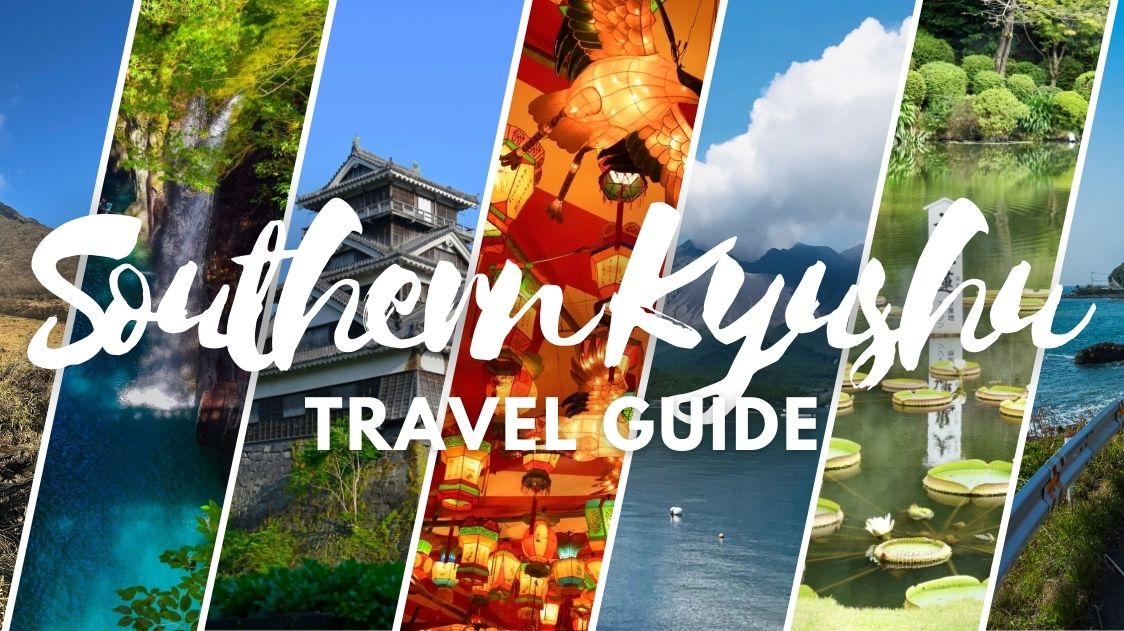
Japan gets quieter, greener, and a little more dramatic once you head south of Fukuoka. Volcanoes start to dominate the skyline, hot springs turn into daily rituals, and regional food becomes fiercely local. Southern Kyushu packs together a collection of landscapes and cultures that reward travelers willing to slow down, explore, and follow the terrain rather than the crowds. With convenient flights linking Tokyo to the region’s airports, including routes operated by Solaseed Air, reaching this part of Kyushu is easier than many first-time visitors expect.
Table of Contents
There are several ways to define Southern Kyushu, but in this article, we use the term in a broader sense. Here, it refers to the five prefectures of Kyushu, excluding Fukuoka and Saga, which are located at the northernmost part of the region: Miyazaki, Kumamoto, Nagasaki, Oita, and Kagoshima.
Located in the southern half of Japan’s third-largest island, this region faces both the Pacific Ocean and the East China Sea. Mountain ranges cut through the interior, active volcanoes shape daily life, and warm ocean currents give the area a milder climate than much of Honshu. Compared with northern Kyushu’s urban centers, Southern Kyushu feels more open, slower-paced, and deeply tied to nature.
Travel here tends to revolve around regional airports and scenic rail lines, rather than high-speed rail alone. That logistical difference shapes the experience: fewer day-trippers, more overnight stays, and stronger connections to local food, hot springs, and seasonal events.
The five prefectures grouped here share a southern climate, but they excel in very different ways. This comparison table highlights what each area does best, helping travelers quickly match destinations to their interests before diving into detailed planning.
Each prefecture plays a clear role in the overall travel picture. Airports are spread out rather than centralized, cities remain human-scale, and the real highlights often sit outside urban cores. Understanding how each area functions helps shape smarter routes and avoid unnecessary backtracking.
Miyazaki stretches along the Pacific coast and feels physically open, with long shorelines and wide skies. Miyazaki Airport is minutes from the city center and serves as a convenient entry point for travelers heading straight to Takachiho Gorge, Aoshima, or the Nichinan Coast. The prefecture’s appeal lies in scenery and atmosphere rather than big-ticket landmarks.
Why you should visit: Coastal nature and mythology in an easygoing, sun-soaked setting.
Kumamoto occupies a strategic position near central Kyushu, anchored by Kumamoto City and its airport. From here, roads radiate toward Mount Aso, Kurokawa Onsen, and rural hot spring villages. The landscape is shaped by volcanic forces, but the cities feel grounded and practical, making Kumamoto an ideal base for exploration.
Why you should visit: Volcanic terrain, historic power symbols, and countryside onsen.
Nagasaki is defined by water. Its main city wraps around a narrow harbor, while outlying islands stretch far into the East China Sea. Nagasaki Airport connects travelers to a region where Japanese, Chinese, and European influences overlap in architecture, food, and urban layout. City sightseeing is compact, but island excursions add depth.
Why you should visit: Layered history and port-city culture, unlike anywhere else in Japan.
Oita is organized around geothermal energy rather than urban scale. Beppu and Yufuin are the main transport and lodging hubs, connected by rail and road, with Oita Airport serving the eastern coast. Sightseeing here moves at a slower pace, focused on bathing, walking, and seasonal food rather than landmarks.
Why you should visit: Total immersion in Japan’s hot spring culture.
Kagoshima sits at Kyushu’s southern edge, facing Sakurajima volcano across its bay. Kagoshima Airport and Kagoshima-Chuo Station function as major gateways, not only for the prefecture itself but also for ferry routes to Yakushima and other southern islands. The city integrates everyday life with constant volcanic presence.
Why you should visit: Active volcano views, strong regional identity, and access to remote islands.
Taken together, these five prefectures form a region best explored in stages. Flights connect Tokyo to each hub directly, while regional trains and rental cars fill in the gaps. The payoff is a journey that shifts naturally from coast to crater, city streets to steam-filled valleys, without ever feeling repetitive.
Southern Kyushu is a good fit for travelers who match destinations to interests rather than trying to see everything at once. Some prefectures shine for food, others for landscapes or hot springs, and a few work best as gateways rather than final destinations. The table below provides a practical shortcut when shaping an itinerary.
For first-time visitors, combining two complementary prefectures often works better than attempting all five. A common pairing is Oita for hot springs with Kumamoto for landscapes, or Miyazaki’s coast followed by Kagoshima’s volcanic south.
Miyazaki feels geographically distant from Japan’s main tourist circuits, and that distance shapes the experience. The prefecture runs along the Pacific coast, backed by forested mountains and river valleys, with a climate that stays mild well into autumn. Sightseeing here leans heavily toward outdoor landscapes and cultural narratives rather than dense urban attractions.
The best-known natural site is Takachiho Gorge, a narrow volcanic canyon carved by the Gokase River. Basalt cliffs rise straight from the water, and early mornings are prized for calm conditions and limited crowds. Nearby shrines link the area to ancient mythology tied to Japan’s imperial origin stories, making Takachiho both scenic and symbolic.
Along the coast, Aoshima Shrine sits on a small island surrounded by wave-shaped rock formations known as the Devil’s Washboard. It’s easily accessible from Miyazaki City and works well as a half-day stop. Farther south, the Nichinan Coast delivers one of Kyushu’s most enjoyable drives, with ocean views, cliffside roads, and quiet fishing towns spaced comfortably apart.
Food in Miyazaki reflects local agriculture rather than elaborate presentation. Chicken nanban, fried chicken topped with tartar sauce, is the prefecture’s signature dish, while locally grown mangoes dominate summer desserts. Surf culture also has a foothold here, especially near Kisakihama Beach, adding to Miyazaki’s relaxed, outdoors-first character.
Miyazaki is most efficiently reached by air. Direct flights with Solaseed Air operate daily from Tokyo Haneda Airport to Miyazaki Airport, with a flight time of approximately 1 hour and 50 minutes. Miyazaki Airport is located close to the city center, allowing quick transfers to downtown hotels, coastal areas, and onward transport to Takachiho.
From the airport, rental cars are strongly recommended for travelers planning to explore beyond Miyazaki City, especially for Takachiho Gorge and the Nichinan Coast, where public transport is limited and schedules are infrequent.
Search flights to Miyazaki
Miyazaki Airport is the main gateway to Takachiho Gorge, Aoshima, and the Nichinan Coast. Flying is the fastest and easiest way to reach this nature-rich region of southern Kyushu.
Search flights to Miyazaki
Kumamoto sits at the geographic crossroads of Kyushu, and that position shapes both its history and its landscapes. The prefecture is defined by Mount Aso, one of the world’s largest active volcanic calderas, whose grasslands, crater rims, and steam vents dominate the surrounding countryside. Life here has long adapted to volcanic conditions, resulting in fertile soil, abundant spring water, and a culture closely tied to the land.
The urban anchor is Kumamoto City, home to Kumamoto Castle, one of Japan’s most important feudal fortresses. After years of restoration following earthquake damage, much of the castle complex has reopened, allowing visitors to explore reconstructed interiors alongside surviving stonework. The city itself is compact and functional, making it an easy base before heading into rural areas.
North of Aso, Kurokawa Onsen offers a quieter contrast. The village is known for its riverside baths and traditional ryokan clustered along narrow lanes. Rather than individual landmarks, the appeal lies in atmosphere, seasonal scenery, and slow movement between baths.
Food in Kumamoto reflects regional pride. Basashi (horse sashimi) is the most famous specialty, typically served with soy sauce, garlic, and ginger. Karashi renkon, lotus root stuffed with spicy mustard, adds a sharper edge to local menus. Clean groundwater also plays a role in daily life, visible in public fountains and traditional wells throughout the region.
For travelers, Kumamoto works best as a base for exploration, especially with a rental car. Roads around Aso provide access to crater viewpoints, pasturelands, and small farming towns that feel far removed from major cities.
Kumamoto is easily accessible by air from Tokyo. Direct flights with Solaseed Air operate daily from Tokyo Haneda Airport to Kumamoto Airport, with a typical flight time of about 1 hour and 55 minutes. The airport is located east of Kumamoto City, close to major highways leading toward Mount Aso.
Airport buses connect directly to Kumamoto City, while rental cars are the preferred option for visiting Aso, Kurokawa Onsen, and surrounding rural areas, where rail coverage is limited and local buses run infrequently.
Search flights to Kumamoto
Kumamoto Airport connects you with Mount Aso, Kumamoto Castle, and Kurokawa Onsen. Fly directly to start your adventure across volcanic landscapes and historic towns.
Search flights to Kumamoto
Nagasaki developed along the curves of a narrow harbor, shaped as much by geography as by history. For centuries, it served as Japan’s primary point of contact with the outside world, and that legacy remains visible in the city’s layout, architecture, and food culture. Hills rise sharply from the waterfront, producing layered cityscapes and some of Japan’s most famous night views.
One of the most visited sites is Hashima Island, commonly known as Gunkanjima. Once a densely populated mining island, it now stands abandoned offshore, its concrete structures slowly reclaimed by wind and sea. Boat tours operate from Nagasaki Port when conditions allow. Within the city, Peace Park and the Atomic Bomb Museum provide a sober, carefully presented account of 1945, set apart from the city’s livelier districts.
Nagasaki’s international past is also reflected in places like Dejima, the former trading post that linked Japan to Europe during the Edo period, and in neighborhoods shaped by Chinese and Western settlement. Farther out, Huis Ten Bosch presents a full-scale European-style townscape, functioning as a theme park with seasonal events and illuminations.
Local food is distinct even by Kyushu standards. Champon, a noodle dish influenced by Chinese cooking, and sara udon are everyday staples, while Turkish rice gathers Western, Japanese, and local flavors into a single plate. These dishes tell the story of a port city that absorbed ideas from many directions.
Nagasaki is connected to Tokyo by direct flights with Solaseed Air from Tokyo Haneda Airport, with a flight time of approximately 2 hours and 5 minutes. Nagasaki Airport is built on an artificial island in Omura Bay and links to the city via airport buses and ferry services.
Once in Nagasaki City, trams and buses cover most sightseeing areas efficiently. Island destinations such as Hashima or the Goto Islands require additional ferry connections, making Nagasaki a destination that benefits from staying multiple nights rather than rushing through.
Search flights to Nagasaki
Reach Nagasaki Airport to explore Peace Park, Dejima, Hashima Island, and the city’s iconic night views. Flying saves time, letting you focus on history, culture, and coastal scenery.
Search flights to Nagasaki
Oita is synonymous with onsen culture, offering some of Japan’s most concentrated and varied hot spring experiences. The prefecture’s volcanic activity shapes both the landscape and local life: steam vents rise from the ground, rivers carry mineral-rich waters, and geothermal energy powers public baths, hotels, and culinary specialties.
The most famous area is Beppu, where the “Hell Tour” showcases steaming hot springs in vivid colors and dramatic formations. Visitors can watch geysers spout, mud bubble, and thermal ponds glow in shades of blue, red, and brown. Nearby Yufuin presents a quieter counterpoint: a compact town of boutique ryokan, art galleries, and cafés set against rolling hills and Mount Yufu.
Oita also offers unique bathing experiences. Sand baths in Beppu allow guests to be buried in naturally heated sand, while steam baths along rivers provide a more active, hands-on encounter with the geothermal environment. Traditional ryokan stays complement these activities, pairing hot water with local hospitality.
Culinary offerings in Oita highlight the prefecture’s local produce and geothermal resources. Jigoku-mushi pudding, steamed using natural hot spring vents, is a popular treat, while Seki mackerel, a prized coastal fish, appears in both casual and fine dining menus.
Oita Airport is the primary gateway, with daily direct flights with Solaseed Air from Tokyo Haneda Airport, taking around 1 hour and 45 minutes. The airport is well connected to Beppu, Yufuin, and Oita City via buses, taxis, and rental cars.
For full exploration, renting a car is highly recommended. While rail lines reach Beppu and Oita City efficiently, many hot spring villages and scenic spots are outside walking distance or public transit routes, making a vehicle essential for flexible travel.
Search flights to Oita
Oita Airport is your gateway to Beppu’s “Hell Tour,” Yufuin’s charming streets, and rejuvenating onsen experiences. Flying gets you to Japan’s top hot spring prefecture with ease.
Search flights to Oita
Kagoshima occupies Japan’s southern edge, facing Sakurajima, one of the country’s most active volcanoes, across a wide bay. The prefecture blends natural drama with a relaxed southern pace, making it an ideal base for both urban exploration and excursions to remote islands like Yakushima.
Within the city, Sengan-en showcases historic gardens and samurai-era architecture, while the bayfront provides views of volcanic activity across the water. The coastline and nearby Kirishima mountains offer hiking routes, scenic drives, and nature reserves for those wanting to escape the city. Ibusuki, south of the city, is famous for sand baths, where visitors are buried in naturally heated volcanic sand, an experience unique to the area.
Food in Kagoshima reflects the region’s ingredients and traditions. Kurobuta (black pork) features heavily, often grilled or in tonkatsu style, while shirokuma shaved ice provides a sweet, refreshing contrast. The prefecture is also a hub for shochu production, giving travelers the opportunity to visit distilleries and sample regional varieties.
Kagoshima functions as a gateway. Ferries and flights from the city connect to Yakushima, Amami, and other islands in the southern archipelago, making it the starting point for nature-focused itineraries beyond the mainland.
Kagoshima Airport offers daily direct flights with Solaseed Air from Tokyo Haneda Airport, with a flight time of roughly 2 hours. The airport connects efficiently to Kagoshima City and Ibusuki via bus and rental car options.
For exploring both the city and nearby volcanic or coastal destinations, a rental car is recommended. Public transport is sufficient within Kagoshima City, but flexible access is required for surrounding natural attractions and island connections.
Search flights to Kagoshima
Fly to Kagoshima Airport and step into a landscape of Sakurajima, Kirishima mountains, and Ibusuki’s sand baths. This southern gateway opens access to both volcanic scenery and nearby islands.
Search flights to Kagoshima
Southern Kyushu enjoys a mild, subtropical climate, but each prefecture has subtle variations that influence travel plans. Coastal areas like Miyazaki and Kagoshima stay warm longer into autumn, while inland and mountainous regions, particularly around Kumamoto and Oita, can see cool winters and occasional snow at higher elevations. Rainfall peaks during the June–July rainy season, and typhoons can affect the region from late summer into early autumn. Travelers should plan accordingly, especially for outdoor activities like coastal drives, hiking, and onsen visits.
While each season has its perks, timing also depends on interests:
Weather considerations:
Winter (Dec–Mar):
Spring (Mar–May):
Summer (Jun–Aug):
Autumn (Sep–Nov):
Southern Kyushu is best approached as a region to explore gradually, appreciating its rich contrast: volcanic interiors and open coastlines, port cities shaped by global exchange, and hot spring towns built around daily rituals rather than landmarks. Travel here rewards thoughtful routing, seasonal awareness, and a willingness to move beyond major hubs.
With multiple regional airports and convenient domestic connections, including flights operated by Solaseed Air, it’s easier to move between these distinct areas than the map might suggest. For travelers looking to see a different side of Japan — one defined by geography, local food, and regional character — Southern Kyushu offers depth without density, and variety without overload.
For more information about traveling around the southern areas in Japan, check the articles below!
Written by
Toshiko
Photographer, journalist, and avid urban cyclist, making sense of Japan since 2017. I was born in Caracas and lived for 14 years in Barcelona before moving to Tokyo. Currently working towards my goal of visiting every prefecture in Japan, I hope to share with readers the everlasting joy of discovery and the neverending urge to keep exploring.
©2026 Inbound Platform Corp. All Rights Reserved