© Hilton
Deborah O’Donoghue is a reporter at Travel Tomorrow. This British-Irish writer lived in the UK and France before moving to Belgium. She has travelled all over the world and worked in car body repairs, in the best fish ‘n’ chip shop in Brighton, and been a gopher in a comedy club, as well as a teacher. She’s a past winner of the Commonwealth Broadcasting Association Short Story Prize. Her début novel, Sea of Bones, was published by the UK’s Legend Press in 2019 and Droemer Knaur Germany in 2021.
Experts forecast that, in 2026, consumers will increasingly seek rest and silence, solo time, reading, culture, and road trips, while finding ways to limit decision-fatigue.
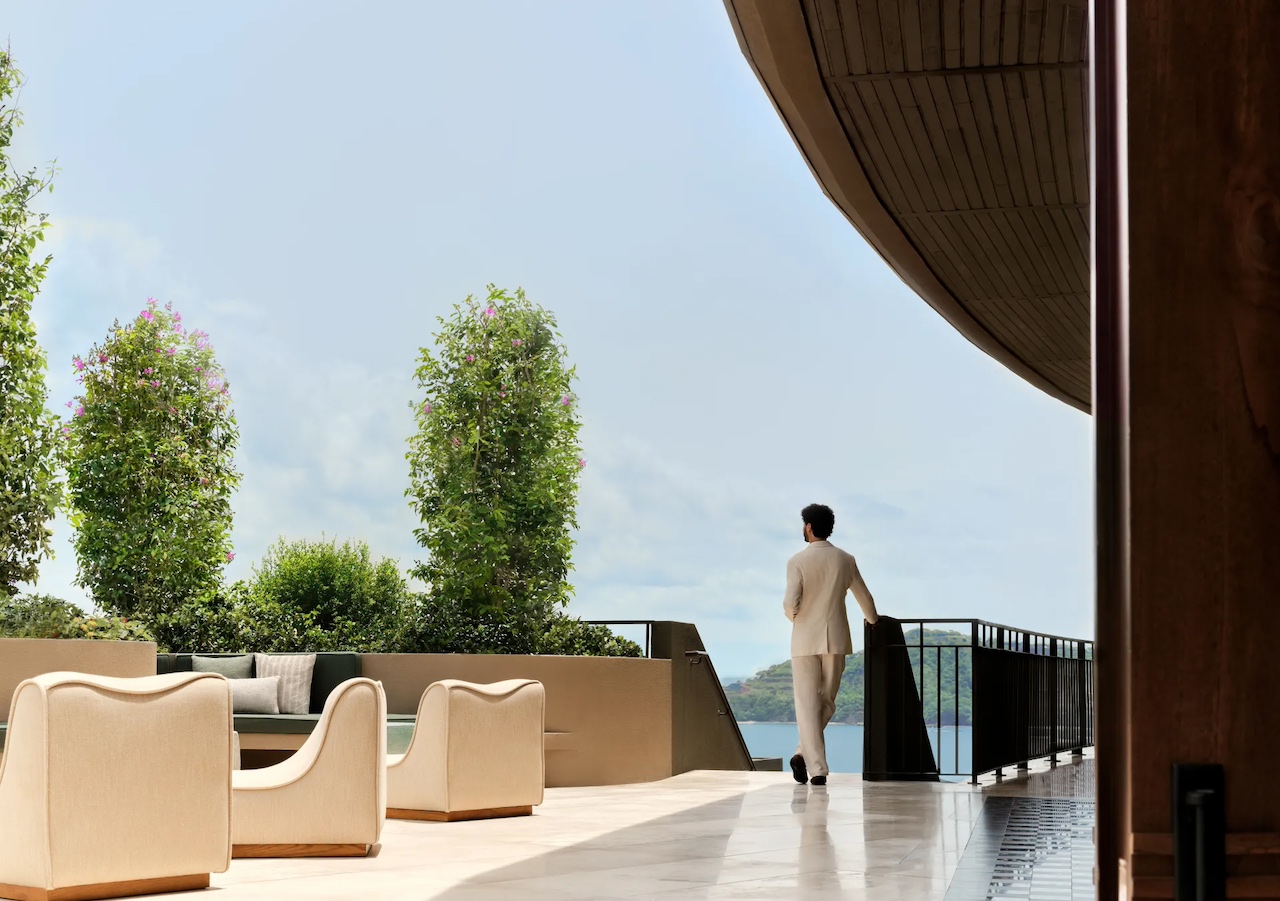
The portmanteau terms headlining various industry analyses say it all. “Hushpitality” or the “quietcation” describes the number one trend named in Hilton’s 2026 Trends Report, with global research showing respondents’ number one leisure travel motivation in 2026 is “to rest and recharge” (56%). Spending time in nature (37%), improving mental health (36%), and spoiling themselves with “me time” (20%) were other important desires, while “restful vacation destinations” such as Cancun, Honolulu, Orlando, Bali, and the Maldives featured among the top brands’ top searches over the last two years.
The trend extends to business travellers, 27% of whom “actively seek alone time during work trips to fuel up or re-energize,” Hilton notes. Over half (54%) of business travellers say they’d take a trip just to get a break from their family or partner.
The BBC also puts quiet vacations at the head of its analysis, citing Hector Hughes, co-founder of the UK’s Unplugged digital detox cabin brand, who says: “Now, over half of our guests cite burnout and screen fatigue as their main motivation for booking.”
Ironically, as consumers try to limit screen time, platforms such as Booking.com, Expedia, Google, and Airbnb are already integrating AI features and bot “agents,” and generative AI is increasingly being employed to provide itineraries, with Hilton pointing out that a “significant 61% of travelers report finding AI tools valuable when planning their trip.” But those same consumers are seeking out human validation by asking concierges in Hilton’s hotels to review their AI-powered plans.
The caution stems from reported AI hallucinations and scams, as well as criticism from sustainability champions and overtourism experts about the way AI’s algorithmic approach pulls in and dumps the same information on everyone, overwhelming destinations—and consumers.
That info-overwhelm is leading to a rise in travel experiences where consumers relinquish decision-making. Hilton says 66% of those traveling with their children or grandchildren will opt for vacations that require minimal planning, like all-inclusive resorts, cruises, and group tours. Catering to this and described by travel PR firm Lemongrass, stakeholders are increasingly offering “mystery” travel options that curate trips and excursions on behalf of travellers, diminishing their decision fatigue and the mental load of constant micro-choices.
Unsurprisingly, as consumers seek peace and “me time,” the popularity of solo adventures and retreats continues to rise. Skyscanner’s “solo” filter jumped 83% globally year-on-year, and Hilton says over a quarter of travellers (26%) “plan to travel alone in 2026,” while nearly half (48%) report adding solo travel days to their itineraries before or after their 2026 family trips. Internationally, more men are reporting the desire for solo getaways, leading to what Hilton calls “a slight rise of the ‘Mancation” in 2026 for those in Saudi Arabia, China, and Türkiye, compared to 2024 data.”
That all chimes with industry reports of hyper individualism driving a surge in specialist tours satisfying individual hobbies, interests, and needs, on which not everyone does the same thing at the same time. What’s more, holidays are increasingly being chosen to deal with ultra-personal life events, such as divorce or bereavement.
Despite the atomisation of interests, reflecting the “solo pleasures” trend, reading on vacation is a pastime enjoyed by growing numbers of people. A historic Tokyo book district was chosen as Time Out’s coolest neighbourhood for 2025, and Future Market Insights says literary tourism generated $2.4 billion last year and is predicted to grow to $3.3 billion by 2034.
Reading has been listed in the top three most anticipated leisure activities for over two-thirds (68%) of US vacationers. Morning Consult report 53% of US travellers expressing specific interest in a dedicated reading retreat (55% of men and 49% of women), while a whopping 67% of millennial Americans expressed a desire to attend one. Compare that to the 20% of people who say they turn to streaming entertainment at a hotel more than ever before. Still, one effect of fiction’s popularity is that travel inspired by film and TV is still making its mark, with shooting anticipated to drive 2026 tourism in places such as the Harry Potter TV location in Cornwall.
A post shared by anabel jimenez (@anabelscorner)
Hilton also highlights the vogue for getting on the road, with 5.9 million hashtags for #RoadTrip globally. The trend is as much about budget and eschewing airport chaos as it is about an Instagrammable lifestyle. Recent data from the United States recreational vehicle (RV) industry shows the appeal of RV holidays grew by almost a third in 2025. The RV Industry Association’s Holiday Travel Intention Survey indicated 28 million Americans planning RV trips between four and seven hours from home this winter – a year-on-year increase of 33%.
Driving also allows travellers to get to less-frequented places and smaller towns—a trend already noted by Travel Tomorrow among social media refusers, meaning that, in the words of Nick Pulley, of Selective Asia, quoted by the BBC, visitors are “turning away from overcrowded hotspots that rarely live up to their over-filtered, uncluttered online image,” and looking instead for “off-grid destinations.”