Published on February 20, 2026
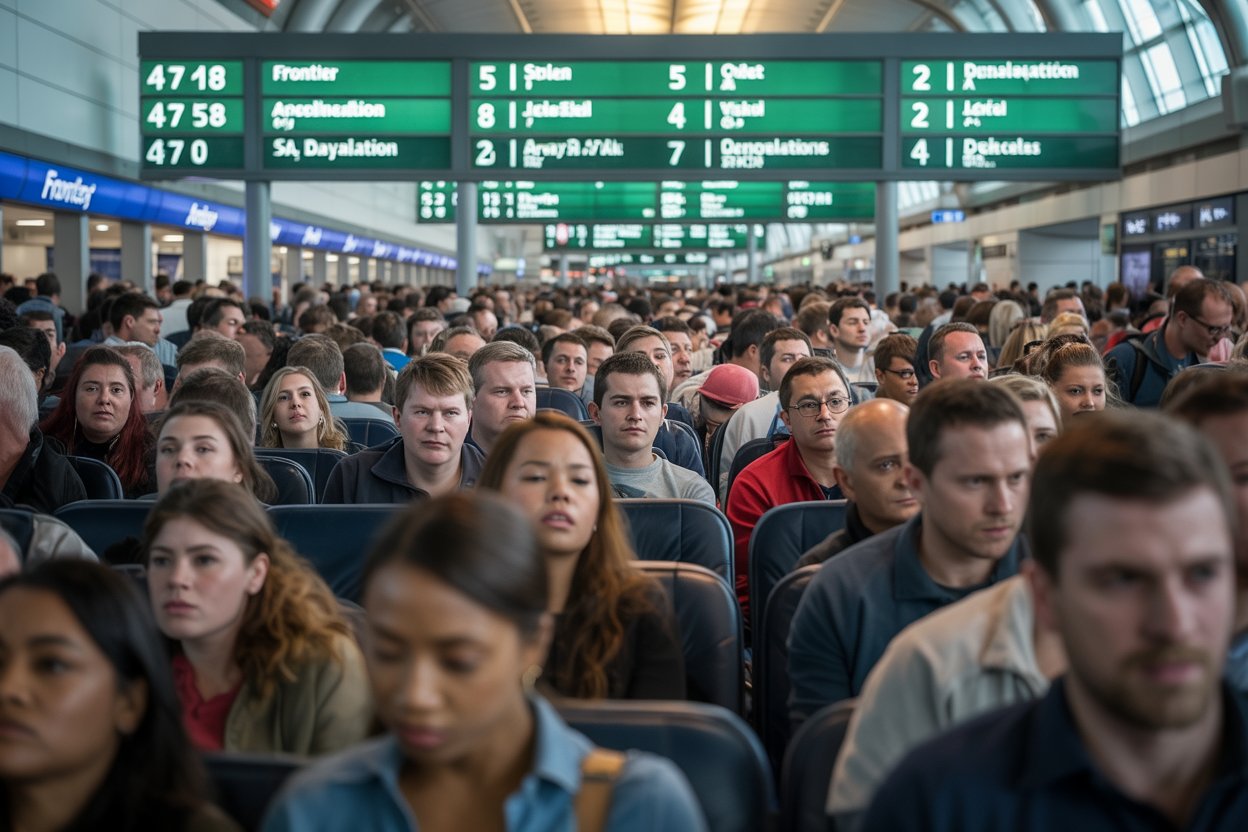
Image generated with Ai
More than 183 flight cancellations and 6,611 delays have hit the US as United, American, Delta, Southwest, Alaska, Horizon and other airlines face severe travel chaos across Atlanta, Minneapolis, Salt Lake City, Denver, Miami, Chicago and beyond, straining operations nationwide. This disruption has been fuelled by a combination of surging demand, weather disruptions, airport congestion and operational bottlenecks, explaining why so many carriers and hubs are simultaneously struggling to keep flights on time.
In the U.S. airline industry, the performance of individual carriers has varied significantly. SkyWest, a regional carrier, had the highest number of delayed flights, with 781 delays, making up 29% of its total flights. However, it was not alone in facing challenges, as other major players like Delta Air Lines and Southwest Airlines also experienced substantial delays. Delta, for instance, had 693 delayed flights (21%), while Southwest reported a staggering 1,238 delays, which accounted for 31% of its flights. Despite these delays, premium services offered by airlines like Delta and American Airlines have seen higher bookings, contributing to the overall surge in ticket sales. Smaller carriers like Spirit and Allegiant also experienced delays but reported fewer cancellations. This performance data underscores the current complexities within the U.S. airline industry, where delays and cancellations remain a challenge, even as travel demand continues to rise.
When it comes to U.S. origin airports, performance varied with some airports reporting higher cancellation and delay rates compared to others. For example, airports like Minneapolis/St. Paul International (MSP) and Salt Lake City International (SLC) reported higher cancellation percentages at 2% and 2%, respectively. These airports also saw higher delay rates, with MSP reaching 23% and SLC at 14%. In contrast, airports such as Hartsfield-Jackson (ATL) and Miami International (MIA) had low cancellation rates, but still experienced delays, particularly MIA with 10% delays. Other airports like Los Angeles International (LAX) saw some of the highest delay rates at 31%, indicating challenges in managing the growing travel demand despite efforts to handle the surge in passengers.
| Airport | Cancelled (#) | Cancelled (%) | Delayed (#) | Delayed (%) |
|---|---|---|---|---|
| Hartsfield-Jackson Intl (ATL) | 11 | 0% | 193 | 16% |
| Minneapolis/St Paul Intl (MSP) | 11 | 2% | 116 | 23% |
| Salt Lake City Intl (SLC) | 11 | 2% | 80 | 14% |
| Denver Intl (DEN) | 9 | 0% | 205 | 20% |
| Miami Intl (MIA) | 9 | 1% | 89 | 10% |
| Chicago O’Hare Intl (ORD) | 8 | 0% | 309 | 23% |
| Detroit Metro Wayne Co (DTW) | 8 | 1% | 103 | 23% |
| Los Angeles Intl (LAX) | 5 | 0% | 274 | 31% |
| Harry Reid Intl (LAS) | 5 | 0% | 251 | 30% |
| Phoenix Sky Harbor Intl (PHX) | 5 | 0% | 200 | 24% |
| Des Moines Intl (DSM) | 5 | 5% | 21 | 22% |
| Aspen-Pitkin County (ASE) | 6 | 4% | 25 | 16% |
| John F Kennedy Intl (JFK) | 3 | 0% | 125 | 19% |
| Dallas-Fort Worth Intl (DFW) | 3 | 0% | 181 | 16% |
| Orlando Intl (MCO) | 3 | 0% | 121 | 17% |
| Seattle-Tacoma Intl (SEA) | 3 | 0% | 86 | 15% |
| Louis Armstrong New Orleans (MSY) | 3 | 1% | 43 | 19% |
| Bradley Intl (BDL) | 3 | 2% | 18 | 13% |
| Reagan National (DCA) | 2 | 0% | 197 | 43% |
| San Francisco Int’l (SFO) | 2 | 0% | 191 | 31% |
| San Diego Intl (SAN) | 2 | 0% | 120 | 33% |
| Newark Liberty Intl (EWR) | 2 | 0% | 79 | 13% |
| LaGuardia (LGA) | 2 | 0% | 72 | 13% |
| Houston Bush Int’ctl (IAH) | 2 | 0% | 64 | 9% |
| Baltimore/Washington Intl (BWI) | 2 | 0% | 52 | 15% |
| Portland Intl (PDX) | 2 | 0% | 44 | 16% |
| Daniel K Inouye Intl (HNL) | 2 | 0% | 29 | 5% |
| Anchorage Intl (ANC) | 2 | 0% | 29 | 7% |
Airports across the United States have also experienced significant disruptions, with some major hubs facing high cancellation and delay rates. Hartsfield-Jackson Atlanta International (ATL), for example, reported 193 delays (16%) but only 11 cancellations. Other airports like Minneapolis/St. Paul International (MSP) and Salt Lake City International (SLC) faced higher cancellation rates, with MSP seeing 2% cancellations and 23% delays. Los Angeles International (LAX) and Harry Reid International (LAS) had notably high delay percentages, with LAX seeing 31% and LAS 30%. Despite these challenges, many airports continue to serve as crucial hubs for both domestic and international flights, handling the surge in travel demand while dealing with the complexities of maintaining timely flight schedules.
Advertisement
More than 183 flight cancellations and 6611 delays have hit US travel as United, American, Delta, Southwest, Alaska, Horizon and other airlines face severe chaos across Atlanta, Minneapolis, Salt Lake City, Denver, Miami, Chicago and beyond, driven by bad weather, congestion and operational strains.
More than 183 flight cancellations and 6611 delays have hit the US as United, American, Delta, Southwest, Alaska, Horizon and other airlines continue to face severe travel chaos across Atlanta, Minneapolis, Salt Lake City, Denver, Miami, Chicago and beyond. This wave of disruption, driven by a mix of extreme weather, airport congestion, tight staffing and operational strains, shows how vulnerable the entire system remains when multiple pressure points collide at once, fully underscoring the scale and reasons behind the crisis highlighted in the headline.
Advertisement
Advertisement
Advertisement
Tags: airline cancellations, airport disruptions, travel chaos, US flight Delays

Subscribe to our Newsletters
I want to receive travel news and trade event updates from Travel And Tour World. I have read Travel And Tour World's Privacy Notice .
Friday, February 20, 2026
Friday, February 20, 2026
Friday, February 20, 2026
Friday, February 20, 2026
Friday, February 20, 2026
Friday, February 20, 2026
Friday, February 20, 2026
Friday, February 20, 2026