
Published on February 27, 2026
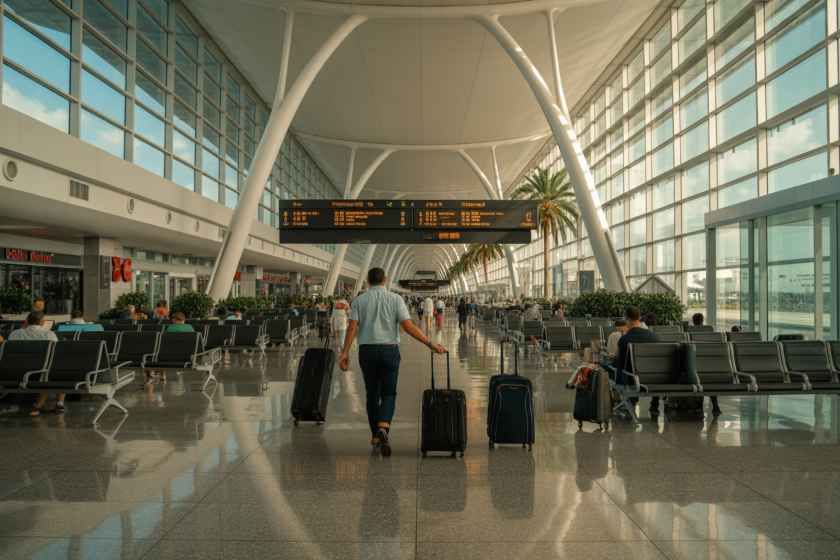
Image generated with Ai
Miami, Florida is preparing for a significant aviation infrastructure upgrade as American Airlines moves forward with a $1 billion expansion of Concourse D at Miami International Airport. The project, known as the D60 expansion, will introduce 17 new gates designed to accommodate larger aircraft and strengthen Miami’s role as a primary gateway to Latin America and the Caribbean.
If you have traveled through Miami before, you already know its position on the global route map. The airport functions as one of the busiest international hubs in the United States, particularly for connections between North America and destinations across Central America, South America and the Caribbean. Now, the upcoming construction aims to reshape how travelers move through this critical transit point.
Tourism Growth
The three-story concourse addition will expand the existing footprint of Concourse D, where American operates the majority of its Miami-based flights. Currently, some gates in the section are configured primarily for smaller regional aircraft. The D60 project will introduce gates capable of handling larger, long-haul jets commonly used for international routes.
For tourists, this translates into broader aircraft compatibility and the potential for additional nonstop services. Larger gates mean more flexibility in route planning, particularly for high-demand destinations in cities such as São Paulo, Bogotá, Mexico City, Buenos Aires and multiple Caribbean capitals.
Advertisement
Advertisement
Another operational change involves passenger flow. The new layout replaces a shared boarding configuration with individual boarding areas for each gate. During peak travel periods, especially winter high season when travelers head to beach destinations across the Caribbean and cruise ports in South Florida, this design could ease congestion around departure zones.
The expansion also includes direct connectivity between the new gates and the airport’s customs processing facilities. For international arrivals, streamlined access to customs and border control areas is a key element of travel efficiency. Faster processing times can improve onward connections for travelers transferring to domestic flights within the United States.
Advertisement
Advertisement
Miami’s geographic location positions it as a natural transit hub. From Europe, travelers frequently connect through Miami to reach Caribbean islands and Latin American cities. From across the United States, passengers funnel through MIA for flights southbound. The D60 project is structured to support that connectivity model.
This infrastructure investment forms part of a broader modernization effort at the airport. In addition to the new gates, American previously outlined plans to develop a new premium Flagship Lounge within Concourse D. The airline also intends to expand its existing lounge footprint by converting the current Flagship space into a larger Admirals Club facility.
For international travelers, lounge access can shape the airport experience during long layovers or delayed connections. Expanded lounge capacity aligns with Miami’s role as a long-haul gateway, where flight durations to South America often exceed six hours.
Tourism stakeholders in Miami-Dade County monitor such developments closely. Airport capacity expansions often influence route planning decisions, airline scheduling and visitor volume forecasts. Additional gates capable of handling widebody aircraft may open opportunities for new international services or increased flight frequencies.
The D60 expansion also intersects with cruise tourism. PortMiami, located a short drive from the airport, remains one of the world’s busiest cruise ports. Many international cruise passengers arrive by air before embarking on Caribbean sailings. Improved gate infrastructure and passenger processing at MIA can support smoother transitions between air and sea travel.
Construction timelines and phased openings will determine how quickly travelers begin experiencing the new concourse. Large-scale airport projects typically unfold in stages to minimize disruption to ongoing operations. Throughout the process, Concourse D will continue functioning as American’s primary Miami hub.
From a tourism perspective, airport infrastructure is often the first and last touchpoint of a destination. For visitors arriving in Miami for beach holidays in South Beach, cultural exploration in Little Havana or onward journeys into the Florida Keys, the airport sets the tone.
As passenger numbers continue to recover and international travel demand remains steady, airports across the United States are upgrading terminals and gate facilities. In Miami, the D60 project represents one of the largest single-airline investments tied directly to international route growth.
Conclusion
You land, you disembark, and you move through customs. Soon, those steps may take place inside a redesigned concourse built to handle more travelers, larger aircraft and expanded global connections. For a city whose tourism economy depends heavily on international arrivals, that evolution is more than construction—it is infrastructure aligned with travel demand.
When the new gates open, passengers departing for Caribbean islands or arriving from Latin American capitals will pass through a modernized extension of Miami’s aviation network. And in a city defined by global movement, that network continues to grow.
Advertisement
Tags: American Airlines Flagship Lounge Miami, American Airlines Miami hub, Caribbean travel via MIA, Concourse D60 project, Florida USA

Subscribe to our Newsletters
I want to receive travel news and trade event updates from Travel And Tour World. I have read Travel And Tour World's Privacy Notice .
Friday, February 27, 2026
Friday, February 27, 2026
Friday, February 27, 2026
Friday, February 27, 2026
Friday, February 27, 2026
Friday, February 27, 2026
Friday, February 27, 2026
Friday, February 27, 2026