As tourism to the US plunges because of perceived risks, some travellers are now second-guessing whether it's safe to visit destinations Trump has recently threatened.
This was supposed to be a huge year for tourism to the US. In 2026, the nation is not only celebrating the centenary of its iconic Route 66 highway and the 250th anniversary of its independence, it's also co-hosting the FIFA World Cup. In a normal year, any one of these events would put a broad grin on the faces of US hotel owners and airline executives. But the events of the past 12 months have been anything but normal.
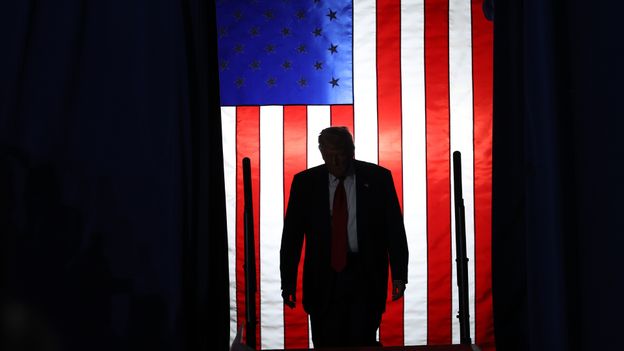
Since taking office again in January 2025, US President Donald Trump and his administration have issued tariffs on longtime allies, repeatedly threatened to annex Canada, detained foreign tourists at the border, implemented mass deportations and may soon be rolling out a programme that scrutinises foreign tourists' social media profiles before they are allowed to enter the country.
As a result, a growing number of nations have issued travel warnings to the US and many would-be visitors have called for an all-out boycott of travel to the country, with some even calling it a "hostile state". According to a report by the World Travel & Tourism Council (WTTC), the US was projected to lose a staggering $12.5bn (£9.35bn) in international visitor spending in 2025. Of the 184 nations analysed by the WTTC and Oxford Economics, the US was the only one forecasted to see a decline in international visitor spending last year.
"Once aspirational, a US trip now feels, for many, like both a political act, a leap of faith for entry and a financial burden," writes Sarah Kopit on the tourism industry website Skift. The site also reported that 46% of travellers polled last year said they were less likely to visit the US because of Trump.
But that was last year.
In the first few days of 2026, the US government has conducted airstrikes in Caracas and captured President Nicolas Maduro; says it will now "run" Venezuela; renewed talks to acquire Greenland; and has threatened Cuba, Iran, Colombia and Mexico. Now, it seems that Trump's actions aren't just affecting travellers' decisions to visit the US; they may be affecting travellers' decisions to visit these other destinations too.
Heather Storgaard, a Danish resident, was planning to visit friends in Greenland in February, but Trump's ramped-up invectives about buying or taking the mineral-rich island by military force has given her pause. "I'm still thinking of going," Storgaard said, "and am still looking, but cautiously."
Jackie Arruda, a Brazil-based hospitality marketer, was also planning to visit a friend in Greenland in May, but is now watching closely to see if she will need to cancel her trip.
"What these recent events [in Venezuela] showed me was that these threats can become real plans very quickly," she said. "If something happens in the next months, I will cancel this trip, but I'm more worried about my friend's safety, the Greenlanders as a nation, their future and the impact and consequences this invasion would have on the whole world."
Meanwhile, Jesús Noguera, owner of the Havana-based Cuba Careo Tours, notes that there has been an immediate impact on tourism as a result of statements from Trump describing the country as a "ready to fall" after Maduro's capture.
"The rhetoric has generated real and immediate alarm for potential tourists coming to Cuba," said Noguera, citing multiple examples of rescheduled plans and concerned emails from prospective travellers. "I am concerned about the future of the sector. I honestly do not see any clear signs of recovery in the near term. Tourism simply does not thrive in instability, uncertainty and a heightened perception of risk."
According to Laura Rendell-Dunn, a spokesperson at the specialist Latin American tour operator Journey Latin America, the US's actions in Venezuela have not impacted the company's bookings so far to Colombia (after Trump warned the nation's President Gustavo Petro to "watch his ass"), nor to Mexico (where Trump has offered to send US troops to fight drug cartels).
While it may be difficult for individual travellers to gauge how seriously to take Trump's proclamations, for British travel agents and tour operators, the decision is simple.
"There's a clear line in the sand," said Sean Tipton, spokesperson for the Association of British Travel Agents (ABTA). "As soon as the Foreign Office gives advice against travel, they will not send anyone. It is a duty of care issue: when you travel against Foreign Office advice, standard travel insurance does not cover you."
More like this:
• Why some travellers are avoiding the US
• How Trump's sweeping new policies could change travel
• Where are all the Canadians going?
While British tour operators and travel agents will not offer trips to places designated as too dangerous by the government, independent travellers can still go, but their travel insurance may be invalidated. For those weighing whether it's safe to visit, Tipson recommends would-be travellers check the FCDO website, which is updated multiple times each day and represents the most current information regarding threats to British travellers.
Of the countries Trump has recently threatened, at time of writing the FCDO advises against all travel to Venezuela and Iran (updated 9 January), and cautions against all but essential travel to some areas of Colombia and Mexico. It does not currently advise against travel to Greenland. Meanwhile, the US State Department's warnings range from "exercise normal precautions" to "do not travel" to certain parts of Mexico; "increased caution" in Cuba and Greenland; "reconsider travel" to Colombia; and "do not travel" to Iran.
Local tourism organisations are considering how to work with the unexpected attention that Trump's recent threats have brought.
"Is it terrible or is it good to get this kind of media focus?" said Inga Rós Antoníusdóttir, a travel executive with extensive experience of working in the Arctic and Nordic regions. "It all depends on what the tourism industry does with the attention."
Antoníusdóttir says that for emerging travel destinations like Greenland, the increased media attention could actually raise greater global awareness of the island and be used as a springboard for the territory to showcase its unique culture, nature and history.
In Iran, Mahdi Eshraghi, CEO of Tehran-based tour agency Surfiran, says that Trump's recent statements to intervene in Iran's protests are not the real issue underpinning the nation's falling tourism demand from the West. Instead, he notes that Americans' long-held negative perceptions about the nation alongside policy shifts have led to travel firms and individuals to avoid marketing and visiting the country.
"In our experience, the decline in demand for travel to Iran has been continuous since the US withdrawal from the nuclear agreement in 2018, rather than a short-term reaction to current political rhetoric," he said.
In the travel industry, perception is everything. Less than two years since the US was named the world's top destination for tourism by the World Economic Forum, the nation is seeing what can happen when travellers feel the risk of visiting isn't worth the reward. While it may be too early to gauge whether would-be travellers feel similarly about other countries Trump has put in his crosshairs, if the first few weeks of January have proven anything, it's that things can change quickly.
—
If you liked this story, sign up for The Essential List newsletter – a handpicked selection of features, videos and can't-miss news, delivered to your inbox twice a week.
For more Travel stories from the BBC, follow us on Facebook and Instagram.
Under the surface of the ocean, 100,000 towering mountains dot the Earth. Their violent currents are key to life.
Investment expert Glen Smith says the pressure on Fed chair Jerome Powell is all about 'political theatre.'
Musician KT Tunstall meets her avatar as Tech Now explores music’s virtual future.
Dark-sky retreats are on the rise, offering nights under dazzling skies to boost calm, clarity, and wonder.
Former Venezuelan minister says firms will not invest without democratic legitimacy.
Initially sceptical of his career, the actor recalls his father’s reaction to one of his early roles.
Brian Szytel says he expects a correction in equity valuations in the year ahead.
The two actors talk to Radio 1's Ali Plumb about the complexities of the British vernacular.
Global financial caution over US strike and capture of Venezuela’s President Nicolás Maduro.
BBC journalist Ammie Sekhon explores the unexpected history of the pop-up ad.
Renowned for her astounding range, the Italian mezzo-soprano's singing is a source of joy for adoring Opera fans.
Expert says the newly released third-quarter figures are a useful indicator of the resilience of the US economy.
Talking Movies presenter Tom Brook looks back at 2025 to pick the top 10 films of the year.
US markets start the week higher on renewed AI enthusiasm after a period of volatility.
Ikea’s meatballs turn 40. We asked Swedes how Köttbullar became a global phenomenon.
Martin Baccardax, senior writer at Barron's, says tech stocks are likely to continue to drive markets in 2026.
Tech Now investigates the latest AI toys on the market and how safe they are for children.
Shares on Wall Street have opened strongly and James Demmert explains what this means for consumers.
Buried beneath Paris since 1912, the ghost river Bièvre shaped the French capital in unexpected ways.
Greg Halter, from the Carnegie Investment Counsel, says the markets have seen a third consecutive year of gains.
Copyright 2026 BBC. All rights reserved. The BBC is not responsible for the content of external sites. Read about our approach to external linking.
How US politics is affecting international travel – BBC
You Might Also Like
FLY91 adds extra Hyderabad–Goa flights to assist stranded passengers amid travel disruptions – ET TravelWorld

'Monumental' high-speed bullet train from Los Angeles to Las Vegas takes major step towards construction – Daily Mail