
Published on March 8, 2026
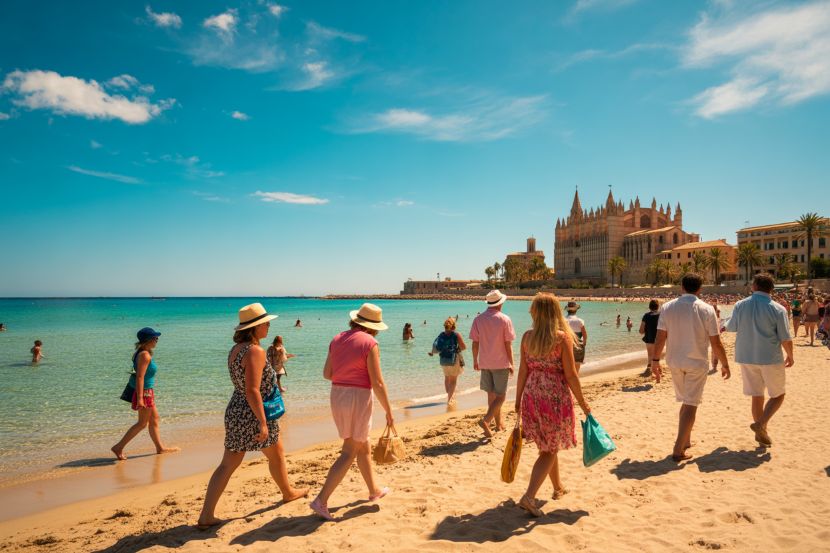
Image generated with Ai
Germany’s travel influence on Mallorca and the Balearic Islands continues to play a decisive role in shaping the tourism landscape of Spain’s Mediterranean islands. For decades, German tourists have formed the backbone of Mallorca’s international travel market, supporting hotels, airlines, and local businesses throughout the year. In 2025 alone, the Balearic Islands welcomed 4,927,029 visitors from Germany, accounting for 26% of all international arrivals, while Mallorca alone attracted about 4.57 million German travellers, representing roughly 34% of the island’s total tourists.
Image generated with Ai
Although visitor numbers from Germany declined slightly by nearly 2% in 2025, tourism leaders believe this change may reflect evolving travel habits rather than a major decline in interest. Instead of concentrating visits in peak summer months, many German travellers are exploring the islands during spring, autumn, and even winter. This shift is important for Mallorca’s long-term tourism balance, especially as the region tries to expand beyond traditional sun-and-beach tourism and promote culture, nature, and experiential travel. For travelers planning a Mediterranean escape, these trends could reshape when—and how—Mallorca is best experienced.
Germany has long been the most influential international tourism market for the Balearic Islands, a Spanish archipelago that includes Mallorca, Menorca, and Ibiza. Visitor data from 2025 highlights how crucial German travellers remain for the region’s tourism economy.
This strong concentration shows that Mallorca is the primary destination for German tourists visiting the Balearics. While other markets such as the United Kingdom and Spain distribute visitors across several islands, German travellers overwhelmingly prefer Mallorca.
Advertisement
The island’s appeal lies in its combination of Mediterranean beaches, cycling routes, gastronomy, and cultural heritage, which align well with German travel preferences for organized, high-quality holiday experiences.
Several factors explain the enduring connection between Germany and Mallorca.
Advertisement
Advertisement
Mallorca enjoys frequent direct flights from major German cities such as Berlin, Munich, Frankfurt, and Düsseldorf. Airlines operate year-round services, making the island accessible even during off-season months.
For decades, Mallorca has been marketed heavily in Germany. Many German visitors return repeatedly, and some even maintain holiday homes on the island.
Advertisement
Advertisement
Beyond beach holidays, Mallorca offers:
These experiences increasingly attract travelers looking for active or cultural holidays, not just coastal relaxation.
Despite the strong relationship, German visitor numbers declined slightly in 2025, dropping by just under 2% compared with the previous year. The decline began around May 2025, interrupting what had previously been a steady period of growth.
From that point onward, only November recorded a noticeable increase in German arrivals. Data from January 2026 also indicated a continued downward trend.
However, tourism professionals believe the shift may not signal weakening demand. Instead, it could reflect changing travel patterns, including:
For Mallorca’s tourism industry, these changes may actually support the long-term goal of reducing seasonal overcrowding during summer months.
One of the most significant roles played by German tourism is sustaining the winter travel economy in Mallorca.
During colder months, many European destinations struggle with reduced tourism. Mallorca, however, benefits from milder Mediterranean weather, making it attractive for winter getaways.
German travellers frequently visit during this period for:
While domestic Spanish tourists also visit, many participate in subsidized travel programs aimed at retirees, which typically involve all-inclusive hotel stays with lower spending levels. German visitors tend to spend more on dining, activities, and excursions, making them particularly valuable for local businesses.
Tourism leaders in the Balearic Islands increasingly emphasize spreading visitor demand across the entire year rather than concentrating it in July and August.
German tourists already contribute significantly to this goal. Compared with some other markets, they are more likely to visit during spring and autumn, when the island offers ideal conditions for outdoor activities.
Travel experiences gaining popularity include:
This evolution supports Mallorca’s broader strategy to move beyond mass tourism and promote sustainable, high-value travel experiences.
If travelers want to experience Mallorca at its best while avoiding peak crowds, several periods stand out:
German travelers have already embraced these seasons, and international visitors may find them equally rewarding.
While visitor numbers may stabilize, German travel spending is projected to increase in 2026.
Estimates suggest that German tourism expenditure could reach around €86 billion, reflecting the country’s strong travel culture. Surveys consistently rank travel as one of the most important consumer expenses in Germany, second only to healthcare.
For destinations like Mallorca, this means future tourism growth may be driven more by quality and spending per visitor rather than sheer volume.
This approach aligns with the Balearic Islands’ strategy to prioritize sustainable tourism, improve infrastructure, and enhance visitor experiences.
Several global factors could influence tourism flows to Mallorca in the coming years:
Mallorca’s reputation for safety, infrastructure, and professional tourism services positions it well to attract travelers looking for reliable holiday destinations.
The relationship between Germany and Mallorca remains one of the strongest tourism partnerships in Europe. Even with modest fluctuations in visitor numbers, German travellers continue to provide stability to the island’s hospitality sector.
As travel preferences evolve, Mallorca is adapting by promoting culture, nature, gastronomy, and off-season travel experiences. If these strategies succeed, the island could transition from a classic summer hotspot to a true year-round Mediterranean destination.
For travelers, that shift could mean more opportunities to explore Mallorca’s landscapes, historic towns, and coastal beauty—without the overwhelming crowds of peak summer.
Advertisement
Tags: Balearic Islands travel market, European tourism trends, German tourists in Spain, Mallorca off season travel, Mallorca tourism trends

Subscribe to our Newsletters
I want to receive travel news and trade event updates from Travel And Tour World. I have read Travel And Tour World's Privacy Notice .
Sunday, March 8, 2026
Sunday, March 8, 2026
Sunday, March 8, 2026
Sunday, March 8, 2026
Sunday, March 8, 2026
Sunday, March 8, 2026
Sunday, March 8, 2026
Sunday, March 8, 2026