
Published on February 19, 2026
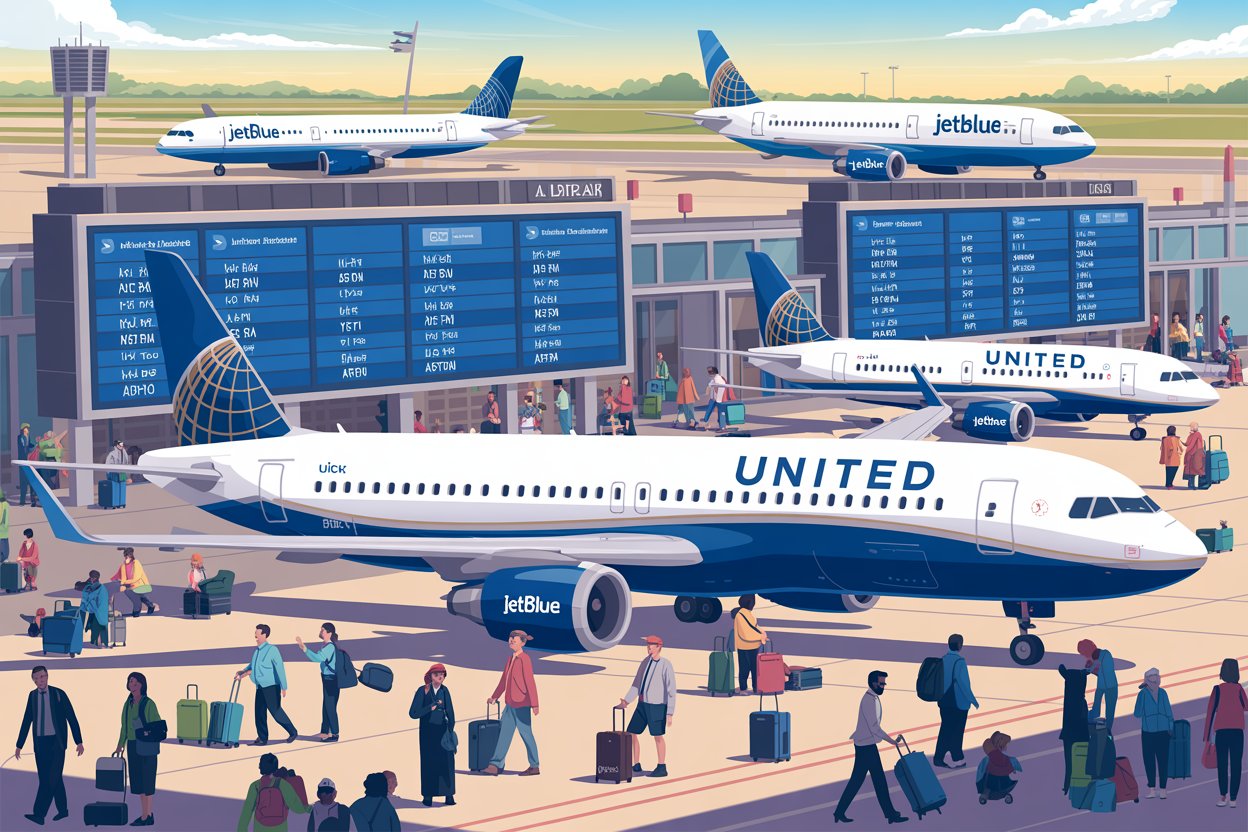
Image generated with Ai
JetBlue Airways and United Airlines have repeatedly denied that any merger is in progress, but speculation about a deeper tie‑up continues to swirl after the two carriers expanded routes under their “Blue Sky” partnership — a collaboration that integrates booking and frequent flyer benefits. The latest development is a new twice‑daily flight between New York’s JFK and Houston’s George Bush Intercontinental Airport (IAH) that begins in May 2026, fuelling industry and traveller talk about where this partnership might be headed.
This is United States‑based airline travel news with implications for domestic route networks and transfer options.
Both JetBlue and United have publicly stated that there are no merger negotiations underway — effectively quashing industry talk about a full takeover or consolidation between the respective airlines. Despite repeated denials, observers note that the Blue Sky partnership still encourages speculation about long‑term strategic alignment.
The Blue Sky collaboration officially allows customers to earn and redeem frequent flyer points across both airlines, as well as book flights on either carrier’s website. United also gets access to JetBlue’s valuable JFK slots — although the earliest planned use of those slots for United flights isn’t expected until 2027.
Advertisement
Advertisement
Competitors and industry analysts have noted that while this collaboration is not a merger, it creates commercial integration that edges closer than a simple codeshare and could evolve over time, especially in highly competitive markets like New York and Houston.
JetBlue’s announcement that it will begin twice‑daily service between New York JFK and Houston IAH starting May 21, 2026 is particularly significant. This gives travellers three daily options between Houston and the northeast, when combined with existing Boston–Houston service.
Advertisement
Advertisement
For business and leisure flyers, this expansion means:
This route growth could attract travellers who previously relied solely on United for connections between JFK and Houston, giving JetBlue a foothold in United’s strong domestic market.
Passengers now have multiple flight times throughout the day, making same‑day business travel and leisure itineraries more convenient across major U.S. eastern and southern hubs.
Under the Blue Sky partnership, travellers can book JetBlue and United flights on both airlines’ platforms and earn or redeem miles in either frequent flyer program. This interline integration improves itinerary planning and offers broader network access than either carrier could provide on its own.
Greater route competition between JetBlue and United, especially on lucrative city‑pair markets, could encourage more competitive fares and promotional pricing — beneficial for travellers booking in advance.
While both carriers deny merger talks, ongoing speculation and analyst commentary suggest markets are watching this partnership closely. The anticipation can confuse some travellers trying to plan for future loyalty and alliance benefits.
Major U.S. airline partnerships can attract attention from antitrust regulators and competitor responses. Past airline alliances have been challenged when they were perceived to reduce competitive options for travellers.
Although the Blue Sky partnership expands booking and loyalty benefits, full interline connectivity and codesharing that would allow seamless flight connections across both carriers may still be temporary or limited. Full itinerary booking across both airlines isn’t yet open as partners refine integration phases.
The U.S. airline industry has been watching multiple strategic moves this year: consolidation attempts, partnerships, and mergers have been discussed or challenged in court. JetBlue’s previous alliance with American Airlines was unwound over antitrust concerns, and its proposed Spirit takeover was blocked by regulators — underscoring the sensitivity of airline consolidation efforts in the U.S. market.
In this environment, the Blue Sky collaboration — which stops short of full merger — offers a more regulator‑friendly pathway to strategic alignment, especially if both carriers can demonstrate competitive benefits for travellers without reducing market choice.
United’s return to JFK via JetBlue slots and reciprocal loyalty benefits also signal how carriers are creatively working around slot constraints and market dominance — with implications for big‑city travel, network connectivity and future transcontinental service growth.
Despite clear merger denials from both JetBlue and United, the expansion of routes like JetBlue’s new JFK–Houston flights beginning in May 2026 and the ongoing rollout of Blue Sky partnership features continue to fuel industry and traveller speculation about deeper strategic alignment.
For travellers, these developments mean more flight alternatives, stronger loyalty rewards options and increased flexibility in planning multi‑leg itineraries. At the same time, regulatory scrutiny and phased partnership rollouts mean the landscape of U.S. airline competition remains dynamic — with potential implications for fare pricing, route availability and long‑term network strategy as the industry evolves.
Advertisement
Tags: airline alliance speculation, Blue Sky partnership expansion, JetBlue United news, JFK to Houston flights 2026, U.S. airline travel update

Subscribe to our Newsletters
I want to receive travel news and trade event updates from Travel And Tour World. I have read Travel And Tour World's Privacy Notice .
Thursday, February 19, 2026
Thursday, February 19, 2026
Thursday, February 19, 2026
Thursday, February 19, 2026
Thursday, February 19, 2026
Thursday, February 19, 2026
Thursday, February 19, 2026
Thursday, February 19, 2026