
Published on January 6, 2026
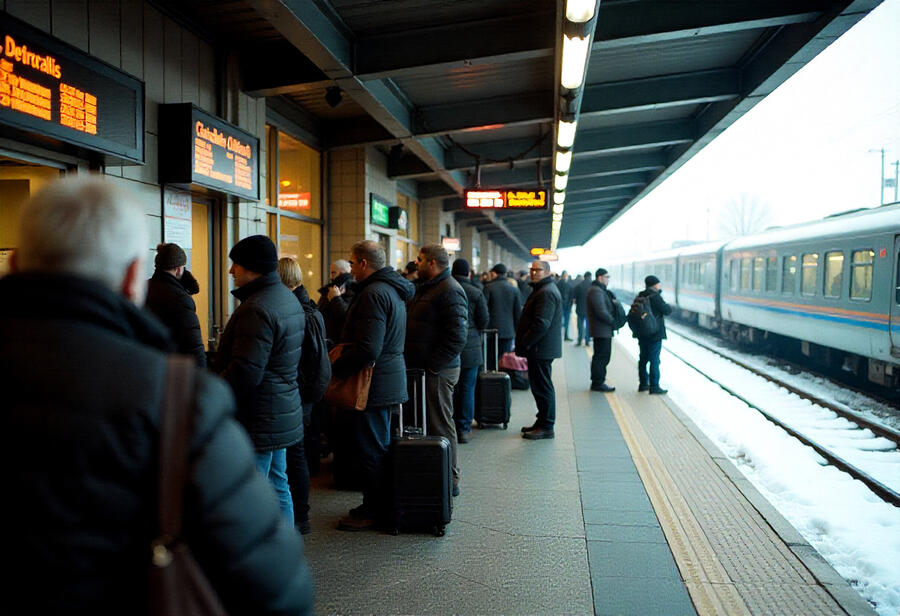
Amtrak faced severe strain during the 2023 holiday travel period due to a combination of weather-related disruptions and ongoing mechanical delays that impacted services nationwide. Winter storms, flooding, and track damage caused significant delays, particularly on long-distance routes such as the Coast Starlight and Empire Builder. These weather challenges, coupled with mechanical assessments and technical issues with trains, led to widespread disruptions, cancellations, and extended travel times for many passengers. Despite Amtrak’s efforts to adjust schedules and reroute passengers, the compounded challenges of severe weather and mechanical setbacks highlighted the strain on the rail system during this high-demand period.
The holiday travel period for Amtrak, which wrapped up on Sunday, January 4, was marked by a mix of delays and cancellations due to adverse weather conditions and ongoing mechanical assessments across its routes. While most passengers were able to reach their destinations, several key services experienced significant disruptions.
Advertisement
Advertisement
Long-Distance Routes: Fewer Freight-Related Delays
Historically, long-distance Amtrak routes face fewer interruptions from freight traffic during the holiday period, and this year was no exception. However, some routes that had been plagued by delays earlier in the year saw improvements. For instance, the Southwest Chief, which had faced congestion issues west of Albuquerque, N.M., in recent months, largely avoided major setbacks this time.
Advertisement
Advertisement
A notable exception was the Coast Starlight, which encountered significant delays, particularly between Dunsmuir, Calif., and Eugene, Ore., due to Union Pacific freight traffic. However, the most serious disruptions occurred further south. On New Year’s Eve and New Year’s Day, track problems south of San Jose, Calif., combined with inspections following flooding and landslides, caused widespread delays. Northbound trains were delayed near Santa Barbara, Calif., and southbound trains were held up near San Jose. By January 4, the Seattle-bound No. 14 had accumulated over six hours of delay at Chumult, Ore. Additionally, track damage from storm surges forced the cancellation of the southbound Coast Starlight, which had to reverse course near Monterey Bay. Northbound No. 14 was also canceled between Santa Barbara and Oakland, with no clear information on whether alternate transportation was offered.
Empire Builder and Borealis Face Additional Setbacks
Advertisement
Advertisement
The Empire Builder, a vital long-distance route, was also significantly affected by delays. These disruptions were caused by a mix of extreme weather conditions, mechanical issues, and crew shortages. On December 29, the eastbound Empire Builder faced delays due to a “communication outage” near Grand Forks, N.D., which impacted freight schedules. As a result, eastbound No. 8 and westbound No. 7 were both delayed. No. 7 was held for nearly five hours at Minot, N.D., waiting for a new crew, while the following eastbound train faced a three-hour delay due to the same reason.
The troubles continued into January 2, when the Empire Builder’s Seattle section struck an obstruction west of Spokane, damaging several passenger cars. By January 4, the train had already accumulated a seven-hour delay at Minot and an additional two hours at Grand Forks due to mechanical maintenance. Ultimately, Amtrak made the decision to terminate the train at St. Paul, Minn., and bussed passengers to Chicago, with the train arriving nearly nine and a half hours late.
Meanwhile, the westbound Borealis service faced its own set of challenges. On January 3, the train was halted at La Crosse, Wis., after an electrical problem in one of its coaches caused damage to the train’s power systems. The train was sent back to Chicago without passengers, and buses were used to replace the eastbound service the following day.
Northeast Corridor: Acela Delays and Technical Issues
Amtrak’s Northeast Corridor, connecting cities such as Boston, New York, and Washington, D.C., also faced delays due to mechanical issues, particularly affecting its Acela fleet. Both older and NextGen Acela sets were impacted by ongoing technical problems, leading to delays and unscheduled stops.
One of the major disruptions occurred on December 29, when the pantograph of Acela No. 2151 became entangled with the catenary system in Boston, causing delays that lasted for several hours. Additional cancellations followed throughout the week, including the southbound NextGen Acela No. 2247 on January 4. These issues were compounded by fluctuating scheduling, leading to inconsistent departures on the Northeast Corridor.
To address these disruptions, Amtrak made adjustments to its Acela assignments. Starting on January 5, four out of seven Boston–New York Acela departures will feature the new NextGen trains, and five out of ten Acelas between New York and Washington will be upgraded with NextGen units. While the total number of Acela departures has been reduced compared to the previous month, the new NextGen trains are now scheduled more consistently throughout the day, providing better service for passengers.
Ongoing Efforts to Minimize Disruptions
Despite the ongoing disruptions, Amtrak continues to adapt its operations to minimize the impact on travelers. While adverse weather conditions and mechanical issues caused significant delays, the majority of passengers were still able to reach their destinations, though they faced extended travel times. Amtrak’s ongoing mechanical assessments and track inspections are part of an effort to maintain reliable service, particularly during busy travel periods.
Amtrak faced severe strain during the 2023 holiday travel period due to weather disruptions, including winter storms and flooding, coupled with ongoing mechanical delays, resulting in significant travel disruptions and cancellations across the country.
Amtrak’s proactive approach to managing these challenges, through rescheduling and adjusting its fleet, ensures that service disruptions are kept to a minimum. Despite the setbacks during the holiday period, Amtrak remains a critical part of long-distance travel in the U.S., and efforts to enhance the reliability and consistency of its services are ongoing.
Advertisement
Tags: Amtrak, Railway News, Travel News, Weather Disruptions

Advertisement
Tags: Amtrak, Railway News, Travel News, Weather Disruptions
Subscribe to our Newsletters
I want to receive travel news and trade event updates from Travel And Tour World. I have read Travel And Tour World's Privacy Notice .
Tuesday, January 6, 2026
Tuesday, January 6, 2026
Tuesday, January 6, 2026
Tuesday, January 6, 2026
Tuesday, January 6, 2026
Tuesday, January 6, 2026
Tuesday, January 6, 2026
Tuesday, January 6, 2026