
The Universities of Huddersfield and Southampton have joined forces under the UK Rail Research and Innovation Network (UKRRIN) to support changes in Network Rail’s hot weather policies. The resulting work will mean a significant reduction in travel disruption for rail passengers when temperatures soar.
When Britain enjoys a summer heatwave, rails in direct sunlight can be up to 20°C hotter than the air temperature. Although laid to be in tension at temperatures of up to 27°C, continuously welded steel rails cannot freely expand at higher temperatures. This can lead to significant compressive stresses during hot weather.
If the track structure is unable to resist these stresses—owing to factors such as track geometry defects, reduced lateral resistance, or forces imposed by passing vehicles—the rails may deform laterally, causing the track to buckle. Most of the network can operate normally at air temperatures of around 30°C, but on hotter days some locations may be at risk of buckling. Network Rail must then introduce localised speed restrictions, because slower trains exert lower forces on the track, thereby reducing the chance of buckling.
The existing rules were put in place 30 years ago. Since then, changes in track design have made it more resistant to buckling, and new train designs are more ‘track-friendly’, reducing the forces they apply. Meanwhile, climate change is increasing the frequency of very hot days, but improved track management by Network Rail is helping to control the incidence of buckles occurring.
Paul Molyneux-Berry, Principal Industrial Fellow at the University of Huddersfield’s Institute of Railway Research (IRR), explained the work carried out. “We have analysed 30 years of data to characterise the buckling risk of different track types and developed a simple measure of the severity of a track buckle. Vehicle dynamic simulations of many train types and buckle geometries were then carried out to determine safe speeds in hot weather.”
The IRR’s work has been applied by Network Rail to justify an increase in the speed permitted in hot weather, without an increase in risk. This makes a significant difference to line capacity, reducing delays and cancellations on hot days. The University of Southampton modelled how a track buckle can grow under the passage of a train, for a range of train types, speeds and temperatures. In conjunction with the IRR’s work, this has enabled Network Rail to define a simple procedure to keep trains moving safely, albeit slowly, over mild track buckles.
Martin Frobisher, Group Safety and Engineering Director at Network Rail, personally expressed his gratitude for the outstanding collaborative work of the two academic institutions. He said: “This research will significantly improve the rail network’s resilience and reliability during extremely hot weather, making a real difference to passengers this summer by reducing delays and cancellations, and most critically, the number of stranded trains.”
The new processes for passing trains over buckles at slow speed were used by Network Rail to keep trains moving for the first time during the hot weather in May 2026, while the faster speed limits have been implemented on a number of routes, helping to reduce summer timetable disruption.
Professor Paul Allen, Director of the IRR and lead for the UKRRIN Centre of Excellence in Rolling Stock commented: ““This project is a fantastic example of how the UK’s leading railway research universities can work together as part of the UKRRIN network, making a real difference to our railways. The work forms one of many impactful projects UKRRIN partner universities have delivered since its inception in 2018.”
Professor William Powrie, lead for the UKRRIN Centre of Excellence in Infrastructure added: “That UKRRIN exists is a testament to an investment by UK Research and Innovation (UKRI) Research Council some two decades ago, which kick-started rail research in UK universities and funded the development of the technical and scientific knowledge and expertise now being deployed for the benefit of railway systems in the UK and around the world.”
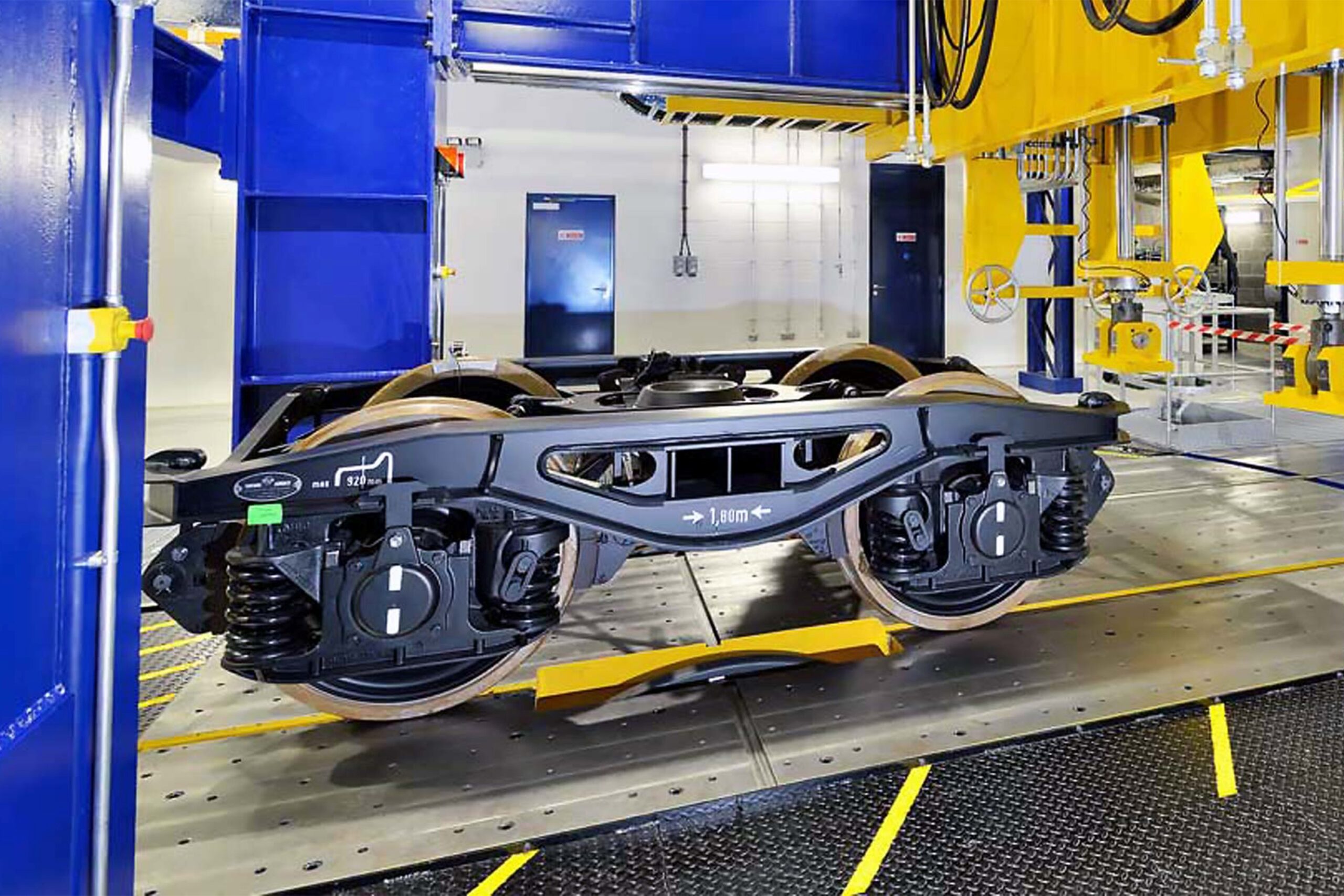
The University’s IRR comprises a team of over 30 dedicated academic research staff and is equipped with state-of-the-art full-scale test facilities where it can simulate and test rail systems. It has built up a reputation as a world-class centre for railway engineering research and innovation, working closely with industry and academic partners to deliver impactful research for a safer, more reliable and cost-efficient low-carbon railway.
Lead image: The HAROLD test rig at the University of Huddersfield’s Institute of Railway Research (Photo: University of Huddersfield)
Rail UK, from Rail Media, is updated regularly with news, views and features. Covering industry and project developments from around the UK rail industry.
[email protected]
SUBSCRIBE TO THE NEWSLETTER
© 2013-2025 Rail Media. All rights reserved.
 This work is licensed under a Creative Commons Attribution-NonCommercial-NoDerivatives 4.0 International License.