
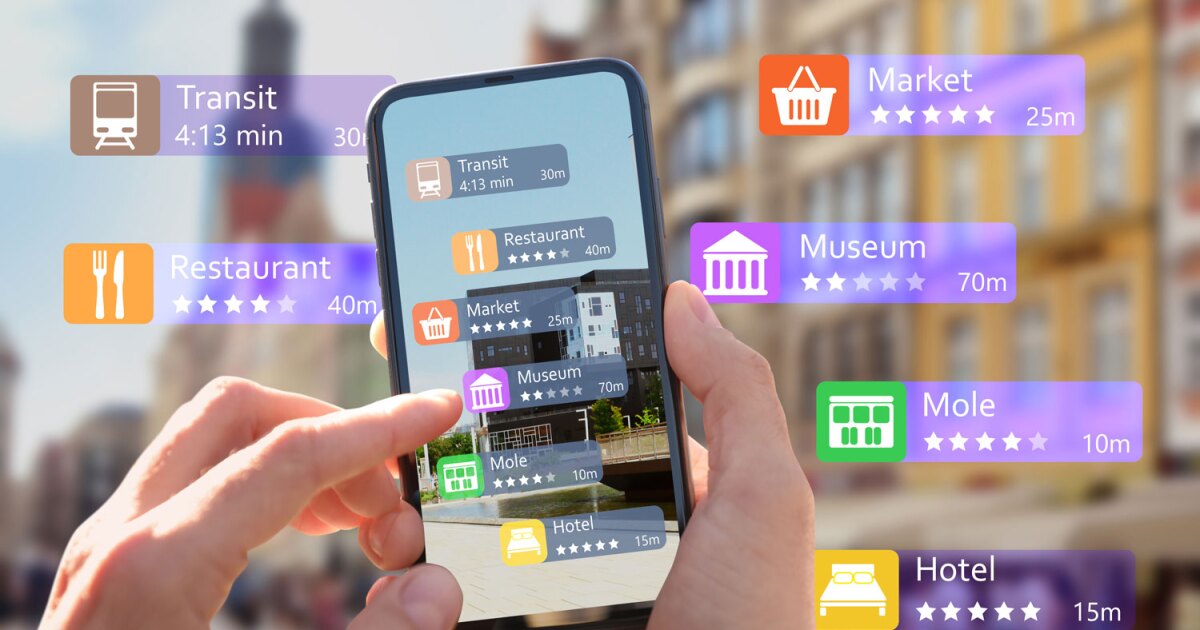
As summer is quickly approaching, the summer vacation season is among us. Many people will take a week or two to let off some steam, re-set, and explore a new corner of the world.
A little preparation before departure can reduce culture shock in foreign places.
Part of this preparation can include apps that will allow people to pick where to eat and how transportation works in the destination they are traveling to.
We’ll also discuss President Trump’ idea that taking a hands-off approach to AI will allow the tech to grow and stay competitive with other countries, particularly China.
But the White House may be forced into overseeing AI technology if it wants to partner with companies for use in government affairs.
Then, we’ll look at a new AI home companion to a majority of America taking advice about their health from influencers, what is happening this week in technology?
Guests:
This transcript is generated with AI. To ensure its accuracy, review the audio file.
Amy Juravich: Welcome to Tech Tuesday from All Sides with Amy Juravich, a show where we share stories about science, technology, and the future of our environment. As summer is quickly approaching, summer vacation season is approaching as well. Many people will take a week or two off and let off some steam, reset, and maybe explore a new corner of the world.
For people traveling outside of the states, it might be a bit overwhelming to navigate different cultures. Culture shock can have a real hindrance on trip expectations. A little preparation before departure can make travelers more emboldened to the world. Part of this preparation can include apps that will help people do everything, from pick where to eat to explain how transportation works.
And to give us some summer travel tips for traveling abroad, we have New York Times contributing writer, Ruffin Prevost. His most recent piece for the Times was entitled “The Apps You Need for Your Next Trip Abroad.” Welcome to the show, Ruffin.
Ruffin Prevost: Hey, thanks for having me.
Juravich: So some of the apps that usually work in the United States for like ride sharing, ride hailing, banking, maps, those don’t always work in other countries. So let’s just start with an example. Does Uber and Lyft that we know well here, does that work anywhere you’re going?
Prevost: They work in a lot of places, but not every place. And some of the places where they do work, they don’t work as well as other more popular local apps. I’ll give you an example. I was in Buenos Aires in March and Cabify is kind of their Uber there. Uber worked. I was able to hail a ride with it. The cars were a little sketchy.
The drivers were a a little surly. Um, I remembered this article was coming up. I had Cabify on my radar. I downloaded that and, um, the cars were nicer. The drivers were better and it was a little bit cheaper, but generally it worked better than Uber.
So across the line, this is the case. A lot of apps that Google maps works in a lot of places works really well, but not everywhere there are other better alternatives. So it’s worth doing a little research. If you rely on apps and you’re into that, um to check that out before you go.
Juravich: So tell me how we know, depending on where we’re going, how we which apps we need, if we want to prepare before we get there. Is there an easy way to do it, or is it a lot of just like doing searches and figuring it out?
Prevost: The easiest way I’ve found is a website, which is now also an app called Travel Ready R-E-D-Di. It’s a pretty cool little site where if you go on that website, type in the destination country you’re going to, it will give you a little report of, this is the currency they use there, these are the apps for the top things you might wanna do, ride hailing, dining reviews and reservations, public transit, that kind of thing.
It’ll even advise you about the weather depending on when you want to go. So I would recommend Travel Ready, which when I wrote this was a website and the owner has since made it into an app so you can carry it with you wherever you go as well. And then that will give you a good idea of what apps are popular and most useful and reliable wherever you’re going.
Juravich: That’s such a 2026 thing. It’s the app you need to know what apps you need. Is that right? All right, so that’s what you recommend, travel ready, but ready is spelled R-E-D-D I. Okay, so basically with something like that, you just type in the country you’re going to and then what’s gonna happen? What’s it gonna tell you?
Prevost: Uh, it will actually take you to a page for that country that lays out all the different apps you need for what you want to do and links to go download those apps if you want go ahead and download them. And I would recommend that, um, you know, let’s say you’re going to Europe and you’re gonna want to use, uh, bolt, which is a ride ride hailing app.
That’s a little bit better there than Uber in my opinion, go ahead and download it here if you’re able to, not every country. Not every app will allow you to download it until you’re in that country. So there’s some apps for Japan, for instance, that you can’t even download from the server until you are in Japan.
For example, if you’re in Europe, download that, go ahead and enter your password, your ID, your credit card information so that when you want to hail a ride, once you’re Barcelona, you’re not standing on the street corner, trying to type all that information in when you, when you’re really hungry and tired and cranky.
Juravich: Well, that’s what I was just gonna ask. What if we wanted to practice beforehand before we got on the trip, but I guess it won’t work if we try to practice it in the United States.
Prevost: Some, most will, some won’t. Move It, for instance, is an alternative to Google Maps. City Mapper is another popular alternative to Google Maps, City Mappr works great in New York. And a lot of people prefer it there in New York to Google maps.
So if you’re going to a place where you do your research and it’s recommended, hey, get City Mapple. It works a little bit better than Google. Go ahead and download it here, try it out like you said, and practice with it just so you understand the interface and figure out how to use it before you really need it.
Juravich: I’ve never heard of City Map. Is that because I don’t live in New York? Is that why?
Prevost: I live in rural Wyoming, so I did a lot of research for this story and I’d never heard of it either. But apparently for people using public transit, it’s great for, you know, when there’s three ways to enter or exit a subway stop to go underground, you’ll save some steps by going in the right entrance and going right out through the right exit. So it has some of those details that Google doesn’t always have.
Juravich: This is Tech Tuesday from All Sides on 89.7 NPR News. We’re talking about summer travel tips for traveling abroad with journalist Ruffin Prevo, who wrote about this recently for the New York Times. Let’s talk about eating. What about finding a place to eat when you’re abroad? Is Yelp helpful or are there other apps that other countries use to rate restaurants and maybe Yelp is not universal?
Prevost: Yeah, I don’t even know if Yelp is still helpful in the US.
Juravich: Yeah, that’s true.
Prevost: Google Maps I like in the U.S., the reviews are pretty on point, and it’s super fun to read about.
Juravich: You want, yeah, you want recent reviews too, yeah.
Prevost: But for instance, in Japan, they have an app there called TableLog and it’s what the locals use. And the locals are tough in Japan on their restaurants. There are not a lot of five star reviews there. If you get three and a half, four stars, that’s gonna be a major culinary experience for you.
So I like, that’s a, for instance of a very specific local one that they use in Japan because you’re getting local reviews from local people and they’re recent. And they’re in English. That app only recently last year launched an English language version.
So that’s also something, you know, I should mention while we’re talking about this is make sure you have your app set and you can go in and usually choose language settings for it. Choose English if that’s your language. Before you go, it’s a little bit easier than fiddling around with it once you get there.
Juravich: Yeah, well, I can imagine, especially in Japan, if you speak English, you would need, you would have trouble even figuring out in the settings what you’re doing, right?
Prevost: Yeah, I use an app called The Fork in Europe a lot. It’s kind of an alternative to OpenTable. They have reviews and you can also make reservations. In Italy, it’s La Forchetta.
Juravich: Okay.
Prevost: That’s kind of one that’s used throughout Europe. All of this is really changing too with dining right now. It’s kind a dynamic scene because American Express and some other big players in the credit card business are getting in and buying up apps like Rezzy.
So there are a lot of local upstarts and a lot changes for dining apps. And if you’re into kind of food tourism, definitely do some research and find out. Sometimes it’s not just one sometimes it’s a couple of apps that dominate the local space wherever you’re going figure that out before you go because If you use Rezzi or open table odds are they won’t work
Juravich: Yeah, that’s why I was going to ask you about making reservations at restaurants, because everyone, you know, if you’re on vacation, you want to have good dining experiences, but you either need the right apps or you need to know what you’re doing. Is making a phone call sometimes just as useful for booking a table, or should you really kind of embrace what app is being used in the country you’re in so you can have the best dining experience?
Prevost: Bone calls are great, especially for small mom and pop places that maybe aren’t, you know, to be on one of these booking apps, they charge you a commission for every reservation they make. So a lot of the smaller restaurants, they’ll just put their phone number up on their website or in their window and you can use WhatsApp to call internationally overseas without any strings or fees.
As long as you have wifi, you can get on WhatsApp and call that restaurant. Or text them and a lot of them will text you back and you can just text them and say, hey, I’m looking for a table for four tonight at eight o’clock, what can you do? And they, you know, hey we’ve got you down or we can get you in at 8.30 or whatever.
I would try WhatsApp and then Instagram is also helpful. I don’t use Instagram a lot, but I have an account and it’s helpful for restaurants to market themselves and they use the messaging features on it to book tables.
Juravich: And to see pretty pictures of the food, I’m guessing.
Prevost: Absolutely. Yeah.
Juravich: Let’s talk a little bit about language. Experts recommend learning at least a survival level of the language of the country you’re traveling to if you don’t speak the native language. What would you say is a survival-level of language, and do you think you need to learn at least few words here and there?
Prevost: I just got back from Amsterdam and it’s the first country I went to where I didn’t try and learn that survival level before I went because everyone there spoke excellent English and I just would feel stupid mangling Dutch when they all speak great English.
But I’ve been to Turkey, I went Japan last year and tried to learn enough Japanese to thank you, please, where’s the bathroom? Can I have the check? But beyond that, a survival language is, I would say, a caveman talk is how I’d describe it.
It doesn’t have to be perfect grammar, but, you know, me go here, where is this? People are great with that. Think about how you react when a foreigner comes to the US and they’re trying to communicate with you in English. You’re not judging them on their grammar, you’re judging them on their effort and enthusiasm to communicate with you.
So I’m a big advocate of telling people, Learn as much as you can and don’t worry about the grammar and pronunciation is helpful, but not key. It’s more about those basic words and pleasantries and phrases that grease the wheels of everyday interactions. You’ll have a much better time communicating with people on their own terms and their own language.
Juravich: Do you recommend people trying out Duolingo for a couple months before their trip?
Prevost: I’m not a big fan of Duolingo. That’s OK. You’re a d-
Juravich: That’s okay. You’re allowed not to be tell me. Tell me what you do use. Yeah
Prevost: Yeah, you can try it and if it works for you, that’s that’s it’s free and you’re getting some mileage from it um I use pimsleur which is a paid app but it’s it’s an odd it’s an audio app and I use it when I walk my dog who’s An enthusiastic dog that needs an hour of walking every day. So
Juravich: I thought you were going to say as a dog who’s good at languages.
Prevost: She’s kind of getting what she wants through nonverbal communication.
Juravich: OK, got it. Yeah.
Prevost: I listened to that Pimsleur app when I walk, you listen, and then you repeat. And it’s just, um, spaced learning with repetition over time is the key. And Duolingo uses that same technique, but you’re learning some nonsensical phrases and in Duoling, oh, you’re never going to use. So try and use an app that at least again, is geared for if travels your thing and that’s why you want to learn language geared toward, you know, hotels, restaurants. Attractions, the things you’re going to be doing when you travel.
Juravich: So you’re in Wyoming, so you’re walking down the streets of your city in Wyoming speaking different languages every other month.
Prevost: Well, it’s a mild of my mailbox and no one sees me but the two neighbors between me and my mailbox. Okay, there you go. They do occasionally get a little bit of a different language here and there.
Juravich: What do you recommend for people about their phone when they’re traveling abroad? Do you recommend that they get an international phone plan for like a few, for the week or two? Or do you just recommend using the WiFi and WhatsApp like you said?
Prevost: I’ve done both and it really, for me, it depends on your, uh, level of skill, technical ability, patience, and budget. If you can afford the 10 bucks a day to, you know, go on the international plan or whatever your cell servers charges. You’re there for a week and the $70 isn’t gonna cramp your style, that’s great. I recommend it. It’s much easier. But again, I was in Amsterdam for a weak. I used this, an eSIM for 15 bucks and wifi.
Juravich: What’s an eSIM?
Prevost: An eSIM, it’s a electronic code you download to your phone that works in a foreign country, that’s set up for that foreign country. And you buy it in advance. There are several reputable suppliers out there. Again, that’s one of those things that travel ready. It will tell you kind of here’s some eSims for that area.
You can buy them through there. And it just puts your phone on that local network in that country. Or data only, not voice. So you can’t make calls, but you can send texts, you can email, you can navigate using maps. And then once you get to Wi-Fi, you can use Wi-fi calling if you have that enabled in your phone. But that’s a whole other kettle of fish, depending on how good you are with your phone and tech support stuff.
Juravich: Okay, yeah, I had heard that if you wanted to make sure you could leave your phone on airplane mode and just that would guarantee that you’re just using the wi-fi so you didn’t mess anything up. Is that true?
Prevost: That’s true. And the safest way to do it is go into your phone settings and turn off cellular data or voice data for your local carrier. So it doesn’t try and kick in when you’re abroad. Airplane mode is generally the way to that, but it’s not always bulletproof.
Juravich: I, before we end, one of my producers looked up Travel Ready because they had never heard of that site and now they’re like obsessed with it. So I feel like we’re doing a Travel Ready commercial here. But they said that on it, it’ll tell you what vaccines you need. It’ll talk about local etiquette. It’ll tell if the water is safe to drink, common sense safety things for women. So this sounds like a great app. I think we need to sponsor it or something.
Prevost: It’s, you know, check it out. It’s a woman named Kara Laban. She runs the whole site herself. She’s a single female solo traveler and has built this because she couldn’t find the information she wanted and now she’s making it available to everyone.
Juravich: Well, I want to thank you so much for your time today. We’ve been talking about some technology tips for traveling outside the U.S. With New York Times contributing writer Ruffin Prevo. Thanks for joining us.
Prevost: My pleasure, thanks for having me.
Juravich: And coming up, we’re going to talk about how the White House wants to have a say in the future of AI. That’s when Tech Tuesday continues on 89.7 NPR News.
Juravich: You’re listening to Tech Tuesday from All Sides with Amy Juravich, a show where we share stories about science, technology and the future of our environment. President Trump had been a major proponent of AI technology and has even likened it to a beautiful baby being born. He used to embrace taking a hands-off approach to AI, saying that will allow the tech to grow and be more competitive with other countries, particularly China.
However, this sentiment about AI isn’t held by many Americans. People are worried about AI taking jobs and if the technology is safe or not. The White House may be forced into overseeing AI technology if it wants to partner with companies for use in governmental affairs. We’re talking about the White House vetting AI technology with Sheera Frenkel, a tech reporter for the New York Times.
Welcome to the show, Sheera. So the Trump administration is changing its mind about AI oversight. So the original idea was to be completely hands-off, even rolling back some of President Biden’s previous safety regulations. Why did the Trump Administration originally want to be hands- off? Was it the way I just described it, where he wanted to allow the competition?
Sheera Frenkel: That’s right. I mean, we heard President Trump be quite critical of his predecessor, President Biden’s policies, saying that AI needs to thrive. We need to be hands off. These companies need to able to advance at the fastest speeds possible.
He really listened to some people in the White House who were telling him that this is an arms race against China and other countries, and that he really needed to put his backing behind the tech companies so they could sort of speed into this as quickly as possible. And so what we’re seeing now really is, we think, something of an about face of the policies he first announced when he came into office.
Juravich: So was he hearing this from the tech CEOs? Because notoriously, at the beginning of his administration, Elon Musk was right there beside him day in and day out. So are the tech CEO’s the ones telling him, no, no. We don’t need any policy?
Frenkel: Yeah, I mean, it’s to a certain extent. Yes. I mean he had people in his office, including Elon Musk and David Sachs saying that regulation would be bad for these companies and the U.S. Government shouldn’t have a role in all of this.
He has heard from them since then. He’s been hearing from them for many, many months because I don’t know that it’s necessarily these companies don’t want any regulation whatsoever, but they want a type of regulation that they can find palatable. They want they want to have a regulation which allows them to kind of, I think, check the box on working with the U S government. But not something that actually involves slowing them down significantly.
Juravich: So the hands-off approach is unpopular, you know, generally for many Americans, considering that people are worried about AI taking over their jobs, or they’re worried about it being unsafe, maybe people who don’t understand AI. Do you think the American public would like to see some oversight? No, I think the Americans would like it.
Frenkel: Public is really worried about what they don’t know about AI. I think there’s a lot of fears around it. I will also say there’s lot of hype around what AI could potentially do in the future. Some of it probably weren’t and some of it not.
And so I think the American public is looking for answers. I don’t that this, what is being discussed here, this kind of idea of a model review is going to give them the answers that they want. What the White House is talking about is a very technical process where they look at these models and kind of say what are they capable of doing.
What are their specifications? They’re not going to answer questions like, is this AI model gonna take away my job? Is it gonna replace teachers in the classroom? Is it going to replace, you know, is it gonna to replace a large portion of the American workforce? That’s not what the US government is seeking to do here. And I think that’s what American people actually really want to know.
Juravich: Will the vetting that the White House does, have they indicated whether it will create any sort of standards of approval, or is everything seem to be a case-by-case basis?
Frenkel: You know, there’s a lot of confusion about what it will look like and what it’ll even look for. We had first heard, in fact, that they were gonna try and come out with an executive order this week on a review process. Now we’re hearing it might be next week, but that they’re really debating a wide range of options here.
Everything from basically just looking at these AI models and creating like really, really basic safety protocols and saying, are they safe? Are they meeting certain benchmarks for what the U.S. Government considers safe? To something much more technical and much more thorough, which would look at a wide range of guidelines, not just around safety. So to answer your question, we don’t know. We don’t yet what these benchmarks will even be. We just know that for the first time, they’re talking about putting some kind of system in place for official review.
Juravich: The U.S. Is not the only country considering setting safety standards for AI. Are other countries ahead of us? Like, where does the U. S. Rank in this process with what’s going on?
Frenkel: Yeah, I mean, other countries have already put something in place. The UK, you know, I think it’s the most notable, they have put a series of safety guidelines into place that they want their AI companies in general to meet. And other countries in the EU have discussed doing the same.
Again, their language is largely framed around this idea of safety, all the models. And I think that what happened last month with Anthropic, a private company that at least a model known as mythos, which it claimed. Would have advanced cyber security implications. This is a model which they said could find, you know, all sorts of problems with US government systems. It could find holes that hackers could potentially use. That created a lot of concern among people about, well, how capable are these models of potentially doing something that could cause damage?
Juravich: Yeah, you wrote a piece just, was it today or yesterday, about China wanting access to Anthropic, and the answer was no. Can you tell me a little bit more about that? What did they want to do, or the company didn’t want to work with them? Yeah, so Anthropic has taken…
Frenkel: Very hard line against working with China. And the story we just published, I think last night, looked at a conversation that happened at the sidelines of a meeting by a US think tank in which a Chinese NGO approached people at Anthropic and sort of said, you know, we want access to these models.
And Anthropic’s response was to say no and to push back. But it created a lot of concern over, you, know, what if Anthropic had not chosen to give that answer? What if other American AI companies choose not to give them that answer and to work with China in the future? There is. I think quite a bit of fear here within the US of controlling what American companies do with their technology.
Juravich: This is Tech Tuesday from All Sides on 89.7 NPR News. We’re talking about the White House vetting AI technology with Shira Frankel, tech reporter for the New York Times. How has the issue of AI oversight become so confusing and so hard to manage? Do we just, do we let it get out of control? Or I don’t know. I guess my perception is AI has been out of control from the start.
Frenkel: I’ve been a tech reporter for about a decade now, and one thing I’ve realized is that tech and the government is almost always confusing and late and not an easy thing for the government to wrap its heads around. I mean, I still remember 10 years ago when the government said it was going to do more to regulate social media companies and was going figure out how to make social media companies more safe for, you know, vulnerable Americans, including minors.
And we have yet to see legislation really pass on that. So the government is not good. I would say needing the technology that it already has that Americans are already using, let alone cutting edge technology like AI that they don’t quite understand and that nobody I think outside of these AI companies fully understands.
And so, you know, they’re seeking to regulate something that they don’t fully get. And it is happening at the time where they’ve also gotten rid of a lot of people in the U.S. Government, including the Association and Assissa, they’ve gotten rid of a of the expertise within the government that maybe could have helped them regulate this in the past. There are questions here about how all of this will work.
Juravich: Yeah, that was my next question. What about leadership in the White House? Is there someone at the White House who is in charge of AI policy? Like, is there some sort of… It sounds like we need another government agency to be in charge.
Frenkel: I wouldn’t say that someone in charge of AI policy for a long time on this. And now it sounds like there’s a series of conversations with a lot of, I’d say, called invested partners. There is not, I would say, a single AI czar or AI person owning it.
I do think it also touches on so many different facets of government. As we know, the Pentagon wants AI for its purposes. The military needs AI for some of its weapon systems. There are many, many parts of the US government that are interested in how the U.S. Will work closely with private AI companies.
Juravich: You just mentioned David Sacks. He was a proponent of AI regulation, but he left the White House. Tell me who he was. That’s not like a household name.
Frenkel: Right. So David Sacks came in as a close advisor on all things kind of tech at the White House and he was actually a fan of not regulating. He was a proponent of, you know, let these AI companies run free. It’s important. Yeah.
And I think that, you know, again, we’ve been hearing lots of different things from lots of different voices in the room. And with Trump and what they say is always interesting, which is just that you don’t know who Trump is going to listen to.
And it’s feels to many people who are involved in this conversation, the last person Trump talks to is the person whose opinion he kind of adopts on this and that he as a president is very interested in AI, he’s excited by what AI can do and he is hearing out people who thinks that there needs to be regulation, but it’s not clear where he’s gonna land on all of it.
Juravich: We mentioned Anthropic a couple of times. They and the Pentagon are in a legal dispute right now regarding terms of how AI is being used in warfare, among other things. Can you give us a bit of an update there? You know, are they still in a legal dispute at the moment?
Frenkel: They are, Anthropic is suing the Pentagon or the US government in both the Northern District Court of California and in the District of Columbia Court. And this is over the US Government deciding to label them a supply chain risk, which is a designation that in the past has been used for foreign companies, essentially saying that the US Government thinks Anthropics is a threat to national security.
If that sounds… Fusing, it’s because it is. And Tropic is also a company that is very closely working with the Pentagon right now. And its AI technology is being used by the Pentagon to help select targets for airstrikes in the war with Iran. And so it’s muddying the situation that a company that’s so seemingly important to the military and to the Pentagon is also in this pretty bitter dispute with the pentagon over how the government sees this and how they’re going to continue working.
Juravich: Is this dispute with Anthropic a part of the reason the White House is reconsidering its position?
Frenkel: I don’t think the dispute, I’ve not heard that. The people I’ve spoken to haven’t talked about the dispute. What they have said is that Anthropics release of Mythos, the model that I mentioned earlier, this advanced kind of model capable of all sort of, they say that it has an implication for cybersecurity and for, especially for vulnerabilities in US systems, that I think has played a role in it.
I think the US government has seen how powerful these models have become and specifically how powerful Anthropic’s models have become. And that’s part of what has spurred them to kind of say, well, we might need to take action here.
Juravich: President Trump is traveling to China. Do you think he’s going to come back with a different opinion of AI after being there?
Frenkel: That’s a good question. I mean, I don’t know what will happen in those meetings, but we have heard that they want to, if they can make progress on solving the dispute with Anthropic before he goes, if we can make a progress on releasing an executive order before he does, that is the goal of this administration, which is to present a united front here in the United States of how the U.S. Government works with American AI companies and how they see a vision for this going forward. The last thing that people in the White House want to do is go into those meetings with China and not be clear on how the U.S. Is handling AI.
Juravich: If the White House does decide to move forward with regulation, they haven’t said who will oversee it or how it’ll be done. Is that still unknown?
Frenkel: That is still unknown, the mechanism in which all this will happen. I think it will also depend on what they even want it to look like, right? Will they need technical expertise to review these models? Because that requires a very different group of people looking at them than something else and just meeting a couple of safety guidelines. And so we don’t know what mechanism they might have to put in place.
Juravich: And do you think that what comes out of the White House is just regarding vetting AI technology for government use? Or do you it will expand for all, every, the average person’s use?
Frenkel: We don’t know yet. I mean, at the moment, I imagine if they take the route where they come up with these safety benchmarks or safety protocols that could affect all models and it include any model that’s released for public use, I imagine would be affected. But again, it really sort of depends on what avenue they take here.
Juravich: And what have you been seeing with, like, is the United States talking with other countries? Maybe not China, but like, because, you know, Europe’s a little, Europe’s ahead of us, certainly, on social media regulation, so maybe we could learn a thing or two.
Frenkel: I think that, yeah, I think there are people in the US administration and certainly in Congress who talk to counterparts in Europe to get a sense of how they are thinking about these things, how they have structured their laws, what’s working and what’s not working.
And I do think that potentially they’re going to be looking at what the UK has done and say, you know, is that a good model for us? Do we just kind of focus on these safety guidelines and that’s how we structure this? And they’re gonna be talking to people in UK and have had a couple conversations that we know of. To find out whether they think that’s working for them and has given them the right balance of feeling they’ve put a safety measure in place, but not slowed down these private companies, which is really what the U.S. Government is worried about.
Juravich: Just to end on, I know that you can’t predict anything, but do you think that this week or next week we will see something or maybe not?
Frenkel: I have been told to be standby, to wait for news. Everyone I’ve spoken to this week has said they believe this week or next week there will be something announced. And they also say that this administration is unpredictable. And so both things, you know, it can happen at any moment and it might not happen at all was the last phone conversation I had.
Juravich: Okay. Well, and reporters, when they know something is coming, they tend to pre-write a story. But is this so confusing? Can you not pre- write a story?
Frenkel: I will admit it is not my best pre-write. My pre-rite at the moment has six options outlined and a very nebulous top, which I’m sure my editor is going to hate. It’s not an easy thing to pre- write at this point.
Juravich: I can see that. All right. We’ve been talking about the White House vetting AI technology with Shira Fankal, a tech reporter for the New York Times. Thank you so much for your time today. And coming up, over half of U.S. Adults are getting health advice from influencers. And how can you check and make sure that that advice is legit? That’s when Tech Tuesday from All Sides continues on 89.7 NPR News.
Russell Holly: Sure. So yeah, the company that he is now CEO is called Familiar Machines and Magic. And the idea here is to have something that resembles a small stuffed toy, something that can fit in your hand, although not the size of kind of the stuffed animal you would see at the carnival, but not the really big one if you’re super good at that game.
And the ideas here is that it’s got a microphone, a very simple camera, and an audio system. There is, you know, most of them that they have demonstrated so far stand on four legs and is designed to be able to do some kind of movement around, but in most cases is going to sit like a stuffed animal and make some very small movements near you instead of following you around the house like we’ve seen some of the other AI robots aimed for your house claim to be be able do.
Juravich: Okay, and just the video I saw, it looked kind of like part dog, part cat, part bear. I mean, how would you describe it? That’s right. Yeah.
Holly: Yeah, so they’re clearly trying to make sure that this doesn’t look like an existing pet. Something that the company has repeated many, many times is that this is not something that is designed to replace a pet, but to exist in places where a pet is either impractical or for allergy reasons you cannot have a pet but you want a companion in your home.
This is, you know, the goal here is to have something that does not look like something you can already have and therefore does not do things that you already expect a pet to do.
Juravich: Do we know anything about cost and when they might be available for purchase?
Holly: Cost is not something the company is talking about yet, but they do have a wait list that is available and they’re expecting these to be available at some point next year to those who have made those reservations, but they’re not giving specific times yet.
That could mean that these aren’t quite as ready as they would like you to believe and that there’s some additional testing going on there, especially around the concern that there is a microphone and a camera following you around your house at all times that is owned by the folks who used to own Roomba.
Juravich: Yes, that was my next question was about the privacy concern. So, you know, our smart speakers are listening all the time. They’re just not active until you alert them. So is that how this is going to be? The pet will be listening all the time waiting for its name to be said?
Holly: The claim here is that this will be listening, but the data for everything remains on the actual gadget, like on the familiar and does not leave for a data center at any point where that information is stored externally. And so as a user, you would have the ability to go in and remove data or choose to eliminate certain things.
This is not terribly different from claims that Apple makes regarding the way that privacy data is stored and that information is useful as long as you only use Apple Step. Like if you use a third party through your iPhone, that data goes to whatever that third party is. So it’s unclear if the same loophole will exist here.
Juravich: Do you have any idea why they decided to call it a familiar?
Holly: Uh, familiar is a fantasy term. It’s, it’s something that you hear a bunch in things like Dungeons and Dragons and video games and stuff like that. So I imagine that this was aimed at that particular audience is someone who would identify with that phrase as something they would like to have a, uh, you know, like, uh, like a, you know, at a Renaissance festival where there’s one of those moving dragons that sit on your shoulder and, and, you know, that sort of thing, I think is the kind of imagery this evokes.
Juravich: OK. Now, is there anything else on the market like this right now? Because I feel like we’ve talked about robots in your house before, because when Roombas first came out, that was a big leap for customers to wrap their heads around, especially the smarter and smarter the Roomba’s got. So are there other robot pets?
Holly: As a concept, this is something that is not particularly new. This has been around since before we started calling things AI. Sony Japan had for a while there a robotic dog that was called Aibo that would follow you around the house and do some basic kind of technical things.
There are other companies that have tried to put friendly faces on things that were on wheels that could follow you around the House and do things. Amazon had what it considered an AI companion that would walk around and have a great big telescoping neck that would follow you around and help you with things around the house.
The idea of a small, friendly looking robot that lives in your house is something that companies have been trying for more than a decade now, but none of them have reached the kind of price point and usability to justify most people being interested in one.
Juravich: All right, so what about you? Are you going to put yourself on the wait list? Do you want a familiar as soon as they come out?
Holly: I have an actual pet and there’s no way my 60 pound Dalmatian allows this little thing to walk around the house without biting it in half. So no, I’m probably not going to be the market for this.
Juravich: All right, got it. This is Tech Tuesday from All Sides on 89.7 NPR News. We’re talking with Russell Holly, Director of Commerce, Content at CNET. I wanted to move on to Fitbit. The Fitbit craze might have slowed down a bit, but Google is making big strides with a new health coaching technology and its new sleek Fitbit Air. Tell us more about this new wearable tracker. Is it better than past ones we were used to with Fitbit?
Holly: Sure. So Fitbit got acquired by Google a couple of years ago and they’ve been slowly kind of meshing together into a single product. And that’s something that Google has not been particularly shy about. But what we’re seeing here is kind of the biggest obvious step forward in the way some of that technology is being used.
The actual fitness tracker itself is called the Fitbit Air. It is a $100 band around your wrist. The band comes in a bunch of different colors. And unlike every other Fitbit to have ever existed, this one does not have display and it does not have like notification services or voice controls or the ability to pay for things using your wrist, the things that have existed in kind of larger fitness trackers.
This follows a trend that we’ve seen from other companies like whoop that have made these fitness trackers that are completely passive. You wear them on your wrist and it gathers all of the health data that is available to you and it shows it to you on the app if you decide to the app and take a look at it. But the goal is for this not to be a thing that you’re constantly checking.
So you’re not constantly, you know, looking to see how many steps you’ve taken or how many rings you’ve completed or anything like that. You’re just wearing it. And as a passive thing, it tells you at the end of the day, how well you’ve done is kind of the ultimate goal around this style of watch. And this is new for Fitbit, but it is not new for the kind of is tracker industry.
Juravich: Yeah, okay, so the fact that it’s screenless, does that signal that Google’s trying to shift toward more health-focused coaching rather than a fancy watch?
Holly: I think that we’re gonna see a multitude. Google’s not going to step away from having smartwatches. It has a really healthy relationship with Samsung that makes a ton of different smartwatch. And Fitbit as a platform will still have kind of higher options that are available at greater costs that will have some of those features on board.
The Fitbit community is quite vocal and rather large at this point. But this is a really significant step towards a budget option that also gives Google of foot in the door or towards a monthly subscription that folks will be encouraged to pay for.
This coming in at $100 makes it very competitive price-wise, but the other feature that comes with this is that it gives you access to Google’s health premium service, which was until recently called Fitbit Premium for $10 a month or $100 a year if you get an annual subscription. And if you this tracker, you get three months of that service for free.
Juravich: Okay. Do you see Google’s health AI as a better alternative to competitors like Garmin or other competitors?
Holly: It very much depends on the kind of fitness person you are. If you enjoy, you know, kind of a casual walk around your neighborhood, maybe you’re at the gym two or three times a week, then the Google health service is really great at tracking your progress and letting you know how you’re doing over time, giving you advice on ways that you can kind of gradually improve the way that you move around.
And of course, you kind of the basic results of that tracking when it comes to combine with weight measurement and sleep study and things like that. Where that differs from Garmin, Garmin has just an enormous amount of data for really high-end performance athletes.
So if you want something that is, you know, you want to shave, you know, two minutes off of your mile run, the testing that we’ve done shows that, you know the Garmin service by working with the athletes that it’s worked with is far more effective at that kind of goal setting than what Google is currently offering.
Juravich: Where is the, where are we at with the Google health app versus the Fitbit health app? Are they, are they merging or are they still two separate things?
Holly: That’s the other big, you know, kind of bit of news to come from this is that the Fitbit premium service is now fully becoming Google Health. The Fitbit app is going to become the Google Health app.
This is a transition that will happen naturally if you already have the FitBit app on your phone, you will either, you get a prompt to install the Google health app or the app will update and it will just be Google Health now instead of Fitbit and that icon on your watch will change. Google Health has been slowly becoming the Fitbit app for a little while now.
The services have started releasing the same features at basically the same time, and a lot of the visual cues that have been filtered out to the FitBit app have been intentionally designed to look more and more like the Google app since the acquisition in 2020. But this is the first full push in that direction for a lot Fitbit users.
And it is happening two weeks before Google’s annual developer summit, which likely means we’re going to hear quite a bit more about Google Health and how developers can interact with it, as well as the future of the Fitbit platform during that presentation in a couple of weeks.
Juravich: Do you think the name Fitbit is going away?
Holly: I think Fitbit as a watch platform is something that Google will keep very much in the same way that Apple keeps Beats for its headphone line because it is a very popular name. It’s just plain more fun to say than Google Health, you know, for that sort of thing. And you know not everyone is super accepting of that level of change. So I don’t imagine that the Fitbit brand is going away anytime soon.
Juravich: And speaking of health, our final topic today, over half of US adults are getting health advice from influencers. How can you check and make sure they’re legit? And should we be getting advice from influencers in the first place? Russell, what do you think?
Holly: What a great collection of questions.
Juravich: I know, right? I’m not going to ask you to analyze this completely, but what do you think about the fact that Americans are getting so much health care advice from influencers?
Holly: I think, you know, following that is really important. You know, a new analysis bit that came out from the Pew Research Center two weeks ago suggested that 41% of health and wellness influencers claim that they are healthcare professionals with only 17% of them saying that their background is in conventional medicine.
Speaker 7: Hmm.
Holly: So even the folks who are making that claim, they’re not medical professionals in the same way that going to your doctor or going to an athletic performance specialist or something like that is in that sense. And if you’re following folks that are there primarily for weight loss techniques or recipes or something like that, only 7% of that list identify themselves as licensed dieticians or nutritionists.
So a lot of these folks are giving advice that even if it’s good, it’s often not fully baked in with the science that goes along with that advice.
Juravich: Have you found any legit way out there to vet these people to check and see how do you find that niche 7% who are actual healthcare professionals?
Holly: Absolutely. The one weird trick that I use to make sure that someone that I’m following online is giving me correct medical advice is by also sharing it with my doctor. It turns out that that works really, really well. My doctor is really great at being like, hey, no, I like what that person says. That person is cool to listen to.
So I would guess that step one is get a cool doctor who also watches Instagram reels for medical advice so that she knows when to spot misinformation amongst the people watching the things that come to her for advice. But really a lot of it is easily verifiable. The advice that you get, the videos of people walking through grocery stores and saying this thing is, the word is so long that I can’t even pronounce it. Why would you put that in your body?
A lot of that stuff is designed to get a rise out of people who are immediately distrusting but are frequently not based in actual science and medicine. Those things can be researched from just about anyone and verified, you know, using actual medical documentation.
Juravich: Right. So if I go to my doctor and I say my Instagram is telling me I need more protein and more fiber, then what’s my doctor is going to say? Yes, that’s true.
Holly: From my personal experience, that being incredibly limited, yes, that is exactly how that is. Hey, I wasn’t feeling great about myself, so I found these videos, how close is this to the truth for planning my next step health-wise? And that frequently starts a really positive conversation between me and my doctor.
But that step feels really important, is getting this information online is nice, because it is convenient and it doesn’t cost you anything and it happens while you are scrolling, but verifying that before making it a part your life is an important step that according to a lot of these polls not a lot of people are you know taking that second step.
Juravich: Has there been any talk of any sort of regulation of these people? Like if someone is just flat out lying and making videos and they have millions of views, is there anything that can be done about it?
Holly: No, absolutely not. This is something that on a state level is very difficult to regulate because a lot of this is not happening on a State-by-State basis. A lot of the folks giving this advice are not even US-based and so are not subject to the same rules.
There are some other countries that have implemented honesty laws when it comes to providing medical device. Weirdly, China is one of them for the kind of advice that gets put out that is unverified, but the US does not have any real steps in place to stop that kind of misinformation from being shared or used.
Juravich: Is it freedom of speech? So that’s why, even if they’re not being honest and they’re actually lying in the videos, they have the right to do that.
Holly: That is correct, yeah, it is considered something that is in very much the same way that we see for some forms of political commentary. It gets kind of shuffled under the umbrella of entertainment and because it is done on these platforms that are primarily aimed at entertainment and they don’t identify themselves as medical professionals or if they do, they identify themselves as an influencer and not a doctor.
Juravich: With more than 50% of Americans believing the health-related advice from influencers, do you see this only growing from there? I mean, I might be surprised that it’s only half at this point.
Holly: I think all of this, you know, kind of in many cases spawns from, you know, either anxiety or cost associated with seeing a medical professional combined with, you, know, uh, an inherent distrust in, in, you know, kinds of expertise that is, uh become quite popular in the United States and, and several other places in around the world over the last couple of years. So I don’t know that there is an immediate way out of this without some form of regulation from people who are saying things that are, you know, verifiably harmful.
Juravich: I want to thank you for your time. We’ve been talking with Russell Holly. He is the director of commerce content at CNET. Thanks so much for joining us, Russell.
Holly: Thank you for having me.
Juravich: And this is All Sides on 89.7 NPR News. I want to say thank you to our staff, producers Marcus Charleston and Erin Esmont Rabinowitz. Our student producers is Ahuk, Colin Simpson, Brianna Fortunet and Ellen Hanson. And video production is by the Ohio Channel board operation by Chris Johnston. This is All Sides on 897 NPR news. Thanks for joining us.