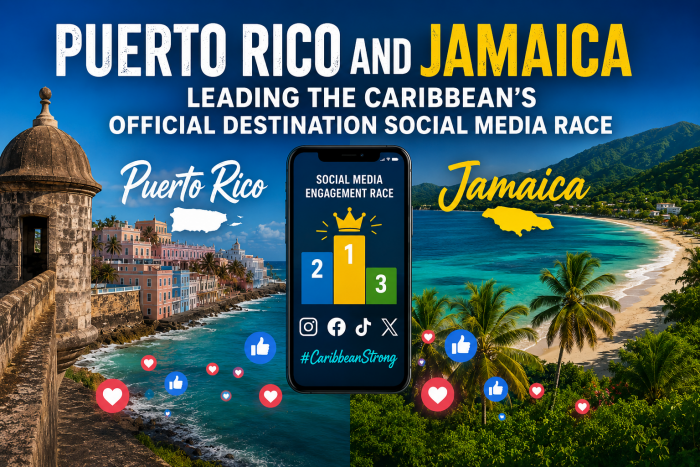
Breaking Travel News analysis of World Social Media Directory data shows Puerto Rico and Jamaica leading the Caribbean’s official destination social media race. But the region’s next growth story may depend on something bigger than tourism board channels: the rise of Caribbean creators, cultural voices, diaspora storytellers and global livestreamers who can turn island identity into worldwide attention.
The Caribbean has never lacked stories.
Its islands have shaped the global imagination of travel for generations: beaches, music, carnival, cricket, rum, sailing, diving, food, luxury resorts, family escapes, heritage, wellness and a diaspora that carries Caribbean identity across the world.
But in the social media age, the question is no longer only who has the strongest tourism product. It is who can turn that product into attention, engagement and intent.
A Breaking Travel News analysis of World Social Media Directory data across Facebook, Instagram, YouTube, X, LinkedIn, TikTok, Pinterest, Weibo and Threads shows a region with huge destination equity, but uneven digital scale.
At the top sits Discover Puerto Rico, with an aggregate official social following of 1,878,155, narrowly ahead of VisitJamaica on 1,772,408. The next tier is led by GoDominicanRepublic with 890,833, Travel Bahamas with 822,572, and the Aruba Tourism Authority with 750,381.
The ranking is revealing. Puerto Rico and Jamaica are setting the pace. The Dominican Republic, The Bahamas and Aruba have built strong social footprints. Bermuda, Barbados, Cayman, Belize and Curaçao show that smaller and more focused destinations can still compete effectively online.
But the wider picture is more challenging. Beyond the leading group, many Caribbean tourism boards still operate with comparatively modest audiences, despite representing destinations with global name recognition.
That gap is an opportunity.
Caribbean destination social media ranking
Rank Destination tourism brand Aggregate followers
1 Discover Puerto Rico 1,878,155
2 VisitJamaica 1,772,408
3 GoDominicanRepublic 890,833
4 Travel Bahamas 822,572
5 Aruba Tourism Authority 750,381
6 Bermuda Tourism 631,154
7 Visit Barbados 610,209
8 Visit Cayman Islands 552,533
9 Travel Belize 479,083
10 Curaçao Tourist Board 463,992
11 Travel Saint Lucia 396,613
12 Antigua and Barbuda Tourism 311,093
13 U.S. Virgin Islands Department of Tourism 294,751
14 Saint-Barth Tourisme 274,489
15 Anguilla Tourist Board 272,717
16 British Virgin Islands Tourist Board 240,711
17 Turks and Caicos Tourist Board 240,430
18 Martinique Tourism Authority 233,174
19 Vacation St. Maarten 224,256
20 My St. Kitts 220,275
21 Visit Trinidad 205,473
22 Cuba Travel 187,722
23 Discover Dominica 143,953
24 Discover Guyana 143,157
25 Bonaire Tourism 130,532
26 Guadeloupe Islands Tourist Board 101,702
27 VisitHaiti 71,654
28 Discover St. Vincent and The Grenadines 60,650
29 Visit Montserrat 51,149
30 Pure Grenada 22,664
31 Saba Tourist Bureau 15,957
32 St. Eustatius Tourism 8,617
33 Suriname Tourism Board 118
Puerto Rico and Jamaica set the pace
Puerto Rico’s strength is breadth. Discover Puerto Rico is large across multiple channels, with meaningful audiences on Facebook, Instagram, X, TikTok and LinkedIn, making it one of the region’s most balanced official destination brands.
Jamaica remains one of the Caribbean’s most powerful tourism names online. Its Facebook audience is the largest in the regional set, underlining the long-standing strength of Brand Jamaica and the emotional connection it holds with travellers, diaspora communities and culture-led audiences.
The Dominican Republic has built one of the region’s strongest video positions, with a comparatively strong YouTube presence and a growing TikTok base. That gives it a valuable platform for campaign storytelling, resort-led content, experiences and creator collaborations.
Aruba is one of the most interesting performers. Its aggregate audience is much larger than its physical scale might suggest. Its strength on Instagram and Threads points to a destination brand that understands visual clarity, consistency and emerging social behaviours.
The Bahamas, Barbados, Cayman, Belize, Saint Lucia, Antigua and Barbuda, the US Virgin Islands, Anguilla, St Barth, the British Virgin Islands and Turks and Caicos all sit in a competitive middle tier where brand recognition is strong, but social media scale can still grow significantly.
For smaller destinations, from Dominica and Guyana to Montserrat, Saba, St. Eustatius, Grenada and St. Vincent and the Grenadines, the challenge is different. They are unlikely to win a spending contest against the region’s largest tourism boards. But they can win with sharper identity, better creator alignment and a clearer sense of what they want to be known for.
Dubai shows the scale of the global benchmark
The Caribbean’s official tourism brands are competing in a global attention economy.
Dubai Tourism provides the clearest comparison. According to World Social Media Directory, Dubai Tourism has an aggregate official social following of more than 13.2 million across its listed channels, larger than the combined total of all 33 Caribbean and near-Caribbean destination brands reviewed by Breaking Travel News.
Dubai’s strength is system. The emirate treats destination marketing like an always-on media operation, linking aviation, hotels, restaurants, events, luxury, family travel, culture, sport, business tourism and creator content into one continuous global narrative.
The Caribbean has many of those same ingredients, often with deeper cultural roots and greater emotional resonance. What it has less of is coordination, scale and consistent creator-native distribution.
That is where the opportunity lies.
Caribbean creators are already global
The creator opportunity for the Caribbean should start with the Caribbean itself.
A 2026 Amra & Elma analysis of the most followed Caribbean influencers describes the region as a cultural powerhouse, with creators spanning music, beauty, food, lifestyle, sport and travel. Its list highlights the scale of Caribbean digital influence, from Usain Bolt at around 14 million Instagram followers, to Shenseea and the Bob Marley estate at around 10 million each, Mariale at around 6 million, and a long tail of food, beauty, lifestyle and travel creators building highly engaged niche audiences.
That matters because the Caribbean’s creator economy is far broader than travel. It includes athletes, musicians, chefs, beauty creators, carnival personalities, diaspora voices, lifestyle publishers, food storytellers and local guides. Together, they tell a richer story than any tourism board can tell alone.
The region’s food creators are particularly important. Caribbean cuisine is one of the most powerful cultural gateways into the region, and creators such as Helena Faustin, Chris De La Rosa, Althea Brown and other recipe-led voices are helping preserve, modernise and export Caribbean food culture to global audiences. Amra & Elma’s list also points to creators such as Yarissa and Bwoy Pedro, whose lifestyle and travel-adjacent content shows how island life can be translated into highly visual, highly shareable formats.
For tourism boards, this is a major shift. The most persuasive Caribbean destination storytelling may no longer come from a campaign slogan. It may come from a carnival artist, a home cook, a diaspora daughter returning for the summer, a cricketer, a hotel creator, a fisherman, a wellness guide, a hiking filmmaker or a local food obsessive with a loyal audience.
Global creators have changed the rules
A smaller number of global creators still provide a useful benchmark.
Drew Binsky, one of travel’s best-known digital storytellers, describes his community as around 20 million, with 9 billion video views. Kara & Nate have built a YouTube audience of more than 4 million subscribers and more than 1 billion views through an approachable, high-energy travel style.
But the more disruptive example for tourism boards may be IShowSpeed.
The American streamer, whose real name is Darren Watkins Jr., has become one of the most powerful youth culture figures in travel-adjacent content. As of May 2026, IShowSpeed has around 53.8 million YouTube subscribers and 8.2 billion YouTube views, alongside around 48 million Instagram followers, 51.3 million TikTok followers and 4 million followers on X. Digiday recently put his total cross-platform audience at more than 150 million followers.
His relevance to Caribbean tourism is immediate. IShowSpeed began a Caribbean Tour on April 25, 2026, livestreaming visits across 15 Caribbean countries. By early May, the tour had already included Puerto Rico, the Dominican Republic, Trinidad and Tobago and Jamaica.
For tourism boards, this is a glimpse of the new destination media economy. A single creator with a phone, a livestream and a loyal global audience can generate the kind of spontaneous visibility that even major campaign budgets struggle to buy.
The comparison becomes even more dramatic when tourism is viewed against wider popular culture. Cristiano Ronaldo and Kim Kardashian operate at a level of reach that dwarfs even the largest tourism brands. But IShowSpeed is the more useful case study for the Caribbean because his content shows how travel, youth culture, sport, humour, music and live audience participation can collapse into one global media event.
This is the environment in which Caribbean tourism now competes.
A potential visitor may discover a destination through an airline campaign, a hotel post, a TikTok clip, a YouTube series, a footballer’s holiday, a carnival reel, a food creator, a livestream, a wedding video, or a diaspora story shared by someone they already trust.
Official tourism boards remain important. But they are no longer the sole gatekeepers of destination storytelling.
What Caribbean destinations can learn from the world
Justin Cooke, editor-in-chief of Breaking Travel News, said the data should be read as a call to ambition.
“The Caribbean has some of the richest destination storytelling assets in the world, but the numbers show that social media reach is still not matching the strength of the product,” said Cooke.
“Dubai has shown what happens when a destination thinks like a media platform, not only a tourism board. The best creators have shown that consistency, personality and narrative can travel further than polished campaign language. Caribbean destinations can learn from both. They need to be more ambitious, more creator-native and more joined-up in the way they tell their stories.”
Cooke said the region should take inspiration from global best practice without losing what makes it distinctive.
“The Caribbean should not try to become Dubai. Its strength is different. It has soul, culture, rhythm, humour, heritage, food, music and a diaspora that already carries the brand around the world. The opportunity is to build distribution around those assets in a more modern way.”
What the world can learn from the Caribbean
The learning also runs the other way.
Many global destinations have built scale, but still struggle for authenticity. The Caribbean has the opposite advantage. Its stories are rooted in real communities, real culture and real emotional connection.
“The world can learn from the Caribbean that destination storytelling works best when it is rooted in real culture,” Cooke added.
“The most powerful travel content rarely starts with a hotel room or a slogan. It starts with people, place, sound, food, memory and emotion. The Caribbean has those in abundance. The next step is to take that authenticity and scale it through creators, social video, diaspora communities and smarter partnerships.”
This is where the Caribbean may have a natural edge.
Jamaica has music, food, sport, fashion, language and cultural influence that travels far beyond the island. Barbados has premium lifestyle appeal, heritage, culinary depth and global visibility. Trinidad has carnival energy and cultural intensity. Saint Lucia has romance, wellness and landscape. Belize has nature, diving, soft adventure and conservation. Dominica has eco-tourism, hiking and volcanic terrain. Anguilla and St Barth have luxury authority. The Bahamas has island-hopping, marine life and proximity to North America. Puerto Rico blends urban culture, beaches, food, music and US connectivity.
These are creator-ready stories.
The opportunity is more than followers
For the Caribbean, the creator opportunity should be measured by more than follower growth.
The real prize is influence across the traveller journey.
Creators can help destinations build awareness among younger audiences, give depth to lesser-known islands, support shoulder-season campaigns, explain multi-island itineraries, bring local communities into the story, and convert niche interests into travel intent.
A diving creator can do more for Bonaire or Saba than a generic beach campaign. A food creator can open up Trinidad, Barbados, Jamaica, Guyana or Puerto Rico in ways traditional advertising rarely does. A luxury travel creator can sharpen the positioning of Anguilla, St Barth or Turks and Caicos. A hiking and nature creator can bring Dominica, Saint Lucia or Grenada to new audiences. A diaspora creator can make a destination feel personal, contemporary and emotionally alive.
The most effective creator strategies will be built around fit rather than fame.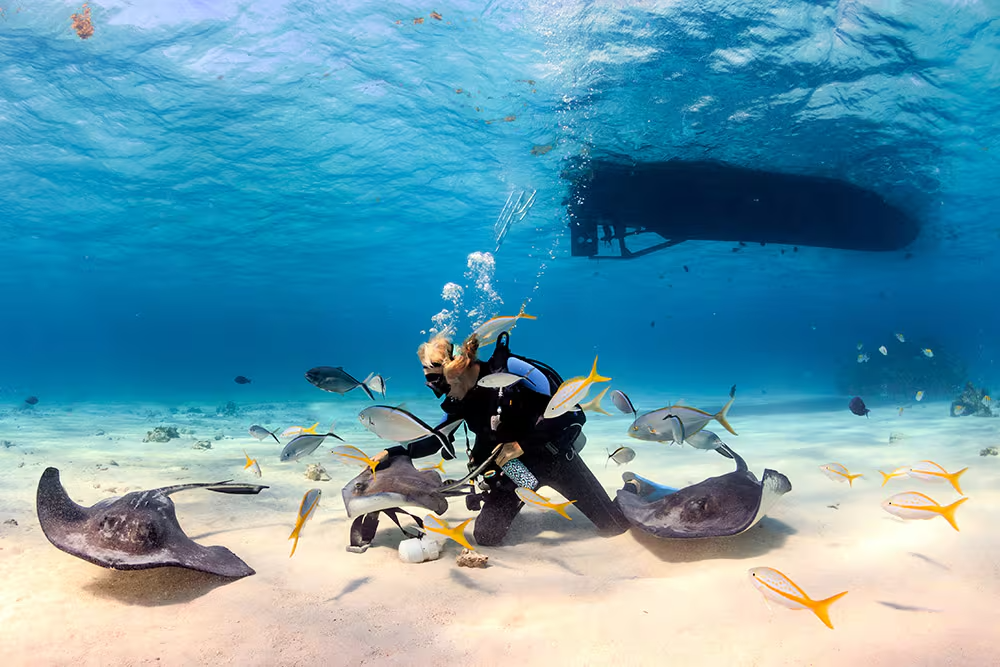
Tourism boards need the right storytellers, those who understand the destination, respect the culture and can translate its appeal into content their audiences trust.
A Caribbean creator strategy
The Caribbean also has an opportunity to think collectively.
A pan-Caribbean creator initiative could give the region a larger voice in the global social media landscape. Rather than each island competing in isolation, the region could build shared storytelling around island-hopping, carnival, food, music, sailing, diving, wellness, luxury, heritage and nature.
That strategy should put Caribbean creators at the centre.
Global creators can amplify the region, but Caribbean creators give it credibility. They understand the humour, language, rituals, food, family ties, music, neighbourhoods and local pride that make the islands distinct. They can also speak to diaspora audiences in London, New York, Toronto, Miami, Atlanta, Paris and Amsterdam, where Caribbean identity already has cultural reach.
A smarter regional model would connect tourism boards, airlines, hotels, cruise partners, festivals and cultural institutions with creators across several layers: major Caribbean cultural figures, local island creators, diaspora voices, niche specialists and selected global travel storytellers.
The result would be more than influencer marketing. It would be destination media infrastructure.
The next phase should include stronger creator hosting programmes, better data on content performance, more cross-island itineraries, clearer storytelling briefs, paid amplification for the best-performing content, and commercial partnerships that connect inspiration to bookings.
The Caribbean’s creator moment
The Caribbean is one of the world’s most recognisable travel regions. Yet the data suggests its official digital footprint still has significant room to grow.
Puerto Rico and Jamaica lead the regional race. The Dominican Republic, The Bahamas, Aruba, Bermuda, Barbados, Cayman, Belize and Curaçao have built meaningful platforms. Others have the chance to leapfrog through focus, creativity and smarter partnerships.
But the bigger story is that the future of Caribbean tourism marketing will be shaped by more than official channels.
Creators are now part of the destination infrastructure. They influence where people dream, where they search, what they save, what they share and eventually where they go.
For the Caribbean, that should be exciting.
The region has never lacked colour, sound, flavour, landscape or soul. It also has something many destinations are still trying to manufacture: cultural influence.
The task now is to turn that influence into a more deliberate, scalable and creator-led tourism strategy.
The Caribbean has the stories. Its creators can bring the scale.
Justin Cooke – Editor -in-Chief Breaking Travel news
Subscribe to our daily newsletter to keep up to date with the latest headlines from the global hospitality sector.
© 2026 Breaking Travel News. All rights reserved.
Breaking Travel News is a registered trademark: UK00003895441