
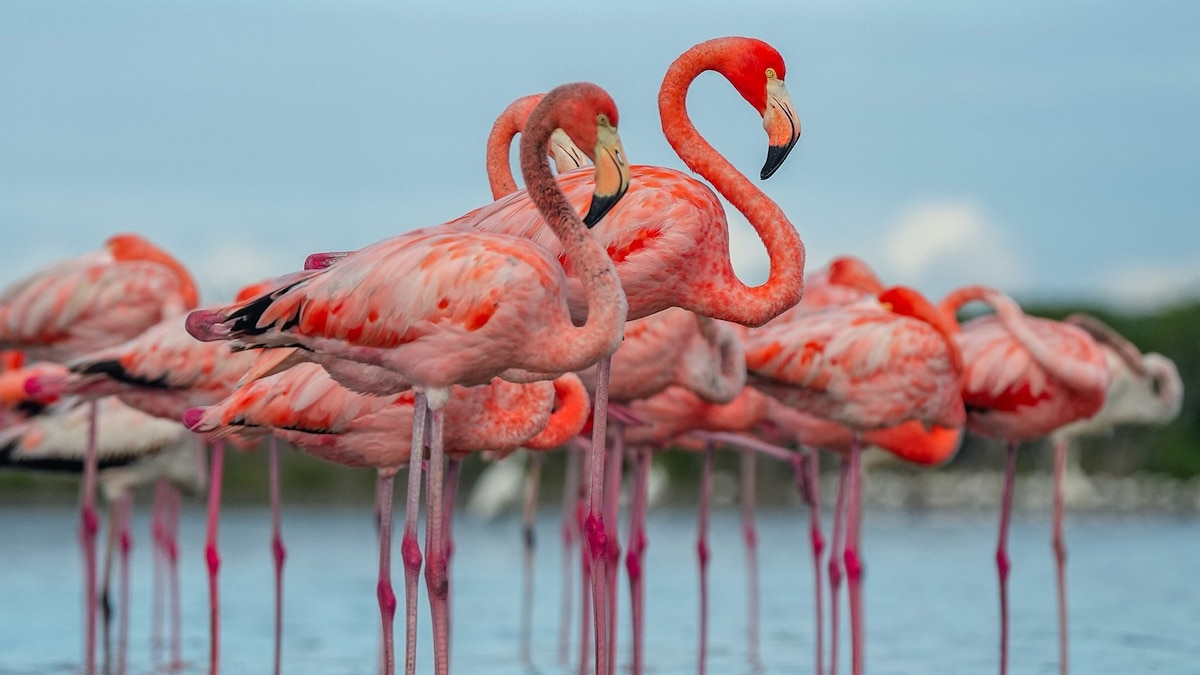
A hundred years after they disappeared, the state’s iconic birds have returned to their namesake outpost in the Everglades—along with a new lodge and updated visitor facilities.
With their impossibly long legs and lipstick hue, flamingos sport a memorable look. Their image adorns Florida postcards, tourist sites, and TV shows, but the state’s population of wild flamingos was virtually extinct for a hundred years due to plume hunting and habitat loss. Then in 2023, they began claiming headlines when several blew in from Cuba and Mexico on the winds of Hurricane Idalia.
“There was a pink invasion,” says Audubon Florida’s Keith Laakkonen, director of Corkscrew Swamp Sanctuary. Some of these flamingos stayed on, especially around the Florida Bay coastline, which is also the perch of the aptly named Flamingo outpost of Everglades National Park.
The Everglades’ southernmost visitor hub, Flamingo has seen its own resurgence, after suffering damage from multiple hurricanes. Now it features a remodeled visitor center and a new lodge—the only one in the park.
Here, travelers can experience the fabled “river of grass,” the largest subtropical wilderness in North America, and spot a captivating array of wildlife—including, with some luck, flamingos. “When you see one,” Laakkonen says, “you get a sense of awe.”
From the Homestead entrance to Everglades National Park, it’s an hour-long drive to reach Flamingo, at the very tip of Florida. This remote location where freshwater marshes merge into the sea offers a unique experience, says Riley Hays, the park’s Flamingo district interpreter. “The sense of solitude and the dynamic meeting of ecosystems make it unlike anywhere else in the national park system.”
Historically, Flamingo was one of the best places in Florida to see flamingos. In 1893, hardscrabble residents named their settlement after the bird, which at that time numbered in the thousands. When fancy feathered hats became all the rage, those same birds became targets. One feather could fetch $500 in today’s valuation.
(This extensive Florida trail connects two U.S. national parks)
Many of Florida’s elegant wading birds were decimated, and “flamingos probably took the hardest hit,” Laakkonen says. After Audubon game warden Guy Bradley was killed by hunters in Flamingo while trying to protect the birds, widespread outrage led to a federal ban on the practice.
When the national park was established in 1947—the first one created for biodiversity—Flamingo’s remaining residents were relocated and some basic amenities added. About 10 years later, a visitor center, restaurant, and lodge opened, making Flamingo a hotspot for the next several decades. That is, until 2005’s double whammy of hurricanes Katrina and Wilma caused so much damage that the lodge had to close. In 2018, after Hurricane Irma, the visitor center followed suit.
During rebuilding, the park service focused on “resilience, sustainability, and immersion in the natural environment,” Hays says. The new lodge and restaurant debuted in October 2023, built from elevated shipping containers that can better withstand hurricanes, flooding, and sea-level rise.
Flamingo Lodge—featuring 24 studios and suites outfitted with well-equipped kitchenettes and private balconies overlooking the glittering waters of Florida Bay—makes a comfortable base for exploration. For the more adventurous, other overnight options include houseboats, glamping-style eco-tents, and campgrounds.
(10 incredible glamping experiences near U.S. national parks)
At the restaurant, you can fill up on burritos, burgers, and your own fresh catch, which the kitchen will cook. The remodeled visitor center, now named for the heroic Guy Bradley, kept its mod pink exterior but updated exhibits on the ecosystem and early inhabitants, improved accessibility, and added features to guard against hurricanes.
Ironically, it was also a hurricane that brought back the flamingos. Now one of the best places to glimpse these 5-foot-tall Florida natives is, once again, in Flamingo.
In 2025, a record 125 flamingos were seen in Florida Bay. Experts estimate that there are about 60 regulars in the Flamingo area, but they’re not always easy to spot. Hays suggests scanning shallow coastal areas and mudflats, especially along Snake Bight Trail and Christian Point Trail, at low tide when the birds feed on the algae and brine shrimp that give them their color. There’s even a chance to catch a flamboyance—yes, that’s the term for a flock of flamingos—right in front of the visitor center.
For the latest location intel, talk to on-site naturalists and others who are out and about. And be sure to use binoculars or a telephoto lens to keep a respectful distance. “If you find yourself getting so close that the birds’ behavior is changing, back off,” Laakkonen advises. Travelers interested in contributing to flamingo conservation efforts can report sightings to the eBird or iNaturalist apps, which will help scientists track numbers and locations.
(Amy Tan shares her best birding tips)
Though flamingos get most of the attention, they’re far from the only eye-popping sights here. Walk the broad grassy path around Eco Pond for the opportunity to see another stunning pink wading bird, the roseate spoonbill. Smaller than flamingos, they have ruby-red eyes and a long, flat-tipped bill that they sweep back and forth through the shallows.
From the local marina, naturalist-guided boat tours head out to the open waters of Florida Bay to view emerald-green mangrove keys and look for pelicans, cormorants, dolphins, and osprey, perhaps toting a recently snagged sea trout.
Boat tours also go the opposite direction, into backcountry creeks and canals that are home to herons, anhingas, wood storks, alligators, and crocodiles, which can look especially fearsome with their toothy mouths agape, a means of temperature regulation. (South Florida is the only place in the world where alligators and crocodiles co-exist.)
Nighttime tours offer some of the best stargazing in the southeastern U.S. due to very low levels of light pollution. If you prefer to explore on your own, rent a canoe or kayak. In the marina itself, you may spot gentle manatees raising their broad whiskered snout for a breath of air.
(What is noctourism—and why is it on the rise?)
For all these animals and their environment, the presence of flamingos is a good sign. It indicates that decades of restoration work in the Everglades are making a difference. And it reconnects a cultural symbol of Florida with a living, wild reality, Hays says. “Their return offers a glimpse into the past while also signaling hope for the future of Florida’s ecosystems.”
Fly into Miami International Airport, then rent a car for the hour-and-forty-five-minute drive to Flamingo. At the entrance of Everglades National Park, you’ll need to pay a fee of $35. Rates at Flamingo Lodge range from about $150 to $400 per night, depending on the season and type of room. It’s open year-round, but the most popular time to visit is between November and April, when temperatures are lower, mosquitoes are fewer, and wildlife is especially abundant.