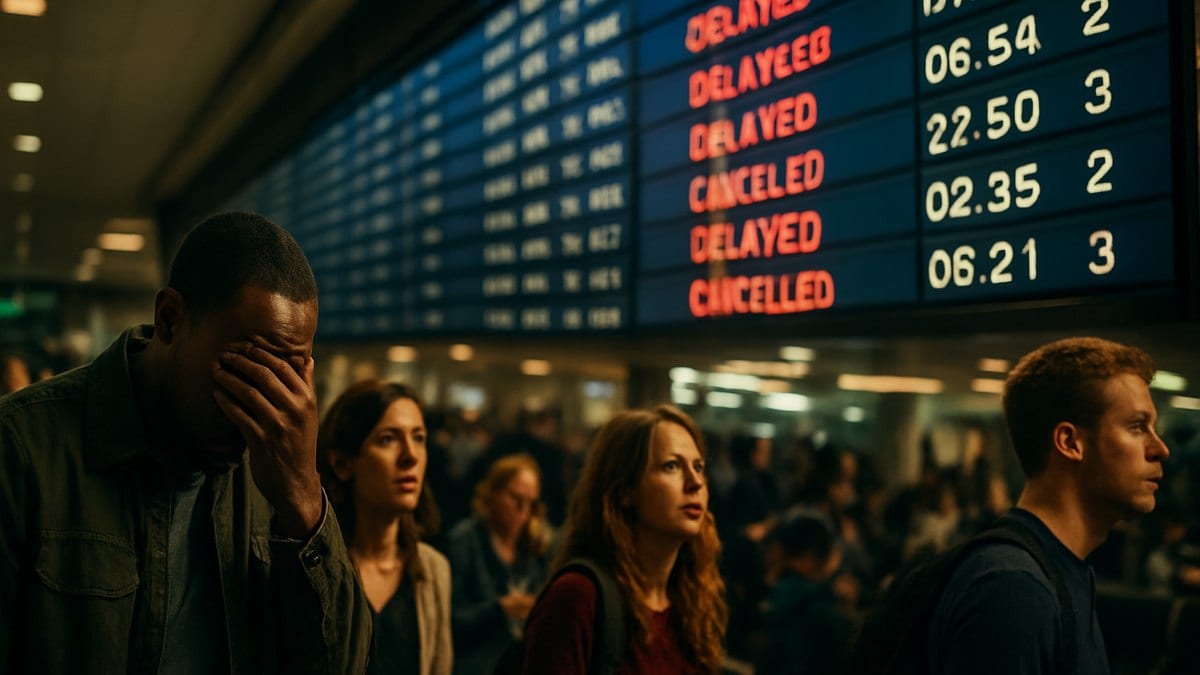
William P. Hobby Airport delays 102 flights and cancels 5, disrupting Southwest, Delta, United and more on routes linking Texas with New York, Chicago and Los Angeles.
The Traveler contains affiliate links. If you click through and make a purchase, we may earn a small commission at no extra cost to you. We are grateful if you use these as it helps a lot! Read the full policy.
More news on this day
Travelers across the United States faced fresh disruption on April 5 as Houston’s William P. Hobby Airport recorded 102 delayed flights and 5 cancellations, creating ripple effects on Southwest, Delta, United and other carriers connecting Texas with major hubs in New York, Chicago and Los Angeles.
Get the latest news straight to your inbox!
Publicly available flight-tracking data for April 5 indicate that William P. Hobby Airport in Houston has been one of the country’s most affected mid-sized hubs, with more than one hundred delayed departures and arrivals and a handful of outright cancellations logged in a matter of hours. Reports indicate that the disruption has affected operations across the airport’s terminals and throughout much of the day.
The latest figures place Hobby among a cluster of U.S. airports experiencing elevated disruption in early April, following several days of stormy weather, air traffic constraints and heavy seasonal demand. Earlier in the week, national tallies showed thousands of delays and hundreds of cancellations nationwide, pointing to a strained aviation system even before the latest issues in Houston.
Hobby serves as a key gateway for domestic traffic within Texas and to coastal and Midwestern hubs, which means even a modest number of delays can have outsized consequences for connecting passengers. While the number of outright cancellations has remained relatively small, the volume of delays has been sufficient to unsettle carefully timed itineraries for travelers heading to and from the city.
Travel information services note that even when flights ultimately depart, extended holding on the ground, rolling gate changes and missed connections can significantly increase total journey times. That dynamic appeared to be in play in Houston, where schedule knock-on effects have continued through the afternoon and into the evening.
Southwest, Delta and United are among the carriers most visibly affected by the Hobby disruption, according to publicly accessible schedules and same-day delay data. Hobby is a major base for Southwest, with the airline operating a dense network of short and medium haul flights that link Houston to destinations across Texas and the wider United States.
Reports indicate that delays at Hobby have impacted Southwest’s operations on intra-Texas routes as well as services to major markets such as Chicago, Los Angeles and New York area airports. Because many of these flights operate back to back on the same aircraft, a single late arrival into Houston can cascade into multiple delayed departures later in the day.
Delta and United, which rely more heavily on other hubs for their national networks, have nonetheless seen their Houston services affected on key trunk routes. Connections to major northern hubs, including Chicago and New York, have been among those experiencing schedule pressure, with late arrivals and extended turnaround times reported.
Industry observers point out that days like April 5 highlight the interconnected nature of U.S. air travel. Disruption at a secondary hub such as Hobby can quickly propagate into missed connections and aircraft rotations at distant airports, particularly when multiple airlines are already operating close to capacity during a busy spring travel period.
The Hobby disruption has not occurred in isolation. In recent days, national aviation summaries have documented thousands of delays and several hundred cancellations across major hubs including Dallas, Chicago, Denver and Los Angeles, driven by unsettled weather, airspace congestion and persistent staffing and infrastructure constraints.
On April 1 and again on April 5, published coverage from travel industry outlets highlighted unusually high levels of disruption, with systemwide totals running into the thousands of delayed flights and hundreds of cancellations on some days. Houston has featured prominently in those tallies, both at William P. Hobby and at George Bush Intercontinental, underscoring the region’s sensitivity to broader network stress.
Thunderstorms and low ceilings over parts of Texas and the central United States earlier in the week prompted a series of traffic management initiatives, including arrival metering and ground delay programs at several airports. While conditions had improved in some regions by the weekend, residual congestion in regional airspace and the recovery of aircraft and crew rotations continued to weigh on schedules.
Aviation analysts note that robust demand is adding a further layer of complexity. Passenger volumes remain high at many U.S. airports, particularly around holiday periods and weekends, leaving airlines with limited slack to absorb disruptions. When weather or air traffic issues occur, recovery windows can be narrow, meaning localized problems such as those seen at Hobby can have a longer lasting impact.
For travelers, the numbers translate into long queues at customer service counters, crowded departure areas and a scramble for alternative options. Social media posts and local coverage from Houston describe passengers waiting through multiple rolling delay notices, some facing the prospect of arriving at their destination many hours later than planned.
At Hobby, many affected flights are on short haul routes that serve as feeders to larger hubs in Texas and beyond. When delays accumulate, rebooking options can quickly narrow, particularly on popular routes to cities such as Chicago, New York and Los Angeles that are themselves managing high traffic volumes and their own weather related challenges.
Hotel bookings and ground transportation in Houston and at downline destinations can also be disrupted when late night arrivals turn into next day departures. Tourism and hospitality businesses often rely on predictable arrival patterns, and shifts of several hours can complicate staffing and inventory planning even if total visitor numbers remain stable.
In some cases, travelers may attempt to reroute themselves through alternative airports in Texas or neighboring states to bypass the worst of the disruption. However, on peak travel days, those alternatives may also be heavily booked or subject to similar delays, limiting the effectiveness of such workarounds.
With Hobby’s April 5 delays coming on top of a week of elevated disruption across the U.S. network, travel forecasters suggest that conditions could remain uneven in the near term, especially if additional spring storms materialize over key hubs in Texas and the central and eastern United States.
Publicly available guidance from travel and aviation experts consistently emphasizes the importance of closely monitoring flight status through airline apps and airport communication channels on days when national disruption is high. Same day schedule changes are common in these conditions, and information can shift quickly as airlines attempt to recover their networks.
Travelers departing from or connecting through Houston in the coming days are being advised in published reports to allow extra time at the airport, pay particular attention to tight connections and consider earlier departures where possible if they have critical arrival commitments. Flexible ticketing policies, where available, may offer options to change flights at reduced cost when disruptions are widespread.
As airlines and airports work through backlogs from April’s early disruptions, the experience at Hobby on April 5 serves as a reminder that even relatively small hubs in the national system can become chokepoints when conditions deteriorate. For passengers, advance planning, real time information and a degree of flexibility remain the most reliable tools for navigating an increasingly unpredictable travel landscape.
Italian Airports Warn of Jet Fuel Strain Amid Middle East Crisis
Several Italian airports have issued advisories on constrained jet fuel supplies, as the Middle East conflict and Strait of Hormuz disruption ripple through Europe’s aviation network.
Philadelphia Airport Meltdown Strands Northeast Travelers
Severe delays and cancellations at Philadelphia International Airport have stranded thousands, disrupting key routes to New York, Boston and other Northeast hubs.
Reagan National Delays Ripple Across Major US Hubs
Weather-triggered disruptions at Reagan National caused 96 delays and 5 cancellations, snarling American, Delta and JetBlue schedules across New York, Chicago, Boston and Atlanta.
China Flight Chaos Leaves Thousands Stranded Across Major Hubs
Severe weather, congestion and operational strain trigger 2,211 delays and 316 cancellations across China, crippling travel through Shanghai, Beijing, Guangzhou, Shenzhen and other key hubs.
Las Vegas Flight Chaos Disrupts New York and Chicago Routes
A wave of delays and cancellations at Las Vegas’ Harry Reid International Airport has disrupted key routes to New York and Chicago, stranding hundreds of travelers.
Jet Fuel Limits in Italy Threaten Spring Flights in Europe
Fuel restrictions at Italian hubs in Bologna, Venice and Milan are raising disruption risks for Ryanair, Lufthansa and British Airways amid the Middle East crisis.
Middle East Flight Chaos Hits Major Hubs and Carriers
Fresh regional tensions triggered 254 delays and 17 cancellations across key Middle East hubs, disrupting services by Saudia, Emirates, Air Arabia and others.
Italy Fuel Caps Deepen Europe’s Jet Fuel Squeeze
Refuelling caps at four Italian airports highlight Europe’s worsening jet fuel crunch, as flight delays, route changes and rising fares spill into global travel.
Flight Chaos Across Australia Strands 30,000 Travelers
A wave of delays and cancellations across Sydney, Melbourne, Brisbane and Canberra has disrupted 164 flights and crippled domestic and international airline schedules.
China Flight Chaos Strands Thousands at Major Air Hubs
More than 2,200 delays and over 300 cancellations at China’s biggest airports are disrupting Qingming travel plans and testing the resilience of the country’s aviation network.
Puerto Rico Airport Chaos Strands Thousands on U.S. Routes
Flight disruptions at San Juan’s main airport left thousands bound for Miami, New York and Orlando facing cascading delays, cancellations and long lines today.
A Global Hub of Travel Knowledge
Great! Check your inbox and click the link.
Sorry, something went wrong. Please try again.
A Global Hub of Travel Knowledge
Great! Check your inbox and click the link.
Sorry, something went wrong. Please try again.