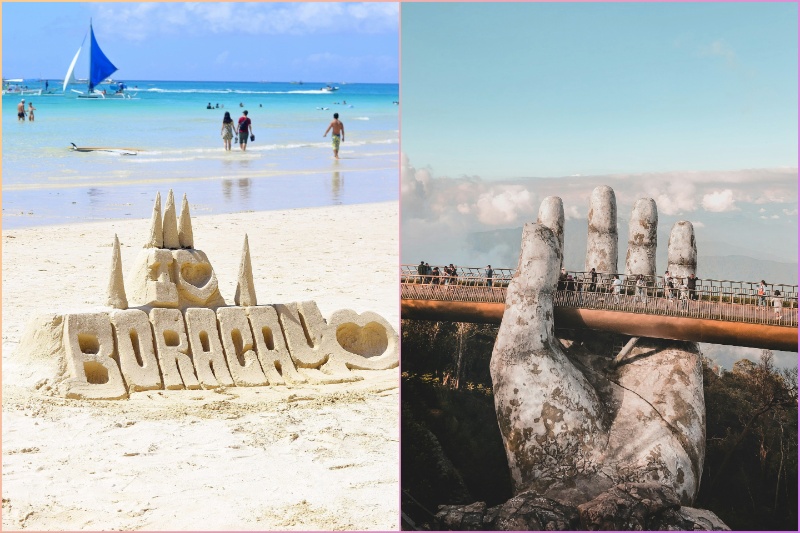
Filipino travelers continued to favor familiar destinations in 2025 while looking to explore nearby regional hotspots in 2026, according to a study commissioned by travel and experiences platform, Klook.
On Wednesday, March 25, Michelle Ho, General Manager of Klook Philippines, unveiled the results of Klook’s annual Travel Pulse Survey which looked into the travel trends, booking behavior and destination preferences of Filipino travelers.
Ho noted that the commissioned survey was conducted in December 2025, acknowledging that some travel preferences may have changed following the Middle East conflict that began in February 2026. Several flights have been canceled globally amid the tensions in the Middle East.
Earlier: Michelle Ho, General Manager of Klook Philippines, unveiled the results of Klook’s annual Travel Pulse Survey which looked into the travel trends, booking behavior and destination preferences of Filipino travelers in 2025. | via @rosette_adel pic.twitter.com/7vFeoP61bA
— Interaksyon (@interaksyon) March 25, 2026
Based on the study, domestic travel dominated bookings last year, with 71% of Filipinos recorded to have traveled within the country in 2025.
The following destinations emerged as the most booked domestic spots on Klook:
Klook also recorded a 50.7% growth in the Philippine market, while its domestic business grew by 39.2%.
The platform also saw a 127% growth in hotel bookings in the Philippines from 2024 to 2025, signaling a strong domestic travel trend.
Looking ahead to 2026, Filipinos are expanding their plans to short- and medium-haul destinations across Southeast and Northeast Asia given the unpredictability of international. Top picks include:
These destinations have remained consistent with last year’s results, with Northeast Asia (67%), Southeast Asia (30%), and South Asia and Oceania (3%) continuing to be the most preferred by Filipinos.
Destinations such as Vietnam (+193% bookings in 2025), Taiwan (+124%) and Thailand (+67.1%) are seeing rising interest among Filipino travelers.
Beyond destinations, the study highlights what Filipinos prioritize when planning trips:
At least 42.6% of Filipino respondents shared that they were willing to increase their travel budgets for food (42.6%) while 25.7% of them are open to shell out cash for experiences such as local tours, workshops, or activities.
Meanwhile, social media remains a key planning tool, with Facebook, YouTube, and Instagram used for travel hacks, budget tips, and discovering hidden gems.
More Filipino millennials are utilizing AI to plan their travels, using it more than Gen Zs for key tasks such as destination research (60.3% vs. 52%), flight and hotel searches (44.1% vs. 37.8%), and finding travel deals (41% vs. 37.7%).
The Travel Pulse study surveyed 11,000 consumers worldwide, including 500 Filipino respondents from Gen Z and Millennial groups.
Ho said they anticipate the results of the poll every year as it provides them “an idea of what to expect from our users, but also insights on the why behind their travels.
“These findings represent how travel is ever evolving, and help us tailor fit our offerings to meet the specific needs of Filipinos. For this year, we are excited to support Filipino travelers as they embark on new adventures close to home, such as in Taiwan and Vietnam,” Ho said.
The Klook executive added that the team aims to enhance travelers’ experiences based on the findings.
“With these findings, we are working towards further improving our offerings, and curating even more experiences that align with the interests of next-generation Filipino travelers”, she concluded.