
Published on March 18, 2026
Image generated with Ai
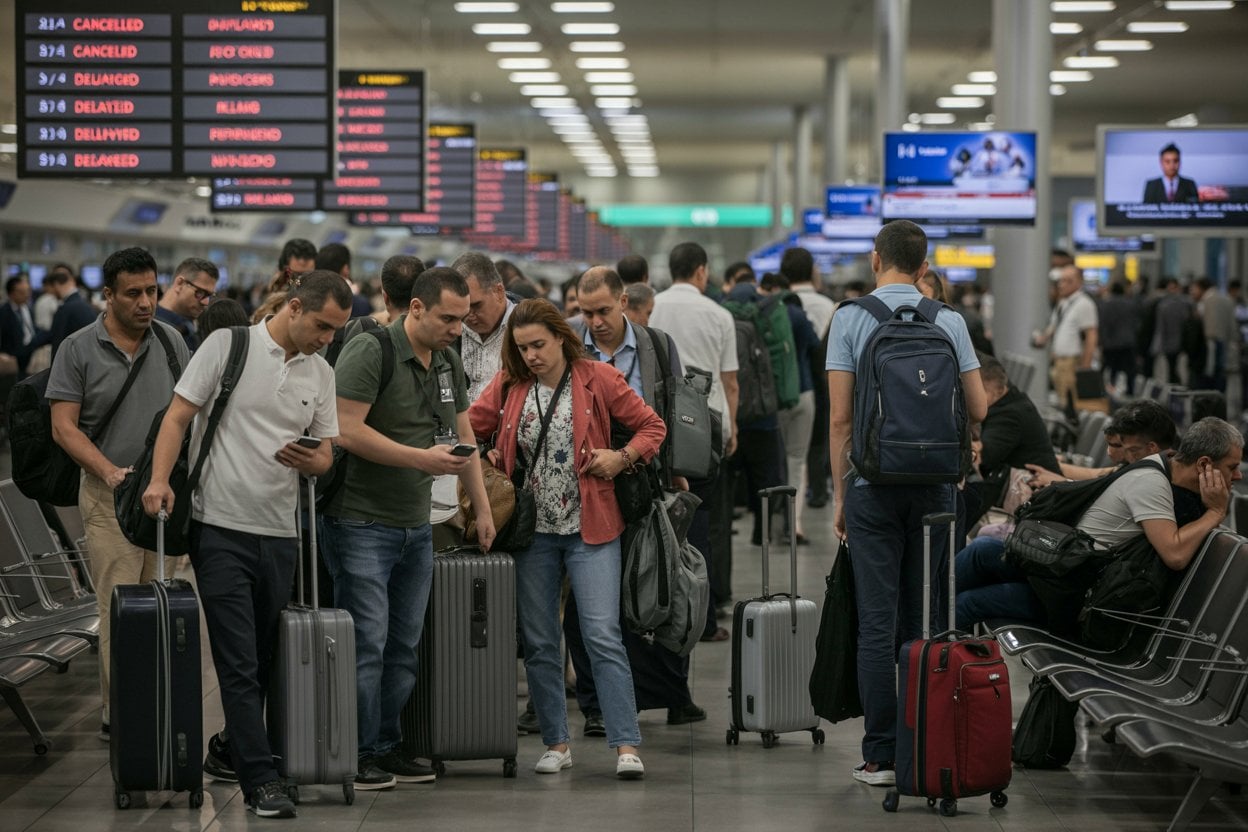
Austin-Bergstrom International Airport has again become the emotional epicenter of travel stress as families, business travelers, and festival-goers find their plans upended by 183 flight delays and 28 cancellations in a single day. Many passengers who came to Austin with dreams of live music, tech conferences, and Hill Country getaways are spending unexpected hours in security lines and crowded gate areas instead, watching departure boards flicker from “On Time” to “Delayed.”
Image generated with Ai
Austin-Bergstrom International Airport (AUS) has been warning travelers for days that spring travel and festival season would push the terminal close to its limits, with more than 35,000 departing passengers expected on peak days. Airport officials and the City of Austin have urged passengers to arrive at least 2.5 hours before domestic flights and three hours before international departures, pointing to exceptionally high demand and limited capacity at checkpoints.
According to recent alerts shared via official AUS channels and city-backed travel pages, the airport anticipated record-breaking spring travel volumes, aligning with Austin’s packed calendar of music festivals, conferences, and major events. These government-linked advisories stress early arrival, advance parking reservations, and close monitoring of airline notifications to reduce the risk of missed flights.
The 183 delays and 28 cancellations at Austin-Bergstrom today sit on top of weeks of strain that have included long TSA lines, packed parking, and, earlier in the season, weather-related disruptions. Flight-tracking data cited by local and national outlets shows that AUS has faced recurrent operational pressure from a combination of factors: strong travel demand, airspace congestion, staffing constraints, and residual effects of winter weather elsewhere in the network.
Advertisement
Advertisement
While today’s disruption is driven primarily by volume, airline operations remain vulnerable to knock-on delays from other hubs, including weather or crew timing issues that ripple into Austin. Government-linked traveler advisories emphasize that airlines are responsible for scheduling, de-icing, and deciding whether to delay or cancel flights, while the airport coordinates facilities, runways, and security in line with federal standards.
Passengers affected by today’s operational mess are being urged to turn first to their airline apps and websites to confirm flight status, rebook, or request assistance. At the same time, Austin-Bergstrom and City of Austin channels are directing travelers to official information pages that outline security procedures, checkpoint expectations, and updated travel tips for AUS.
Advertisement
Advertisement
Government-related advisories highlight several core messages: arrive early, pack with TSA rules in mind, and check status before leaving for the airport. AUS public posts and city-linked pages remind passengers that security screening at the airport is conducted by the Transportation Security Administration (TSA) under federal guidelines, and that high passenger volumes can quickly compound wait times even when all lanes are open.
For many, today’s 183 delays and 28 cancellations are not just statistics but hours of uncertainty, missed connections, and emotional conversations at the gate. Travelers have reported unusually long queues at TSA, crowded terminal corridors, and gate areas filled with anxious passengers refreshing their phones and hoping their aircraft finally pulls up to the jet bridge.
Recent local coverage and social clips from the terminal have shown “massive” lines winding through the check-in and security halls, with some passengers arriving more than three hours early and still feeling rushed. Families with small children, elderly travelers, and first-time flyers are particularly susceptible to the stress of rebookings and last-minute gate changes, especially when outbound flights are tightly connected to cruises, tours, or event tickets that cannot easily be rescheduled.
With delays and cancellations at Austin-Bergstrom still elevated, officials and airlines are offering practical steps to reduce the impact. Travelers are encouraged to:
For those already stranded, many carriers are waiving some change fees or allowing free same-day changes when disruptions are due to weather or large-scale operational challenges, though exact policies vary by airline. Government-aligned travel guidance reiterates that passengers should keep digital copies of itineraries, boarding passes, and receipts, particularly if they plan to claim compensation or reimbursement where applicable under carrier-specific policies or consumer protection standards.
The current wave of delays and cancellations is also a spotlight on a deeper, ongoing challenge at Austin-Bergstrom: the airport’s infrastructure is racing to keep up with the city’s explosive growth. Official forecasts and public planning documents referenced by local and national outlets have flagged that AUS is on track to handle record passenger volumes year after year, stretching everything from gates and baggage systems to parking and road access.
City and airport authorities have been working on long-term expansion and modernization plans, including adding gates, improving terminal space, and upgrading security screening layouts. In the meantime, the spring travel crunch—combined with days like today when 183 flights are delayed and 28 are canceled—shows how thin the margin for error has become during peak periods.
For travelers passing through Austin-Bergstrom International Airport during this turbulent day, the experience is a mix of frustration, fatigue, and small acts of kindness: a stranger watching someone’s luggage while they dash to a service desk, gate agents juggling dozens of rebooking requests, children dozing off in chairs while parents calculate how late they will be getting home. The numbers—183 delays and 28 cancellations—tell the scale of the disruption, but in the terminal it feels more personal: missed reunions, postponed meetings, and vacations starting with hours on the floor instead of in the air.
As Austin-Bergstrom International Airport works with airlines, federal partners, and the City of Austin to navigate yet another high-pressure travel day, passengers are left hoping that the next refresh of the departure board will finally bring the word everyone wants to see: “Boarding.” Until then, patience, preparation, and close attention to official guidance remain the best tools travelers have in an airport stretched by the very popularity that has made Austin one of the country’s most sought-after destinations
Source:Flightaware
Advertisement
Original article: https://www.travelandtourworld.com/
Tags: AUS airport disruptions, Austin airport delays, Austin flight cancellations, Austin-Bergstrom International Airport

Subscribe to our Newsletters
I want to receive travel news and trade event updates from Travel And Tour World. I have read Travel And Tour World's Privacy Notice .
Wednesday, March 18, 2026
Wednesday, March 18, 2026
Wednesday, March 18, 2026
Wednesday, March 18, 2026
Wednesday, March 18, 2026
Wednesday, March 18, 2026
Wednesday, March 18, 2026
Wednesday, March 18, 2026