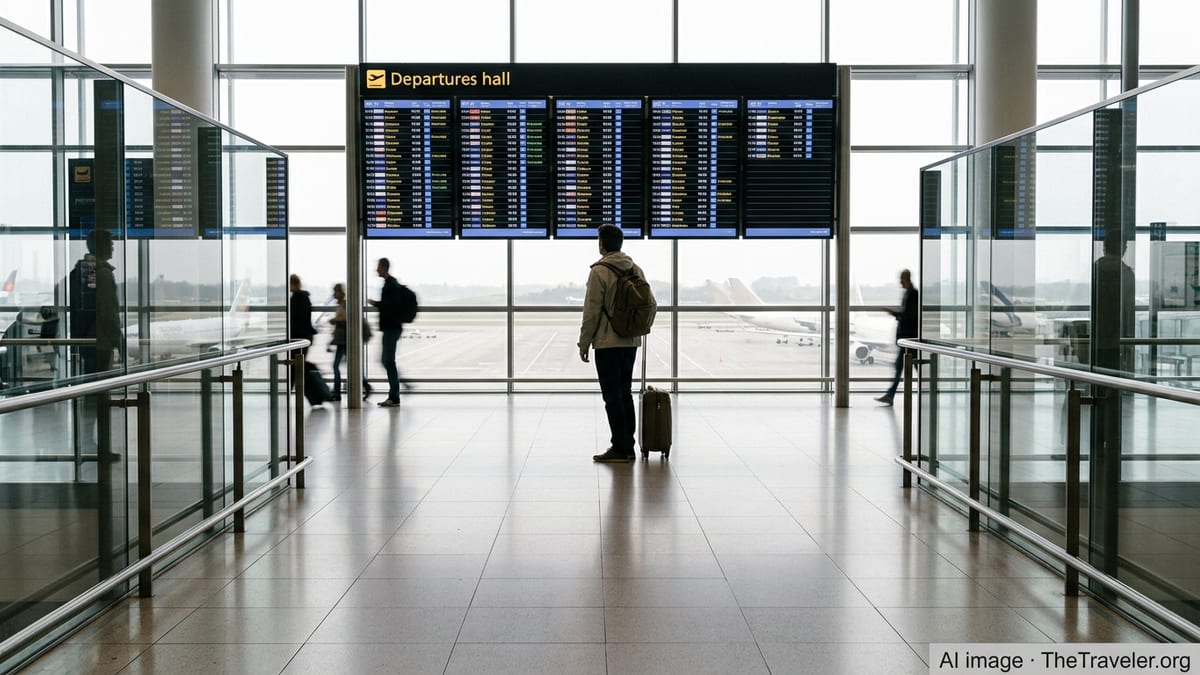
Ireland’s Department of Foreign Affairs has added Cuba to a growing list of destinations under heightened travel advisories as regional tensions and unrest spread.
The Traveler contains affiliate links. If you click through and make a purchase, we may earn a small commission at no extra cost to you. We are grateful if you use these as it helps a lot! Read the full policy.
More news on this day
Ireland’s Department of Foreign Affairs has quietly expanded its roster of countries under heightened travel advisories, with Cuba joining Bahrain, Saudi Arabia, the United Arab Emirates, Qatar, Jordan, Ecuador and a cluster of other destinations now flagged for Irish travellers amid a deteriorating global security climate.
Get the latest news straight to your inbox!
The Irish travel advisory system, overseen by the Department of Foreign Affairs in Dublin, has been under near constant review since late February as tensions across the Middle East and wider global unrest have intensified. In recent updates, officials have escalated warnings for several Gulf states and, more unexpectedly for many Irish holidaymakers, for Cuba and Ecuador.
While each country is assessed individually, the broad trend is clear: more destinations popular with Irish travellers are moving into categories that urge either a high degree of caution or the avoidance of non essential travel. Cuba, long perceived as a relatively stable Caribbean getaway despite economic challenges, is now grouped on advisory maps with states such as Bahrain, Saudi Arabia, the United Arab Emirates, Qatar and Jordan, which are being watched closely because of their proximity to active conflict zones and shifting regional alliances.
For Irish citizens, this means that destinations that may have featured in long planned itineraries for 2026 summer holidays or winter sun breaks now carry additional layers of risk. The advisory changes do not in themselves ban travel, but they signal that the government believes the security situation or local conditions have deteriorated enough to warrant heightened vigilance and careful reconsideration of non essential trips.
Officials stress that the maps and country pages are living documents, updated as new intelligence, consular reports and international partner briefings come in. Travellers are urged to check the DFA site repeatedly in the run up to departure, rather than relying on advice that may have been accurate only weeks earlier.
The elevation of Cuba on Irish travel advisory maps has drawn particular attention because it does not fit neatly into the wider Middle East focused narrative dominating recent headlines. Analysts point instead to a convergence of domestic economic stress, infrastructure fragility and sporadic civil unrest on the island, which together make the environment more unpredictable for foreign visitors than in previous years.
Chronic shortages of fuel, food and basic goods have led to recurring localised protests and a heavier security presence in some urban areas. For Irish visitors, this can translate into sudden disruptions to internal transport, longer queues for everyday services and a higher risk of being caught near demonstrations that may escalate quickly. The DFA’s shift signals that such pressures are now considered structural rather than temporary.
Health care capacity is another factor. Strains on the Cuban health system mean that serious illness or injury may require medical evacuation to a third country, a costly and logistically complex process that is difficult to arrange at short notice if commercial flights are disrupted. Irish consular officials typically highlight this kind of systemic vulnerability when calibrating advice, even if headline crime and terrorism risks remain comparatively low.
Finally, currency and payment restrictions can pose unexpected challenges. Travellers who rely solely on cards or on a single currency may find it harder to access cash or pay for services during periods of instability. The advisory shift is intended, in part, to nudge would be visitors to think through worst case scenarios and ensure they have contingency funds, insurance and flexible exit plans.
The more predictable part of the latest advisory picture concerns the Gulf and wider Middle East. Ireland, in line with several European partners and following a sharp uptick in regional tensions since late February, is now advising against all or non essential travel to a swathe of states, with Bahrain, Saudi Arabia, the United Arab Emirates, Qatar and Jordan featuring prominently.
These countries differ markedly in their internal security profiles, but they share exposure to the risk of spillover from regional conflict, drone or missile attacks, cyber incidents and sudden disruptions to airspace. Irish authorities are particularly alert to the risk that airports or key transit hubs could be targeted or temporarily closed, leaving visitors stranded or facing complex rerouting at short notice.
There is also concern about the potential for protests or demonstrations in capital cities, some directed at foreign interests, which can become volatile with little warning. Even where overall crime rates remain low and day to day life for residents continues largely as normal, the DFA tends to adopt a precautionary posture once the possibility of rapid escalation is recognised.
For Irish travellers with work or family ties in the region, the advisory shift is a reminder to maintain close contact with employers, schools and local authorities, monitor local media and be ready to adjust plans if the security picture worsens. For those considering tourism or stopover breaks en route to Asia or Australasia, it serves as a strong signal to explore alternative routings where possible.
Ecuador’s appearance alongside Cuba in tightened Irish travel advice reflects a broader reassessment of risk across parts of Latin America. The country has experienced a marked surge in gang related violence, prison unrest and high profile attacks in recent years, some spilling into areas frequented by foreign visitors.
Irish officials weigh not only headline crime statistics but also the state’s capacity to guarantee basic services and protect critical infrastructure. In Ecuador, pressure on police and the judiciary, combined with a shifting political landscape, has raised concerns that local authorities may be stretched in responding to simultaneous security incidents.
For travellers, the implication is that routes once considered standard, such as overland journeys between major cities or visits to certain coastal regions, now require more careful planning. The DFA typically flags specific provinces or zones where risks are concentrated, urging visitors either to avoid them entirely or to travel only with reputable operators who can provide real time updates.
At the same time, consular teams are monitoring how airlines, cruise companies and tour operators are adjusting their own risk assessments. Flight schedule changes, altered port calls and last minute itinerary tweaks can all cascade into missed connections for independent travellers who have not built flexibility into their plans.
For Irish citizens with imminent trips booked to Cuba, the Gulf states, Ecuador or any other newly affected destination, the first step is to review the exact wording of the DFA advisory and cross check insurance policies. Many insurers link cover to government travel advice, and a shift from a standard caution level to a stronger warning can affect the validity of certain policies if travel proceeds regardless.
Travellers are also encouraged to register their details with the Department of Foreign Affairs before departure, including contact information and basic itinerary outlines. This enables consular staff to push targeted alerts and, in the worst case, to account for citizens more quickly if an incident occurs that affects a large number of foreign nationals.
Those who decide to continue with non essential trips despite the updated guidance should build in additional safeguards. These include booking refundable accommodation where possible, allowing extra time for airport procedures, keeping copies of key documents stored securely online and offline, and maintaining regular contact with family or friends at home who can act as a point of reference if communications are disrupted.
Above all, Irish authorities emphasise that travel under an elevated advisory is a personal decision that carries greater responsibility. The DFA’s expanding list, with Cuba now alongside Bahrain, Saudi Arabia, the United Arab Emirates, Qatar, Jordan, Ecuador and others, is designed to inform that decision by highlighting evolving risks in a rapidly changing world.
Middle East Air Chaos Strands Thousands as 804 Flights Canceled
Airspace closures across the Middle East have triggered 804 cancellations and 939 delays, stranding thousands and crippling major hubs from Dubai to Istanbul.
Regional Airline Delays at Bangor Rippling Into Maine, New York Hotels
Days of cascading delays by Piedmont, GoJet, Endeavor and PSA at Bangor Airport are unsettling New England tourism and triggering fresh hotel cancellation worries.
Adventure Cruises San Diego Sets New Standard for Safe Party Charters
San Diego’s Adventure Cruises is tightening safety, etiquette and compliance on party-ready charter yachts. Here is what visiting groups and tourists should know before booking.
Star Clippers Adds Free Athens Hotel Stays to 2026 Greek Sailings
Star Clippers is enhancing its 2026 Greece program on Star Flyer from Athens with complimentary hotel nights, breakfast and transfers for select sailings.
American Airlines Lets Members Turn Miles Into Retail Gift Cards
American Airlines AAdvantage members will soon be able to redeem miles for gift cards from major retailers and entertainment brands, expanding rewards beyond flights.
Virgin Voyages Deploys 1,500 AI Agents to Reinvent Cruising
Virgin Voyages is quietly rolling out more than 1,500 AI agents, reshaping everything from onboard service to pricing and payments across its growing fleet.
Massive March Flight Chaos Snarls Air Travel Across Italy
Nationwide strikes, storms and air traffic control bottlenecks have triggered widespread flight cancellations and delays across Italy, disrupting tourism at the start of spring.
Azamara Adds Miami to Ambitious 2028 World Cruise Lineup
Azamara’s 175-night 2028 World Cruise now begins in Miami, linking six continents and 40 countries with marquee stops from Easter Island to Rome and Sydney.
Central Railway Plans 1,484 Summer Special Trains
India’s Central Railway will run 1,484 summer special services in 2025, easing holiday rush from Mumbai, Pune and other hubs with added capacity and key routes.
Buenos Aires Flight Chaos Wrecks Argentina Holiday Plans
Mass cancellations and delays at Buenos Aires airports have upended Argentina holiday trips, leaving stranded tourists, frayed tempers and travel firms scrambling.
Barbados Named New Princess Cruises Homeport for 2027
Princess Cruises will base ships in Barbados for winter 2027–28, positioning the island as a rising Southern Caribbean hub for immersive cruise vacations.
A Global Hub of Travel Knowledge
Great! Check your inbox and click the link.
Sorry, something went wrong. Please try again.
A Global Hub of Travel Knowledge
Great! Check your inbox and click the link.
Sorry, something went wrong. Please try again.