Published on March 6, 2026
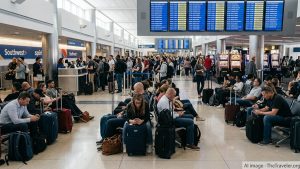
Image generated with Ai
USA, Mexico, and Canada are gearing up to host the highly anticipated FIFA World Cup 2026, a tournament that promises to draw millions of international visitors and generate a staggering $30.5 billion in economic impact. The excitement surrounding the event is palpable, as it offers a unique opportunity for the three nations to showcase their culture, hospitality, and passion for soccer on the world stage. However, with less than 100 days until kick-off, several factors have raised concerns about whether the projected economic boom will truly materialize. Airlines like Emirates, Qatar Airways, and Air Canada are struggling to meet the surge in demand, with security delays and logistical challenges adding to the uncertainty. Additionally, visa complications and the ongoing geopolitical landscape are threatening to dampen international travel, especially from key markets like Europe and Asia. With hotel prices skyrocketing, airlines facing operational hurdles, and security protocols causing long lines at airports, the question remains: will the much-anticipated economic windfall turn into a reality or fall flat, leaving tourism and hospitality industries in the lurch? As fans prepare to flock to the host cities, the stakes have never been higher.
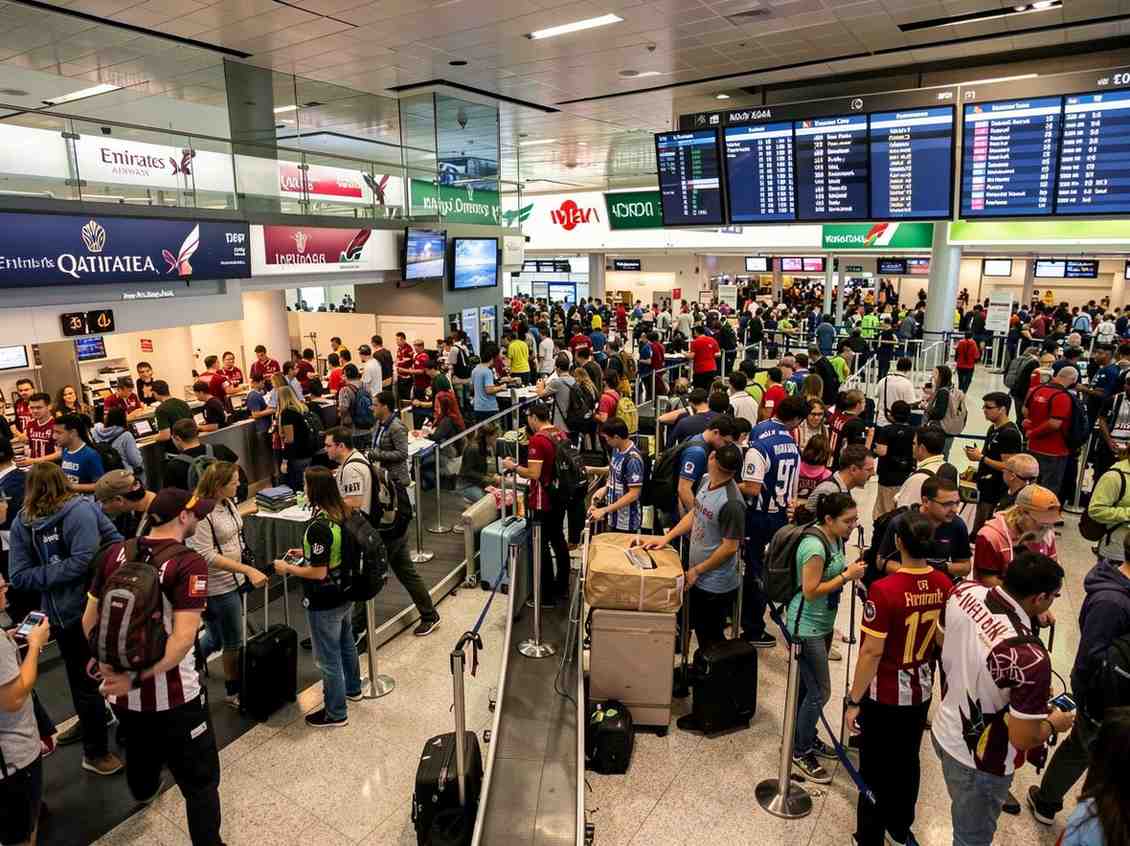
Image generated with Ai
USA, Mexico, Canada, Brazil, France, Germany, UK, and Australia Brace for FIFA World Cup 2026: Airlines Like Emirates, Qatar Airways, and Air Canada Struggle Amid Security Delays – Will the $30.5B Economic Boom be a Bust?
The FIFA World Cup 2026 is set to be a global spectacle, with the United States, Mexico, and Canada co-hosting the tournament. FIFA’s projections promise an economic boon of $30.5 billion, generating hope across the tourism, hospitality, and airline industries. However, recent developments raise concerns about whether this anticipated financial windfall will materialize. Airlines like Emirates, Qatar Airways, and Air Canada, along with the hospitality industry, are facing significant challenges, including security delays and shifting international travel patterns. In this article, we explore the potential impacts of these issues on the airline and hospitality industries, and the broader effects on tourists planning to visit the World Cup.
The Anticipated Economic Impact of FIFA World Cup 2026
Advertisement
Advertisement
The FIFA World Cup, one of the world’s largest sporting events, is expected to be a major catalyst for growth in tourism and related industries. As the U.S., Mexico, and Canada prepare to host the 2026 World Cup, tourism authorities and businesses are anticipating a massive influx of international visitors, with projections that the tournament will boost the U.S. economy by $30.5 billion. This includes spending on flights, accommodation, dining, and entertainment.
Increased demand for travel is expected to provide a significant boost to airlines, particularly those with routes to the host cities. Global airlines, including Emirates, Qatar Airways, Air Canada, and American Airlines, have already adjusted their schedules to meet the growing demand. The FIFA World Cup typically generates an uptick in travel bookings, especially as international visitors flock to the host cities to watch the tournament and enjoy the accompanying festivities.
Advertisement
Advertisement
However, the reality of travel to the World Cup is more complex than simply increased passenger numbers. Airlines and tourism sectors are facing several obstacles, from logistical challenges to rising concerns about international security, visa delays, and economic instability. With travel restrictions in place in some regions and rising international tension, many tourists are questioning their ability to attend the event. The impact of these factors could limit the expected growth in tourism and, consequently, the anticipated $30.5 billion economic benefit.
Airlines Like Emirates, Qatar Airways, and Air Canada Face Operational Hurdles
Advertisement
Advertisement
The airline industry has been preparing for the expected surge in demand during the FIFA World Cup 2026. Major carriers like Emirates, Qatar Airways, and Air Canada have been adjusting their flight schedules and adding additional routes to accommodate the influx of passengers. These airlines are pivotal in connecting international travelers with the host cities in North America, offering flights from key markets such as Europe, the Middle East, and Asia.
Emirates, for example, is renowned for its extensive global network, with flights operating from Dubai to key U.S. cities like New York, Los Angeles, and San Francisco. With the World Cup drawing closer, Emirates is increasing its frequency to major cities hosting the event. Qatar Airways, similarly, is enhancing its connectivity between the Middle East and North America to facilitate seamless travel for soccer fans. Air Canada, the flag carrier of Canada, is also playing a crucial role, providing additional flights to Montreal, Toronto, and Vancouver.
However, these airlines are facing several challenges. Security measures in the wake of global geopolitical instability, particularly concerning the ongoing conflicts in the Middle East, are causing delays in travel plans. In addition, stringent visa requirements and bureaucratic hurdles are limiting access for some international travelers. The logistical challenges of accommodating thousands of fans, coupled with a highly competitive flight market, could strain the airlines’ resources, potentially hindering their ability to meet the high demand.
Travel experts have raised concerns about the availability of seats, particularly on long-haul international routes, where demand may outstrip supply. The airline industry is facing high operational costs, including fuel price fluctuations, which could result in increased ticket prices. Although FIFA’s projections suggest that travel for the World Cup will increase, there is a possibility that airlines may struggle to meet these expectations.
Will the Hospitality Industry Deliver the Promised Boom?
The hospitality industry is another key player in the expected economic boom surrounding the FIFA World Cup 2026. Hotels, resorts, and short-term rental platforms like Airbnb are preparing for a massive influx of soccer fans looking for accommodation in host cities. In the U.S., major hotel chains such as Marriott, Hilton, and Hyatt are seeing a surge in bookings for the World Cup period. They are capitalizing on the expected demand by offering exclusive packages and promotions aimed at attracting international visitors.
Marriott International, for instance, is strategically positioning its properties in cities like New York, Los Angeles, and Atlanta, which are expected to be major hotspots for the tournament. Hilton and Hyatt are doing the same, with both chains focusing on luxury and mid-tier properties to accommodate the influx of fans and corporate visitors attending the World Cup.
However, just as with the airline industry, the hospitality sector faces its own set of challenges. The pandemic’s long-lasting effects have altered global travel patterns, and many tourists are now looking for more flexible, budget-friendly options. The increased demand for hotel rooms in World Cup host cities is driving up prices, which could price out some potential visitors. The rising cost of accommodation and travel, combined with the unpredictable economic climate, may deter some international fans from attending the event in person.
Air Travel Delays and Security Challenges Affecting Tourists
One of the primary concerns for tourists attending the FIFA World Cup 2026 is the ongoing issue of air travel delays and security challenges. International travelers often face long queues, especially at major airports in the U.S., as security measures are heightened in response to global threats. U.S. airports like John F. Kennedy International (JFK), Los Angeles International (LAX), and Miami International (MIA) are notorious for long wait times and crowded terminals during peak travel periods.
Travel delays are expected to become more pronounced as the World Cup approaches. With major airlines adding additional flights and the heightened security measures, airports may struggle to manage the increased traffic. This could result in delays, cancellations, and lost luggage, which would cause frustration for soccer fans eager to reach their destination in time for the matches.
Moreover, the U.S. government’s visa application process has become increasingly stringent, particularly for travelers from countries that require visas to enter the U.S. The long and complicated visa approval process is a significant barrier for many would-be attendees. While FIFA is offering expedited visa services for World Cup ticket holders, the delay in visa processing could prevent some international tourists from attending.
Tourism Tips for World Cup 2026 Visitors
For tourists planning to attend the FIFA World Cup 2026, it’s essential to be proactive in their travel planning to ensure a smooth and enjoyable experience. Here are some travel tips to help visitors navigate the challenges and make the most of their trip:
Flight Details for World Cup 2026 Travelers
Airlines like Emirates, Qatar Airways, and Air Canada are offering increased flights to key World Cup cities. For example, Emirates operates daily flights from Dubai to New York, Los Angeles, and Toronto, with additional services during the tournament period. Qatar Airways, known for its luxurious service, is expanding its operations from Doha to major U.S. cities like Miami, Boston, and Washington, D.C.
Air Canada is also ramping up its offerings, with increased flights from major Canadian cities like Vancouver, Montreal, and Toronto to U.S. host cities. These airlines are collaborating with local airports to ensure smooth connections for international passengers. However, due to the high demand, passengers are advised to book as early as possible to secure the best prices and availability.
Will the $30.5 Billion Economic Promise be a Reality?
As the 2026 World Cup draws nearer, the question remains: will the event deliver the $30.5 billion economic impact that FIFA and tourism officials are predicting? The challenges faced by airlines, hotels, and tourists — from flight delays and security issues to rising travel costs — have the potential to temper the expected economic boon. While the U.S., Mexico, and Canada are preparing to host one of the most anticipated sporting events in history, the reality of air travel and hospitality during the World Cup is far from guaranteed.
USA, Mexico, and Canada are set to host the FIFA World Cup 2026, expecting a $30.5 billion economic boost. However, airline struggles, security delays, and visa hurdles raise doubts about whether this projection will become a reality.
For tourists planning to attend, the FIFA World Cup 2026 promises to be an unforgettable experience. However, careful planning, early bookings, and flexibility will be essential to navigating the challenges and ensuring a smooth, enjoyable trip. While the economic impact remains uncertain, one thing is clear: the World Cup will continue to be a major driver of global travel, attracting millions of fans and fueling tourism growth in host cities.
Advertisement
Tags: Airline News, Europe, Hotel News, sports tourissm, Tourism

Subscribe to our Newsletters
I want to receive travel news and trade event updates from Travel And Tour World. I have read Travel And Tour World's Privacy Notice .
Friday, March 6, 2026
Friday, March 6, 2026
Friday, March 6, 2026
Friday, March 6, 2026
Friday, March 6, 2026
Friday, March 6, 2026
Friday, March 6, 2026
Friday, March 6, 2026