
Discover Florida beyond the roller coasters, from wild springs and quiet islands to historic cities, scenic drives, and distinctive local food traditions.
The Traveler contains affiliate links. If you click through and make a purchase, we may earn a small commission at no extra cost to you. We are grateful if you use these as it helps a lot! Read the full policy.
Continue planning
Florida’s theme parks may grab the headlines, but the state’s most memorable experiences often unfold far from roller coasters and costumed characters. From glass-clear freshwater springs and wild Gulf islands to historic cities, scenic coastal highways, and seafood shacks on working docks, Florida rewards travelers who venture off the midway. Whether you are a first-time visitor or a frequent park guest ready to see the state in a new way, there is a richer, quieter, more surprising Florida waiting just beyond the turnstiles.
Long before the first theme park ticket was sold, Florida’s great natural attractions were its freshwater springs and winding rivers. Fed by underground aquifers, these springs stay around the low 70s Fahrenheit year-round, creating pools of blue water that look almost unreal. Many are protected inside state parks, where you can swim, paddle, or simply sit on a shaded bank and watch fish drift over the white sand bottom.
In winter, some springs transform into vital refuges for Florida manatees, drawing wildlife lovers instead of thrill seekers. At places such as Blue Spring State Park in Volusia County and the limestone pools of Wakulla Springs south of Tallahassee, boardwalks and viewing platforms allow visitors to watch manatees resting in the clear water while rangers explain ongoing conservation efforts. During manatee season, swimming zones are restricted or closed so the animals are not disturbed, reinforcing the idea that these are first and foremost wild habitats, not aquatic playgrounds.
Other springs offer a more active experience once water levels and wildlife conditions allow. Ichetucknee Springs in North Florida is a classic spot for tubing down a spring-fed river shaded by cypress trees, while Madison Blue Spring on the Withlacoochee River attracts certified cave divers to its underwater passageways. Even popular private sites such as Ginnie Springs near High Springs have maintained their appeal thanks to exceptionally clear water and a strong culture around paddling and camping.
For travelers used to high-tech attractions, a day at the springs can feel disarmingly simple. Yet floating quietly over eelgrass or gliding a kayak along a tannin-stained river gives you a deeper sense of Florida’s geology and wildlife than any animatronic ever could. Arrive early in the day, avoid holidays, and be prepared to respect posted rules that protect both the fragile ecosystems and your fellow visitors.
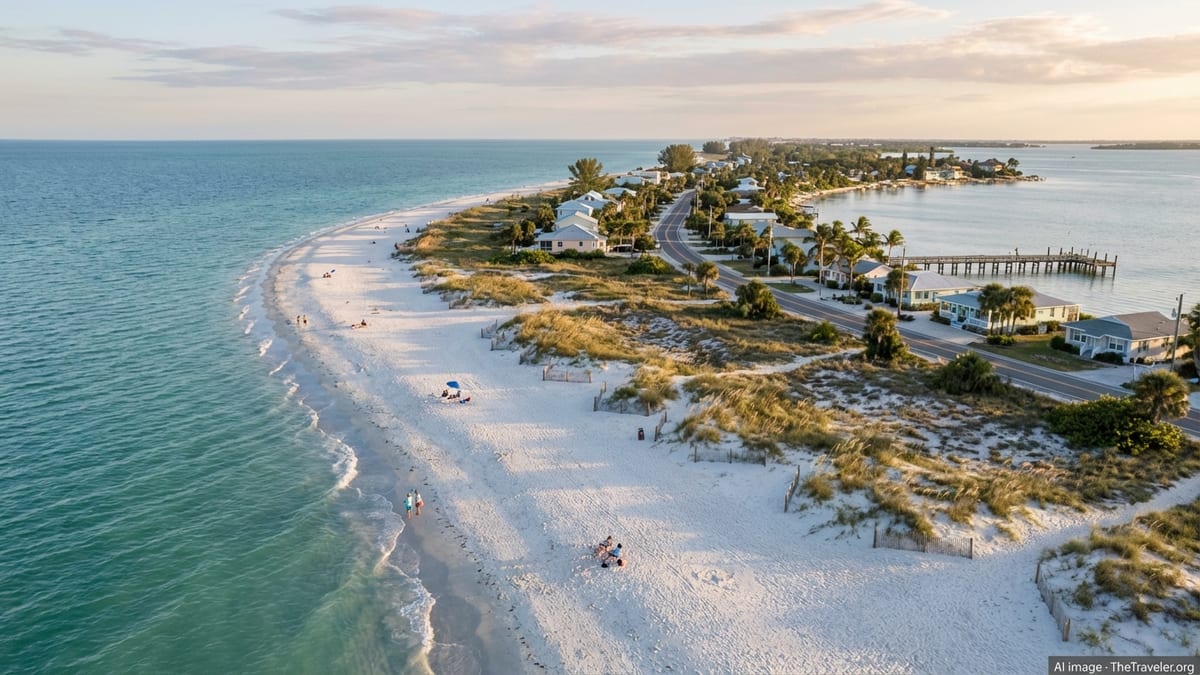
Florida’s coasts are famous, but many visitors see only the busiest stretches near major resorts. Beyond those crowds lies a chain of quieter beaches and undeveloped islands that show what the shore looked like before it was lined with high-rises. You will still find white sand and warm surf, but the soundtrack is more likely to be shorebirds and rustling sea oats than loudspeakers.
On the Gulf Coast, state parks protect some of the state’s most pristine barrier islands. Anclote Key Preserve, reachable only by boat from Tarpon Springs, offers long empty beaches, a historic lighthouse, and excellent birdwatching. Farther south, Gasparilla Island balances small-town charm in Boca Grande with the broad beaches and dunes of its state park at the island’s southern tip. Even in better-known Panhandle regions, places like Grayton Beach State Park in Walton County retain a slower rhythm, with coastal dune lakes, pine forests, and sand that squeaks underfoot.
The Atlantic shoreline has its own under-the-radar spots. Anastasia State Park, just across the bay from historic St. Augustine, offers miles of wide beach, tidal marsh, and nature trails that feel a world away from the city’s busy historic streets. On Jupiter Island, St. Lucie Inlet Preserve protects a stretch of Atlantic beach accessible only by boat, where sea turtles nest in season and ospreys patrol the shoreline.
Reaching these quieter shores often requires a bit more effort, whether that means booking a small ferry, renting a kayak, or driving past the first line of hotel towers to a state park entrance. The reward is space, subtlety, and a glimpse of “Old Florida” that is becoming harder to find. Pack what you need, including sun protection, water, and snacks, because amenities are often limited by design.
Beyond the modern sprawl, Florida is dotted with towns and cities that wear their history openly, from Indigenous and Spanish sites to Victorian commercial districts and railroad-era resorts. Exploring them can feel like stepping through different chapters of the state’s story, with architecture, food, and traditions reflecting centuries of change.
St. Augustine on the northeast coast is the most obvious starting point, often cited as the oldest continuously occupied European-established settlement in the continental United States. Inside its compact historic core, narrow streets, coquina stone buildings, and the waterfront fort tell the story of Spanish Florida, British rule, and the later arrival of wealthy Northern visitors. Across the bay, Anastasia Island adds a more relaxed beach-town counterpoint, so you can divide your time between museums and shoreline walks.
Elsewhere, smaller communities preserve more recent periods of Florida history. In the Panhandle, towns like Apalachicola and Port St. Joe evoke the state’s maritime and timber past with working waterfronts and low-slung historic districts. On the Gulf Coast, the fishing village of Cortez near Bradenton still features old fish houses and simple cottages, offering an atmosphere that contrasts sharply with nearby resort islands.
Even some inland towns reward exploration. Places like Mount Dora, with its lakeside setting and early 20th century architecture, or DeLand, with a handsome main street and university influence, show that Florida’s charm is not limited to coasts. Walking tours, local historical societies, and small museums help decode what you are seeing, but much of the pleasure comes from unhurried wandering, ducking into independent bookstores, and chatting with long-time residents over coffee.
Florida is often imagined as a state of straight interstates and fast-moving toll roads, but its scenic byways tell a different story. Wander off the main routes and you will find coastal highways, oak-shaded back roads, and causeways that skim just above the water, inviting you to slow down and look around.
One of the most photogenic drives is County Road 30A in the Panhandle, a designated scenic highway that links a string of Gulf-side communities and state parks across roughly 30 miles. Here, the emerald water of the Gulf of Mexico, sugar-white sand dunes, and rare coastal dune lakes share space with beach towns that range from deliberately rustic to carefully planned. Pull-offs lead to trailheads, dune overlooks, and small public beach accesses that are easy to miss if you are in a hurry.
On the Atlantic side, portions of historic A1A between St. Augustine and Flagler Beach hug the shoreline so closely that waves sometimes crash just below the road shoulder. This route passes through smaller beach towns, maritime forests, and segments designated as scenic and historic byways. Further south, stretches of A1A thread past river inlets, oceanfront parks, and clusters of midcentury motels that recall an earlier era of American road tripping.
Of course, no conversation about Florida driving is complete without mentioning the Overseas Highway through the Florida Keys. While technically leading to one of the state’s better-known destinations, the drive itself is an attraction, carrying travelers along bridges and causeways that link coral and mangrove islands. The magic here lies less in arrival and more in the changing colors of the water, the weathered fishing bridges, and the sight of storm clouds building over the Gulf and Atlantic at once.
Orlando’s animatronic animals may be entertaining, but Florida’s real wildlife is infinitely more fascinating. Across the state, responsible tours and protected areas offer the chance to see manatees, dolphins, alligators, sea turtles, and countless bird species in their natural habitats, provided travelers are willing to follow guidelines that put the animals’ welfare first.
Along the Nature Coast, the town of Crystal River has become a focal point for manatee tourism, particularly in the cooler months when hundreds of animals gather in the warm waters of Kings Bay. Licensed operators offer guided snorkel trips and viewing tours that follow federal and state rules designed to minimize disturbance. Visitors are coached to float quietly, avoid chasing or touching the animals, and give them space. For those who prefer to stay dry, boardwalks at nearby springs and clear-bottom kayak tours offer excellent vantage points.
Elsewhere, Florida’s vast wetlands and estuaries host their own cast of characters. Airboat rides through sections of the Everglades and other marshlands can provide dramatic views of alligators, wading birds, and sawgrass prairies, though it is wise to research operators who emphasize safety and environmental education. On both coasts, dolphin-watching cruises and guided kayak trips through mangrove tunnels highlight the rich life of bays and backwaters, from roseate spoonbills and ospreys to rays gliding beneath the surface.
Birders, in particular, find Florida rewarding outside the theme park orbit. National wildlife refuges, state parks, and even city preserves attract migratory species in winter and support year-round residents from pelicans to scrub jays. Bring binoculars and a field guide or birding app, and consider joining a local Audubon chapter walk or ranger-led program. The experience of watching a wood stork stalk a tidal flat or a bald eagle circle over a pine forest offers a quieter kind of thrill that lingers long after you return home.
Food is one of the easiest ways to experience a more authentic side of Florida, especially once you step away from chain restaurants clustered near major attractions. Around the state, local specialties tell stories of coastal industries, Caribbean and Latin American influences, and regional agriculture. Seeking them out turns even a short drive into a small culinary road trip.
On the Gulf Coast and in the Keys, seafood dominates menus. In season, stone crab claws cracked and served on ice, grouper sandwiches on soft rolls, and peel-and-eat Gulf shrimp offer flavors far removed from generic fried seafood platters. The Keys add their own specialties, from conch fritters and tangy conch chowder to spiny lobster prepared simply with butter and lime when the season is open. Nearly everywhere you go, you will see key lime pie, which ranges from pale yellow custards with graham cracker crusts to more experimental versions topped with meringue or whipped cream.
Urban areas bring their own mix of cuisines. In and around Miami and Tampa, Cuban and other Latin American eateries serve pressed sandwiches, slow-cooked pork, and rich coffee that speak to the state’s migration history. Farther north, especially in small towns and rural areas, you are likely to encounter Southern comfort foods such as smoked barbecue, fried chicken, and seasonal sides built around local produce like tomatoes, citrus, and sweet corn.
To find the best examples, pay attention to where locals line up and do not hesitate to ask for recommendations from hotel staff, rangers, or shopkeepers. Fish houses tucked behind working docks, food trucks parked near beaches, and modest diners on courthouse squares often provide more memorable meals than upscale resort restaurants. Sampling regional flavors becomes a way to support small businesses and connect with the people who call these communities home year-round.
Beyond the big-city stadiums and major concert venues, Florida’s smaller communities host a steady calendar of festivals, markets, and local events that give visitors insight into everyday life. Attending one can be as simple as browsing a Saturday farmers market in a historic downtown or as involved as planning a trip around an annual seafood festival on the Gulf Coast.
In coastal towns, events often revolve around the water. Shrimp, oyster, and mullet festivals celebrate the local catch with live music, cooking competitions, and boat parades. Inland, harvest festivals and county fairs highlight citrus, peanuts, strawberries, and other crops that anchor regional economies. These gatherings bring together growers, makers, and performers who might never appear on a conventional tourist itinerary.
Art walks are common in many of Florida’s older downtowns and along scenic byways, especially on the Atlantic coast near St. Augustine and in Gulf-side communities along 30A. On designated evenings, galleries and studios open late, musicians set up on sidewalks, and local restaurants offer specials to match the crowds. Visitors can meet artists, watch demonstrations, and get a feel for how creative communities are reshaping once-sleepy main streets.
Before you travel, check local tourism offices, chambers of commerce, and city event calendars to see what is happening during your stay. Even if there is no major festival on the horizon, you are likely to find outdoor concerts, historic reenactments, or small cultural celebrations that transform an ordinary night into something more memorable. Showing up, buying a ticket, and striking up conversations is one of the most direct ways to support and understand the places you are visiting.
Spending time in Florida beyond the theme parks means trading scripted experiences for open-ended ones. Instead of to-the-minute ride schedules, your days revolve around tides, weather, and your own curiosity. You might start with a morning swim in a spring, detour down a scenic highway that catches your eye, then end the day eating shrimp at a dockside picnic table while pelicans perch on pilings nearby.
This unscripted Florida asks more of you than simply scanning a ticket, but it gives more back. You learn to read the color of the water for hidden springs, recognize the call of an osprey, or distinguish between different styles of key lime pie. You meet park rangers, boat captains, artists, and café owners who are eager to share the stories of their hometowns.
Most importantly, traveling this way spreads your dollars beyond a few major attractions and helps sustain the state’s natural areas, historic sites, and independent businesses. For families, couples, and solo travelers alike, that can be its own reward. The next time you fly into Orlando or Miami, consider leaving at least a few days unplanned. Somewhere along a quiet beach, a weathered main street, or a slow river under cypress trees, you may discover the Florida you did not know you were looking for.
Q1. Is it realistic to visit Florida without going to any theme parks at all?
Yes. Many visitors now plan entire trips around beaches, springs, state parks, historic districts, and food experiences without setting foot in a park, especially when they want a slower pace and lower overall costs.
Q2. When is the best time of year to explore Florida beyond the theme parks?
Generally, the cooler and drier months from roughly November through April are most comfortable, with fewer mosquitoes and lower humidity. However, some activities, such as scalloping or certain wildlife sightings, are tied to specific summer and shoulder seasons.
Q3. Are Florida’s springs warm enough for swimming?
Most major springs stay in the low 70s Fahrenheit year-round, which feels refreshing in summer and cool but manageable with short swims in winter. Many visitors use lightweight wetsuits or rash guards during cooler months.
Q4. How can I see manatees and other wildlife responsibly?
Look for licensed tour operators and protected areas that emphasize education and clear wildlife guidelines. Always follow posted rules, keep a respectful distance, move slowly, and never chase, feed, or touch wild animals.
Q5. Do I need a car to experience Florida beyond the theme parks?
In most areas, yes. Public transportation is limited outside major cities, and many scenic drives, small towns, and state parks are not easily reachable without a personal vehicle or rental car.
Q6. Are lesser-known beaches and islands suitable for families with children?
Often they are, but parents should research facilities carefully. Some remote islands have limited restrooms, shade, or lifeguards, so families need to pack extra water, sun protection, and basic supplies.
Q7. How expensive is it to visit state parks and natural areas in Florida?
Entry fees to state parks are typically modest per vehicle, and some springs or preserves may charge small additional fees for specific activities. Compared with theme park tickets, most nature-focused days are relatively budget friendly.
Q8. What should I pack for a non-theme park Florida trip?
Sturdy sandals or water shoes, sun protection, insect repellent, a reusable water bottle, light layers, and a dry bag for phones and keys are especially useful, alongside usual beachwear and casual clothing.
Q9. Is it safe to swim in Florida’s natural waterways?
In designated swimming areas, risks are generally low when you follow posted signs and local advice. Conditions vary by location and season, so always check for closures, water quality advisories, or wildlife warnings before entering.
Q10. How can I make sure my visit benefits local communities?
Choose locally owned lodgings and restaurants, hire local guides, shop from nearby artisans, and respect community norms and natural resources. Small choices, like tipping fairly and following leave-no-trace practices, make a meaningful difference.
Turkish Airlines Halts Routes in Widening Middle East Flight Crisis
Turkish Airlines and regional carriers have frozen key Middle East routes as airspace closures spread. Here’s what today’s cancellations mean for your travel plans.
Brussels Airport–Cologne High-Speed Rail to Launch in 2026
From September 2026, a new ICE high-speed link between Brussels Airport and Cologne will reshape air–rail travel across Belgium and western Germany.
GO7’s Orchestrated Virtual Interlining Redefines Airline Growth
GO7’s new Orchestrated Virtual Interlining platform lets airlines design their own global networks, protect connections and boost revenue without traditional interline deals.
Airports in Turmoil as Gulf Hubs Slash Flights After Iran Strikes
Dubai, Doha and Abu Dhabi have abruptly scaled back or suspended operations, plunging global travel into chaos amid escalating conflict and regional airspace closures.
GO7 Launches Orchestrated Virtual Interlining for Airlines
GO7’s new orchestrated virtual interlining promises seamless multi-airline journeys, new tourism flows and greater control for carriers. Here is what it means for travelers.
Israel and Middle East Crisis Disrupts Travel Worldwide
Escalating conflict has triggered sweeping travel warnings, mass flight cancellations, and airspace closures across the Middle East, leaving global travelers scrambling to protect plans.
IndiGo Hits 11-Month Low as Middle East Flight Suspensions Bite
IndiGo’s share price has slumped to an 11‑month low after mass cancellations of Middle East flights, underscoring how fresh regional tensions are roiling aviation.
$350,000 Private Jet Escapes Soar From UAE and Saudi Arabia
With commercial routes crippled by regional airspace closures, ultra-wealthy travelers are paying up to $350,000 for emergency private jet charters from Riyadh and the UAE.
Gulf Airport Shutdowns Paralyze Travel and Threaten Tourism
Airspace closures in Dubai, Doha and Abu Dhabi have stranded thousands, shaken confidence in Gulf hubs and raised urgent questions for global tourism.
Malaysia Airlines Restarts Jeddah, Madinah Flights Amid Turmoil
Malaysia Airlines is temporarily restoring key Jeddah and Madinah routes in early March 2026 as Middle East tensions roil air travel and passenger plans.
Rovos Rail Derailment in Namibia Raises Fears Over Rail Safety
Two crew members died when a luxury Rovos Rail train derailed in southern Namibia after flood-damaged infrastructure caused a bridge span to collapse.
A Global Hub of Travel Knowledge
Great! Check your inbox and click the link.
Sorry, something went wrong. Please try again.
A Global Hub of Travel Knowledge
Great! Check your inbox and click the link.
Sorry, something went wrong. Please try again.
Best Things to Do in Florida Beyond the Theme Parks – thetraveler.org
You Might Also Like

Las Vegas on list of airports that will see reduced air traffic during government shutdown – Channel 13 Las Vegas News KTNV
Nine European vacation destinations to visit in 2025 if it's not your first time – BBC