
Published on March 2, 2026
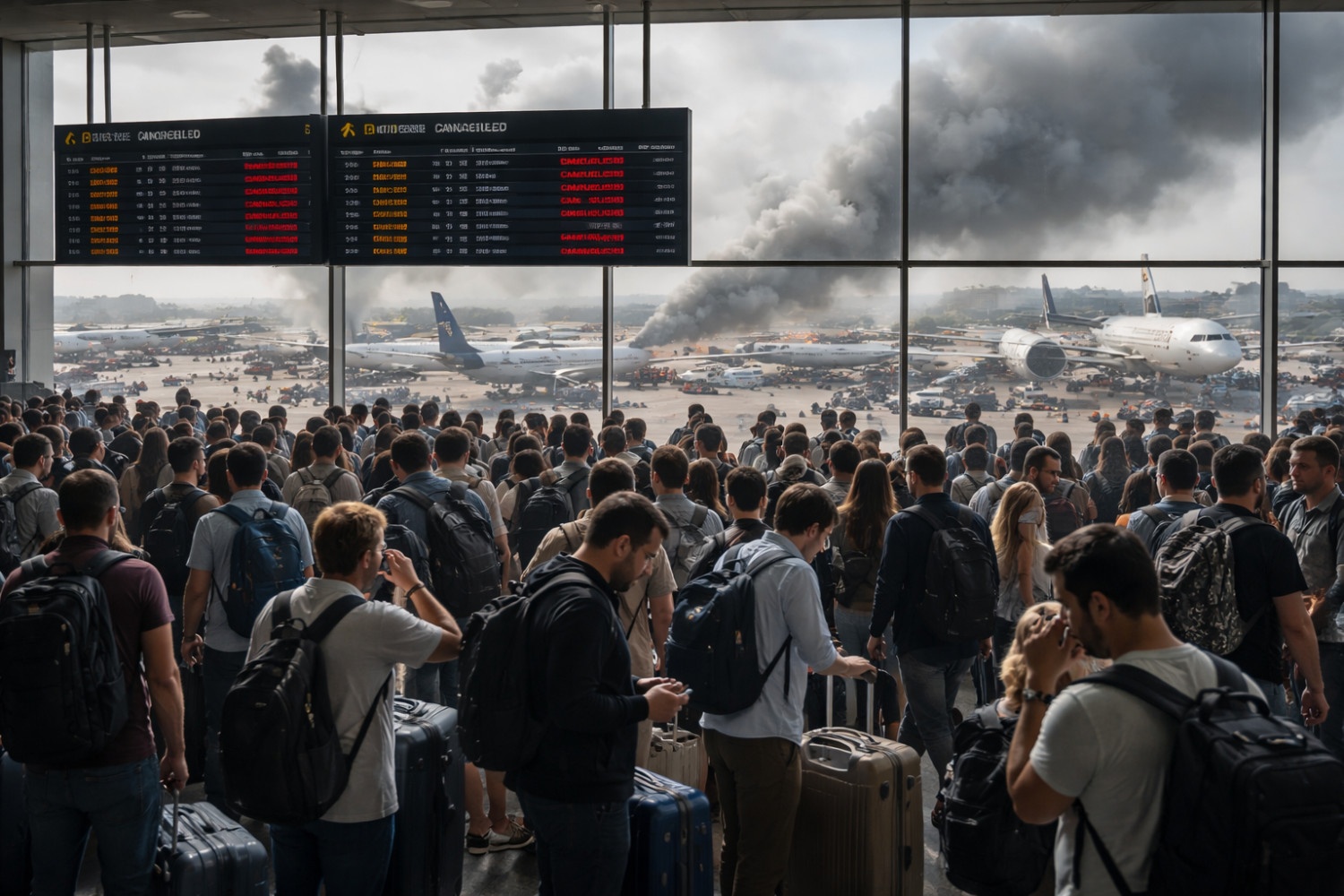
Image generated with Ai
The ongoing conflict in Iran has triggered significant disruptions to global air travel, causing widespread cancellations and delays across several international routes. With the crisis in the Middle East escalating, the aviation industry is grappling with challenges that threaten to derail travel plans for millions of passengers. This article takes a closer look at the impact of the Iran conflict on air travel and the global travel industry, as airlines, airports, and governments work to manage the situation.
Image generated with Ai
The Iran conflict has led to major flight cancellations, particularly in and out of airports in the Middle East, such as Dubai, Abu Dhabi, and Tehran. Airlines, including Emirates, Etihad Airways, and Qatar Airways, have had to adjust their flight schedules, impacting travelers’ plans and causing chaos at airports worldwide. With airspace closures, airlines are now forced to find alternative routes, leading to longer flight times and further delays.
In addition, many airlines have suspended non-essential flights to the region to ensure the safety of both passengers and crew. As a result, thousands of passengers have been stranded or delayed, with no clear timeline for when the situation will return to normal. The ripple effect of these cancellations has reached far beyond the Middle East, with airports in Europe, North America, and Asia seeing an uptick in disruptions.
Several major international airports have been heavily impacted by the ongoing conflict. Dubai International Airport (DXB), one of the busiest airports in the world, saw a significant drop in flight activity, with thousands of passengers left stranded due to the closure of airspace in the region. Airports in Abu Dhabi and Doha are also facing similar disruptions, with flight delays reaching up to several hours.
Advertisement
Advertisement
The situation has been further exacerbated by the suspension of flights at Ben Gurion International Airport in Tel Aviv, Israel. The closure of these airports has forced many airlines to reroute flights, adding to the complexity of the situation and causing confusion among passengers.
According to the International Air Transport Association (IATA), the ongoing crisis has led to a sharp increase in flight cancellations, with airlines having to cancel nearly 22.9% of flights in the region. The disruption to air traffic has not only affected passenger travel but also has had a knock-on effect on cargo shipments, particularly in sectors that rely on air freight.
Advertisement
Advertisement
Cargo airlines have also had to adjust their flight paths and schedules to accommodate the closure of key airspace corridors. This disruption is causing delays in the delivery of goods, including perishable items, electronics, and medical supplies, which rely on air transport to reach their destinations.
For travelers planning to fly to or from the Middle East in the coming weeks, it is essential to stay updated on the latest flight status and airspace conditions. Airlines are advising passengers to check their flight status regularly and consider booking flexible tickets to account for potential changes in schedules.
Advertisement
Advertisement
Travelers are also encouraged to monitor official government travel advisories, as many countries, including the United States and the United Kingdom, have issued warnings against non-essential travel to the affected regions. These advisories are based on the security risks posed by the ongoing conflict, including the threat of violence and civil unrest.
Governments around the world are working closely with international aviation authorities to monitor the situation and ensure the safety of travelers. The International Civil Aviation Organization (ICAO) is coordinating with national governments to provide guidelines for airspace closures and flight rerouting.
In addition, airlines are receiving support from local governments to help manage the crisis. For example, the UAE government has launched a repatriation effort to bring stranded passengers back to their home countries. Similarly, the US government has worked with airlines to ensure that American citizens can return home safely.
While the immediate impact of the Iran conflict on air travel is clear, the long-term effects remain uncertain. The aviation industry is already facing challenges related to rising fuel prices, staffing shortages, and the ongoing recovery from the COVID-19 pandemic. The additional strain caused by geopolitical tensions could further delay the industry’s recovery and result in higher airfares for passengers.
Experts believe that the travel industry may see a shift towards greater reliance on technology and automation to manage the complexities of air travel. Airlines may invest more in artificial intelligence (AI) systems and automated processes to streamline flight scheduling, check-ins, and passenger communication during times of crisis.
Despite the current turmoil, there is hope that the global aviation industry will recover from this setback. Airlines are expected to gradually resume flights as airspace restrictions ease and tensions in the Middle East begin to subside. However, recovery will take time, and passengers are urged to be patient and flexible as the situation unfolds.
As airlines and governments work together to resolve the crisis, travelers can expect more communication and updates from airlines regarding their flight status. The goal is to ensure that passengers are not left stranded or in the dark about their travel plans, especially during such an unpredictable time.
The ongoing Iran conflict has disrupted global air travel, causing flight cancellations, delays, and airspace closures that have impacted travelers worldwide. As the situation evolves, it is crucial for passengers to stay informed and make necessary adjustments to their travel plans. Airlines, airports, and governments are doing their best to manage the crisis, but it may take time for the travel industry to fully recover from these disruptions. For now, flexibility and patience are key for travelers affected by this crisis.
Advertisement
Tags: Abu Dhabi, Dubai, Emirates, iran, Qatar Airways

Subscribe to our Newsletters
I want to receive travel news and trade event updates from Travel And Tour World. I have read Travel And Tour World's Privacy Notice .
Monday, March 2, 2026
Monday, March 2, 2026
Monday, March 2, 2026
Monday, March 2, 2026
Monday, March 2, 2026
Monday, March 2, 2026
Monday, March 2, 2026
Monday, March 2, 2026