Published on February 27, 2026
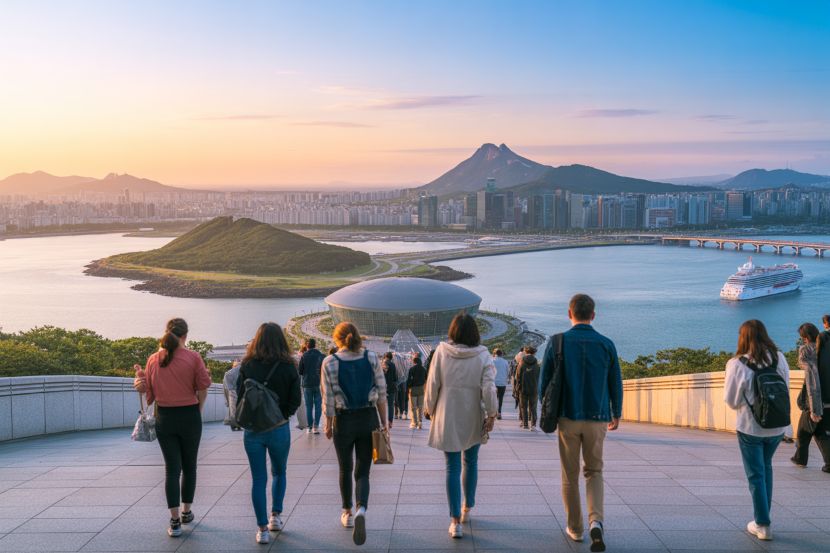
Image generated with Ai
South Korea is preparing for a decisive transformation of its travel economy. In a high-level meeting at Cheong Wa Dae in Seoul, President Lee Jae Myung placed tourism at the center of the country’s long-term growth blueprint, setting an ambitious objective: attract 30 million foreign visitors by 2030. The strategy signals that the Republic of Korea, from Seoul to Busan, from coastal cruise ports to regional airports, intends to evolve beyond capital-centric sightseeing and turn its cultural momentum into nationwide economic opportunity.
The announcement comes at a moment when inbound travel has nearly returned to pre-pandemic strength. With 18,936,562 foreign arrivals recorded in 2025, South Korea is within reach of the 20 million milestone. Now, the government is aiming higher—focusing not just on numbers, but on elevating visitor experiences, expanding regional tourism, and increasing per-visitor spending. For travelers, this means smoother entry procedures, more diverse destinations, and richer local encounters across the Korean Peninsula.
South Korea’s tourism rebound has been strong. Official tourism statistics confirm that 18.93 million international visitors arrived in 2025, marking a 15.7% increase compared to 16.37 million the year before. Alongside the rise in arrivals, foreign tourist spending surpassed 17.4 trillion won, reflecting a 21.1% year-on-year increase from nearly 14.4 trillion won in 2024.
These figures position South Korea as one of Asia’s fastest-recovering inbound destinations. Yet the government sees limitations in the current growth model. Nearly 80% of international travelers remain concentrated in Seoul, raising concerns about sustainability, regional inequality, and overcrowding.
Advertisement
Advertisement
The new roadmap shifts attention from simple volume growth to higher-value tourism, diversified travel routes, and stronger economic benefits for provincial communities.
Over the past decade, K-pop, Korean cinema, streaming dramas, and Korean cuisine have transformed the country’s global image. From music festivals in Seoul to film tourism inspired by global hits, cultural exports have fueled destination curiosity.
Advertisement
Advertisement
At the strategy meeting, it was emphasized that the momentum of K-culture must translate directly into tourism development. The idea is straightforward: cultural fascination should evolve into physical travel—encouraging fans and cultural enthusiasts to explore filming locations, concert venues, heritage neighborhoods, and culinary hotspots.
Travel planners can expect:
This alignment between culture and travel strengthens South Korea’s position against competitors such as Japan, Thailand, and Singapore, all of which are aggressively promoting cultural tourism experiences.
A key priority of the new strategy is regional revitalization. Authorities aim to transform provinces outside the capital into standalone tourism magnets.
Regions expected to benefit include:
Regional airports are set to become active inbound gateways rather than secondary domestic connectors. The Ministry of Land, Infrastructure and Transport outlined measures to strengthen direct international routes into non-Seoul cities, reducing congestion at Incheon International Airport.
For travelers, this means more direct access to scenic coastal towns, rural heritage villages, and culinary regions without routing exclusively through the capital.
To support the 30 million target, immigration convenience is under review. The Ministry of Justice is preparing adjustments to streamline entry procedures, expand automated clearance systems, and improve multilingual services.
Cruise tourism is also receiving renewed attention. As Asian cruise itineraries rebound, South Korea aims to enhance port infrastructure in cities like Busan and Incheon, positioning them as major cruise embarkation and turnaround hubs.
Travel Tip:
Visitors planning multi-city trips should monitor new regional flight connections expected to roll out over the next two to three years. Secondary airports may offer competitive fares and shorter queues.
The government has also identified service integrity as a core priority. Issues such as price inflation, aggressive touting, and inconsistent hospitality standards have been flagged as risks to long-term growth.
Authorities are preparing measures to:
For international visitors, this signals a stronger commitment to fair pricing and service consistency—critical factors in repeat travel decisions.
The strategy meeting was notable for its broad participation. Senior ministers across finance, culture, education, transport, agriculture, health, and SMEs were present, reflecting tourism’s cross-sector importance.
Private industry leaders, including executives from major hospitality firms such as Hotel Shilla, attended discussions, highlighting the collaboration between government and the travel industry.
With global hotel brands expanding across Seoul and Busan, and boutique accommodations growing in heritage cities, the lodging sector stands to benefit from the qualitative growth approach. Higher-spending travelers, wellness tourists, and cultural explorers are increasingly shaping market demand.
Tourism already plays a major role in South Korea’s economy, supporting airlines, hospitality, retail, transportation, and cultural industries. By targeting 30 million visitors by 2030—one year earlier than originally planned—the government is positioning tourism as a primary growth engine.
If the 2025 spending trajectory continues, inbound travel revenue could significantly exceed the current 17.4 trillion won level. Regional small businesses—from street food vendors to local tour operators—are expected to benefit if geographic diversification succeeds.
This model aligns with global travel trends where travelers increasingly seek authentic, off-the-beaten-path experiences rather than mass-tourism hotspots.
Travelers considering South Korea in the coming years may notice:
With South Korea already ranking high in global safety and infrastructure indices, the new tourism transformation plan further enhances its appeal for first-time and repeat visitors alike.
The return of presidential leadership to the national tourism strategy meeting—last personally attended by a president in 2019—underscores how central tourism has become to South Korea’s economic and cultural agenda.
By combining record-breaking visitor numbers, regional expansion, immigration reform, and cultural tourism integration, the Republic of Korea is crafting a forward-looking blueprint that could redefine Asian travel flows by 2030.
For global travelers, the message is clear: South Korea is not merely reopening—it is reinventing its tourism future.
Advertisement
Tags: Asia inbound tourism, Busan cruise tourism, Jeju Island travel boom, Korea 2030 tourism vision, Seoul travel expansion

Subscribe to our Newsletters
I want to receive travel news and trade event updates from Travel And Tour World. I have read Travel And Tour World's Privacy Notice .
Friday, February 27, 2026
Friday, February 27, 2026
Friday, February 27, 2026
Friday, February 27, 2026
Thursday, February 26, 2026
Thursday, February 26, 2026
Friday, February 27, 2026
Friday, February 27, 2026