Iceland is one of Europe’s most popular travel destinations. The vast landscapes, sparsely populated road network, and high proportion of rental vehicles make changes in transportation policy particularly relevant for vacationers. With the introduction of a general road toll and the simultaneous abolition of fuel tax, Iceland has established a new tax system that redistributes the cost structure for driving.
Since January 1, 2026, a comprehensive, kilometer-based road usage fee has been levied in Iceland for the first time. It applies to the entire public road network, regardless of whether it is paved main roads or gravel roads. The latter is particularly important for Iceland, as the majority of roads are unpaved.
The toll applies to all types of vehicles. There are no differences based on drive type. Gasoline, diesel, hybrid, and electric cars are treated equally. Motorcycles and motorhomes are also included. There is no time-limited vignette, as is known from other countries. The basis for billing is exclusively the actual distance traveled.
The amount of the toll depends on the type and weight of the vehicle. Motorcycles are classified as cheaper than cars, while heavy vehicles pay higher rates.
For vehicles registered in Iceland, billing is based on mileage. This must be reported regularly, either during vehicle inspections or online. The state authority Vegagerðin is responsible for managing the road network.
Foreign vehicles are not subject to this system. Travelers who come to Iceland with their own vehicle instead pay a flat fee for the duration of their stay. This flat rate is time-dependent and is not recorded on a kilometer-by-kilometer basis.
For vacationers, the most relevant factor is how rental vehicles are billed. Rental companies pass the new toll directly on to their customers. Instead of charging per kilometer, a daily flat rate is usually charged in practice.
According to the ADAC, this is around ISK 1,550 per day for many providers. This corresponds to approximately €11 or around US$12. The fee either appears as a separate item on the invoice or is already included in the rental price. This makes it easier for travelers to plan their expenses, but it is independent of the actual distance traveled.
With the introduction of the toll, Iceland has abolished the previous fuel tax on gasoline and diesel. This has led to lower prices at gas stations. However, this relief is partially offset by a simultaneous increase in the CO₂ tax.
Overall, the cheaper fuel does not completely offset the new toll. Total costs tend to rise, especially for long distances and classic round trips. Shorter distances are correspondingly less significant.
Regardless of the new general road toll, the existing tunnel toll remains in place. This continues to affect the Vaðlaheiðargöng in the north of the country. The tunnel shortens the distance between Akureyri and Húsavík by around 16 kilometers.
For vehicles under 3.5 tons, including motorcycles, the fee is ISK 2,152. This corresponds to approximately €15 or around US$16. Payment is made online and must be completed at least 24 hours before or after passing through the tunnel. Other tunnels, including older underwater tunnels, remain free of charge.
Iceland has a road network of around 13,000 kilometers. Approximately 4,600 kilometers are paved, with the majority consisting of gravel or unpaved sections. There are no highways. Multi-lane, highway-like roads are only found in the Reykjavík area.
The most important traffic artery is the ring road, which is 1,322 kilometers long. It circles almost the entire island and connects the most important towns. In addition, secondary roads and highland tracks characterize the network. Weather, geology, and seasonal conditions have a much greater impact on the condition and passability of many routes than in Central Europe.
The combination of abolished fuel tax, new mileage-based tolls, and increased CO₂ tax does not lead to lower mobility costs overall. For frequent drivers and extended road trips, expenses are likely to increase. Rental car customers benefit from clearly calculable flat rates, but must also expect additional costs.
Iceland thus remains a special case in terms of transport policy. The new toll does not change travel itself, but it does change financial planning for vacationers and individual travelers.
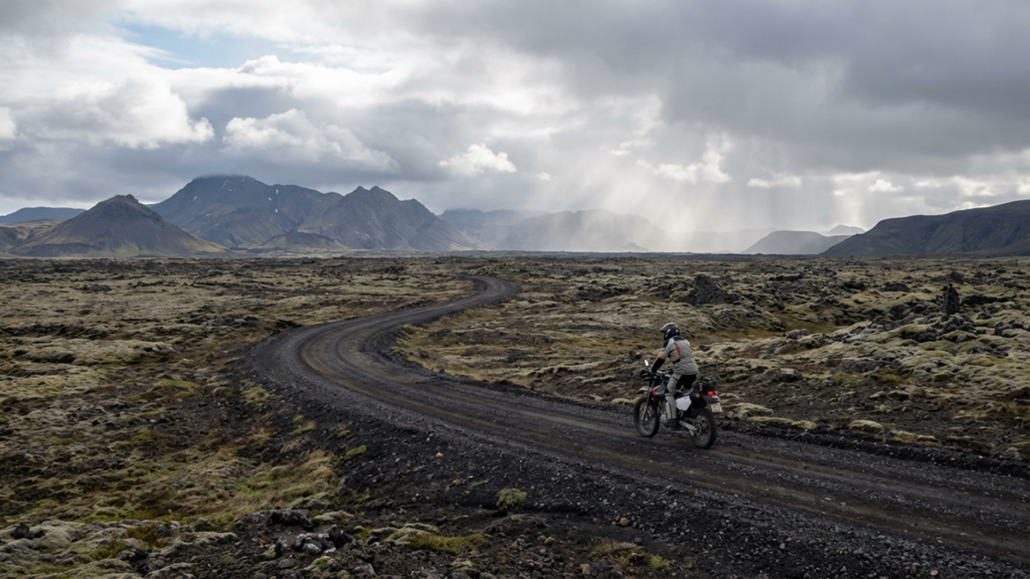
For motorcyclists, traveling in Iceland will change primarily in financial and organizational terms. Motorcycles are also subject to the new mileage-based toll and are charged ISK 4.15 per kilometer, which is cheaper than for cars, but still adds up on long stretches of the ring road or on extended tours. Since the fee also applies to unpaved roads, it affects virtually all typical motorcycle routes in Iceland. Those traveling with their own motorcycle pay a flat rate for the duration of their stay and do not have to report mileage, which simplifies the process. Although the abolition of the fuel tax lowers the price of fuel, the higher CO₂ tax relativizes this effect. Overall, this does not make motorcycling in Iceland noticeably cheaper, but it remains slightly less expensive than traveling by car.
Redakteur bei Motorrad Nachrichten. Fokus auf Technik, Szene und Motorradpolitik – neutral, sachlich, verständlich. Verantwortlich für die Seiten www.Motorcycles.News, www.Motorrad.Training und den YouTube-Kanal “Motorrad Nachrichten”, sowie deren social Media-Seiten.
Type above and press Enter to search. Press Esc to cancel.
You are currently viewing a placeholder content from Vimeo. To access the actual content, click the button below. Please note that doing so will share data with third-party providers.
You are currently viewing a placeholder content from YouTube. To access the actual content, click the button below. Please note that doing so will share data with third-party providers.
You need to load content from reCAPTCHA to submit the form. Please note that doing so will share data with third-party providers.
You are currently viewing a placeholder content from Google Maps. To access the actual content, click the button below. Please note that doing so will share data with third-party providers.
Iceland 2026: New road tolls make rental cars and round trips more expensive – motorcycles.news
You Might Also Like

Dodgers Travel To San Diego for First Padres Series of the Season – Yahoo Sports

Air Canada Reacts Over Environment Canada's Travel Warning: Delays And Cancellations Looming – TheTravel