
Ever wish you could text the most stylish people in the world to ask them for their lists of things to do in the places they know best? Here are insider travel tips for those who would never be caught dead in a tourist trap. Bon voyage!
To capture Madrid beyond the obvious, we turned to four insiders shaping the city’s cultural present: DJ, designer, model, and stylist Sita Abellán, who channels a dark, futuristic glamour that has made her one of the defining style figures of contemporary Spain; Pascal Moscheni, who has created soundtracks for Loewe, Bottega Veneta, and Coperni; Lorenzo Castillo, Madrid’s preeminent interior designer, celebrated for his mix of classical opulence and contemporary edge; and Juanjo Oliva, the Madrid designer revered for his sculptural silhouettes and vision of Spanish elegance.
Make sure to pack comfortable shoes for walking, like espadrilles, elegant sandals, or for cooler weather, sneakers or boots. These Mary Janes by Spanish label Flabelus are chic, yet comfortable enough for hours of walking.
Lightweight layers—think t-shirts, camisoles, cardigans, and trench coats—are great for this city.
Bring a hands-free bag so you can taste tapas or take photos.
“The sky is usually blue and sunny!” says Moscheni. Therefore, sunglasses are a must-have year round.
Don’t bring heavy puffer coats—it never gets too chilly in Madrid. Leave the logos and high heels at home. Your feet will thank you later.
Madrid rewards those who slow down and move with intention: the city runs late, with lunches after 2 PM and dinners rarely before 9 PM, so ease into mornings and let nights unfold. Dress polished but unfussy—tailoring, good leather, and thoughtful simplicity matter more than trends, and comfortable shoes are essential for long walks on cobblestones. Rather than rushing through museums, choose one and linger, leaving space to wander neighborhoods like Las Salesas, Chamberí, or La Latina, where the city’s real rhythm reveals itself. Meals are social and unhurried, luxury is quiet and logo-light, and the most memorable experiences often happen between plans—over a long coffee, a shared plate, or a late drink that turns into something more. “Madrid is still affordable compared to other European capitals when it comes to food and going out, and it’s actually one of the best cities I know to do so,” says Moscheni. “The size of the city center is perfect—not too small, but not hyperconcentrated in one area.”
Follow in the footsteps of Pablo Picasso, Ernest Hemingway, Salvador Dalí, Marie Curie, and Josephine Baker, and book a stay at one of Madrid’s most iconic hotels, The Palace, which reopened in 2025 after a two-year renovation.
The Palace
“The hotel was the nerve center of this creative activity in Madrid during [the city’s modernist golden age] because of its open-minded, cosmopolitan, and contemporary outlook,” says Oliva, who also designed the hotel’s uniforms. “These reasons were more than enough to attract the best artists of the time “
Or, live like Spanish nobility in Santo Mauro, the former residence of the Duke of Santo Mauro, built by architect Juan Bautista Lázaro between 1899 and 1902. The intimate palace is discreet and quintessentially Madrid.
“Its character comes from the way we worked with textiles, antiques, artworks, and noble materials to preserve the feeling of a private 19th-century residence,” says Castillo, who was charged with redesigning the hotel’s interiors. “The moment you walk in, you sense that warmth. It doesn’t feel like a hotel; it feels like entering someone’s grand home, full of history, personality, and intimacy.”
The family-owned La Parra is seductive, low-lit, lively without being loud, and filled with the easy confidence of a place that has long been beloved by locals. Even the Obamas have dined there for croquettes filled with Iberian ham, and juicy roast beef. For the best Paella, Spain’s most emblematic dish—saffron-infused rice cooked slowly in a wide pan, meant to be shared—go to St. James, a Madrileño favorite for refined Spanish classics.
St. James
For intellectual ambiance, Castillo suggests La Biblioteca in Santo Mauro for elevated Spanish cuisine. “We preserved the original English oak bookshelves and combined them with velvets and patterned textiles to create a warm, deeply British ambiance that feels both intimate and timeless,” says Castillo.
La Biblioteca
To fully immerse yourself in Spanish culture, discover the soulful intensity of flamenco—where music and dance move as one. “Go see people dancing flamenco at Corral de la Moreria,” says Moscheni. “It’s an incredible experience and something unique.” To go dancing, Abellán recommends CORE, which is owned by her good friends. “It’s mainly focused on electronic music, and it’s quite new,” she says. “The lighting installation and DJ booth were designed by architect Guillermo Santomà, a major figure in visual architecture. The space feels intimate and safe, and the DJ is set up right on the dance floor, which creates a much stronger connection with the crowd.” If live music is what you’re after, Abellán suggests “La Casa Encendida. Their artist selection is incredibly well-curated, and the overall atmosphere is always great.”
Group of flamenco artists performing in tablao Corral de la Moreria
Madrid is also home to some of history’s most iconic works of art, including Picasso’s Guernica and Diego Velázquez’s Las Meninas. “A must-do is visiting El Museo del Prado, the most important museum in Spain, home to some of the most significant works of art in history,” says Abellán.
El Museo del Prado
“Also, Reina Sofía to see Guernica, and Galería Solo, which offers a more intimate experience and brings together hundreds of contemporary works by artists from around the world.”
Visitors looking at Pablo Picasso’s Guernica in Reina Sofia National Art Museum
The best neighborhoods for shopping, Moscheni says, “are mainly around the Conde Duque and Malasaña area. It provides a good variety of vintage and high-end sportswear brands as well as many coffee shops, bars, and tapas.” For one-stop shopping, visit El Corte Inglés, the storied Spanish department store founded in 1940. You can find everything from global luxury brands to Spanish labels, along with local delicacies like iberico ham, olive oil, and an array of cheeses. You can also arrange for a personal shopping experience complete with a color test. For vintage shopping, Abellán suggests Quality Madrid.
“They have an amazing selection of vintage pieces from brands like Tom Ford, Gaultier, Gucci, and Prada,” says the multihyphenate. ”It’s incredible.” If vintage accessories are what you’re after, go to Loué. “I love their selection of vintage designer bags, they always have beautiful finds,” Abellán adds.
The best time to visit Madrid is in late spring (April through early June) and early fall (September and October), when the city feels both alive and effortlessly elegant. Days are warm without being oppressive, and terraces, galleries, and dining rooms hum with energy. August, by contrast, is defined by intense heat and a mass local exodus, while winter—though rich in museums and dining—lacks the languid, outdoor rhythm that gives Madrid its particular magic.
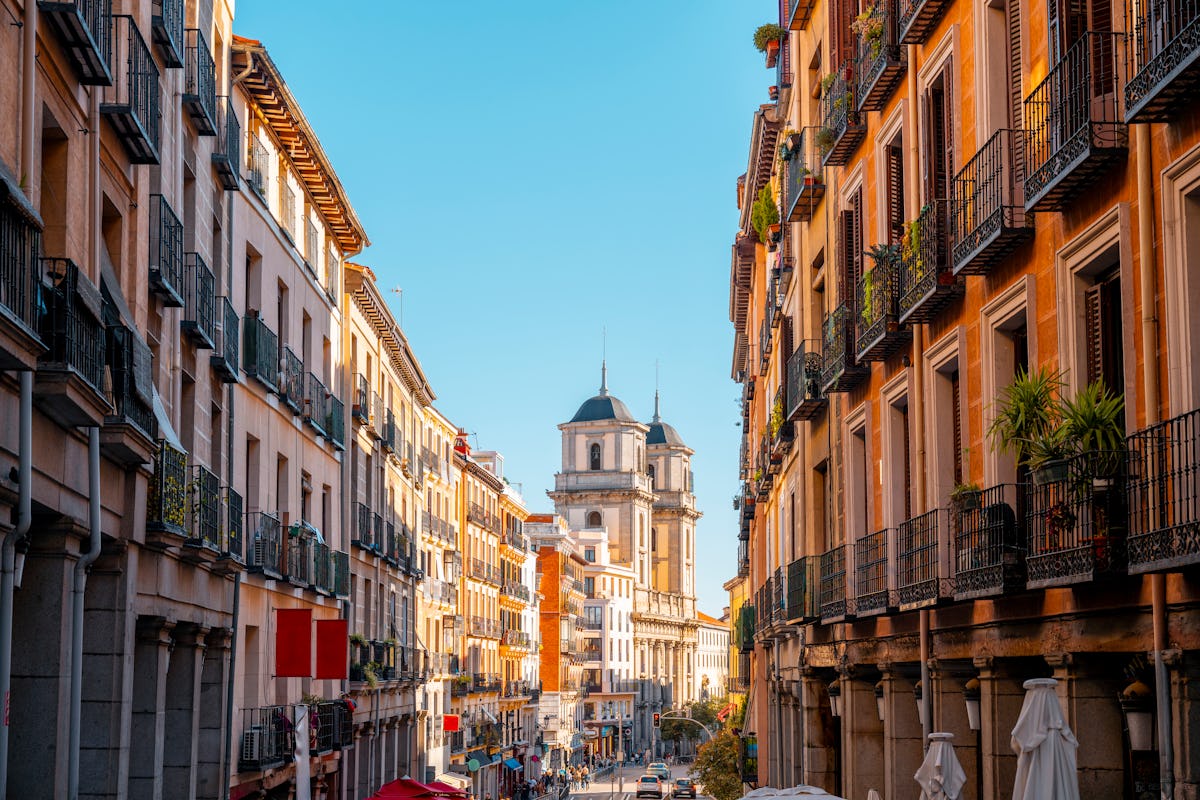
Madrid has never been the kind of city that clamors for attention. Its magic reveals itself slowly—during golden hour along Gran Vía, in the swirl of a late dinner that slips toward dawn, in the galleries and studios shaping Spain’s most compelling creative moment. Now, with a new generation of artists, designers, chefs, and cultural instigators redefining what the capital can be, Madrid is in the midst of an electric renaissance. Consider a trip in 2026—you won’t regret it.
The Insider’s Guide to Madrid – W Magazine
You Might Also Like

15 Reasons Florida’s Infrastructure Can’t Handle Its Growing Tourism Industry – MSN

This ‘Absolutely Stunning’ National Park Was the Least Visited in 2025 – Travel + Leisure