
Travel is increasingly being measured not by distance travelled, but by how profoundly a destination shifts mood. As travellers become more aware of mental wellbeing, holidays are no longer framed purely as an escape from routine, but as an opportunity to reset the brain itself.
At the heart of this conversation is dopamine — a neurotransmitter closely associated with pleasure, motivation, and emotional reward.
Certain environments naturally support dopamine production through a combination of sunlight exposure, physical movement, clean air, access to green spaces, and sensory satisfaction, particularly through food.
Using these criteria, a weighted ranking of global cruise ports highlights the destinations most likely to deliver that elusive “feel-good” effect. Below are the Top 10 destinations, ranked by overall Dopamine Score, based on annual sunshine hours, air quality (PM2.5), average restaurant ratings, quality of green spaces, and walkability, as reported in scenic.co.uk.
The Dopamine Score is a weighted composite index, with each of the following factors contributing 20% to the final score:
This methodology prioritises environments that support both physiological and psychological well-being, rather than relying on subjective travel appeal alone.
Dopamine Score: 100/100
Split claims the top position by excelling across nearly every measurable factor. With 2,631 hours of annual sunshine, the Dalmatian coast offers consistent exposure to natural light, a known contributor to dopamine regulation.
The city balances urban life with expansive greenery, most notably Marjan Hill, often described as the city’s natural sanctuary. Its strong walkability score encourages exploration on foot, while excellent average restaurant ratings reinforce the role of cuisine as a sensory reward.
Split’s ability to combine sunshine, scenery, and movement — without overwhelming scale — positions it as the most neurologically rewarding destination in the ranking.
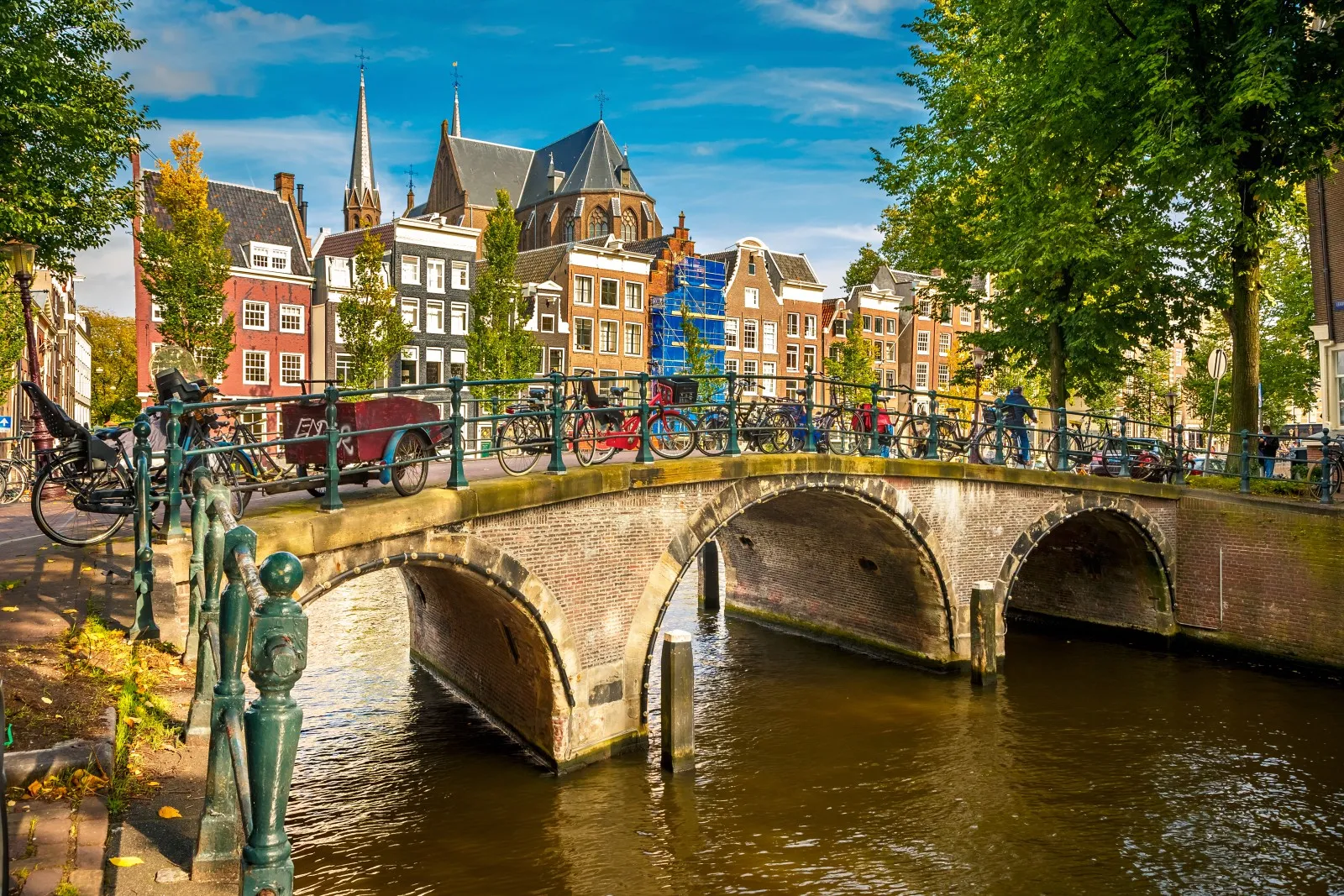
Dopamine Score: 98/100
Amsterdam’s high ranking is driven less by sunshine and more by environmental design. The city’s exceptional walkability score of 88 reflects compact neighbourhoods, flat terrain, and pedestrian-friendly infrastructure.
Green spaces are deeply embedded in daily life, while strong restaurant ratings underline the city’s culinary appeal. Despite moderate sunshine levels, Amsterdam compensates with clean air relative to other major cities and a rhythm of movement that naturally supports mental well-being.
It is a destination where dopamine is released gradually, through ease rather than intensity.
Dopamine Score: 95/100
Tallinn stands out for its excellent air quality, one of the strongest performers in the dataset. Clean air plays a critical role in cognitive function, and Tallinn’s low PM2.5 levels provide a measurable advantage.
The city also scores highly for green spaces and walkability, supported by a compact historic core and extensive parkland. Combined with strong restaurant ratings, Tallinn offers a balanced sensory environment that rewards slow exploration.
Its appeal lies in calm consistency rather than stimulation overload.
Dopamine Score: 93/100
New Orleans ranks highly due to its exceptional sunshine levels, registering 2,649 annual hours. This natural advantage is amplified by a food culture deeply rooted in pleasure, indulgence, and social connection.
While air quality and walkability are less dominant than in European counterparts, the city compensates through sensory richness — music, cuisine, and street life — all of which contribute indirectly to dopamine release.
New Orleans demonstrates that emotional stimulation can be just as impactful as environmental purity.
Dopamine Score: 91/100
Lisbon’s placement reflects a strong balance of sunshine, culinary satisfaction, and scenic movement. With 2,806 sunshine hours annually, the city offers consistent daylight exposure throughout the year.
Although its hilly terrain slightly limits walkability scores, this is offset by expansive viewpoints, waterfront promenades, and accessible green spaces. Lisbon’s food scene also scores highly, reinforcing the connection between pleasure and nourishment.
The city rewards effort, both physically and emotionally.
Dopamine Score: 91/100
Málaga’s ranking is anchored in its Mediterranean climate and strong walkability. Sunshine levels approach 3,000 hours annually, creating ideal conditions for outdoor activity and mood regulation.
The city’s urban layout encourages long walks along the coast, while restaurant ratings remain consistently high. Green spaces are well-integrated, particularly along the seafront and historic districts.
Málaga delivers dopamine through rhythm — sun, movement, and food in steady repetition.
Dopamine Score: 88/100
Cádiz Bay benefits from the highest sunshine figure in the top 10, exceeding 3,000 annual hours. This alone places it firmly among the most mood-enhancing destinations.
While walkability and dining metrics are slightly lower than some competitors, the coastal environment and open-air lifestyle compensate. The constant presence of sea air also contributes to perceived environmental quality, even when PM2.5 scores are moderate.
Cádiz Bay’s appeal lies in exposure — to light, space, and horizon.
Dopamine Score: 86/100
Liverpool’s position is notable given its relatively low sunshine hours. Instead, the city scores strongly in walkability and green space quality, helping to regulate stress and promote movement.
Urban regeneration has improved accessibility, while strong cultural and culinary offerings support sensory engagement. Although air quality is not among the best in the ranking, Liverpool demonstrates that built environments can compensate for climatic limitations.
It is a dopamine destination shaped by design rather than weather.
Dopamine Score: 84/100
Vancouver’s ranking is driven primarily by its high-quality green spaces and strong walkability. Surrounded by water, forests, and mountains, the city offers constant access to nature within an urban framework.
Sunshine levels are moderate, but air quality remains comparatively strong. Combined with solid restaurant ratings, Vancouver provides a stable environment for mood regulation rather than sharp dopamine spikes.
Its strength lies in consistency and access to nature at scale.
Dopamine Score: 81/100
Oslo rounds out the top 10 with strong scores in air quality, walkability, and green space access. While sunshine hours are lower than in southern European destinations, the city compensates through environmental quality and urban planning.
Green corridors extend deep into the city, encouraging physical activity and mindful engagement with nature. Oslo’s culinary scene, while understated, maintains solid average ratings.
It is a destination where dopamine is supported quietly, through balance and restraint.
The destinations that rise to the top of the dopamine ranking share a common trait: they create environments where well-being emerges naturally rather than being engineered.
High sunshine exposure, clean air, walkable urban layouts, access to meaningful green spaces, and consistently satisfying food cultures work together to stimulate dopamine production in ways that feel intuitive and sustainable.
Stay tuned with us. Further, follow us on social media for the latest updates.
Join us on Telegram Group for the Latest Aviation Updates. Subsequently, follow us on Google News
Karan is a published researcher and writer of aviation and space science. In addition to writing about space, Karan runs a YouTube channel called WiseDumb Nepali.
Aviation A2Z is one of the leading news and media publication company.
We publish latest aviation news, exclusive blogs and more.
Copyright © 2024 Aviation A2Z
Type above and press Enter to search. Press Esc to cancel.
Top 10 Dopamine Travel Destinations in the World – Aviation A2Z
You Might Also Like

Dusseldorf Bound TUI Flight from Greece Makes Emergency Landing in Bari Airport, Suspends Operations, Diverts Ryanair, Red Sea Airlines and Wizz Air Flights from Rome, Patras, Budapest, Sharm El-Sheikh, New Update Europe Travel Industry and Summ – Travel And Tour World
Hong Kong Joins South Korea, the Philippines, and China in Transforming Cruise Tourism With Diverse Itineraries, Modern Port Infrastructure and Experiential Travel Opportunities—Key Insights for Global Travelers – Travel And Tour World